
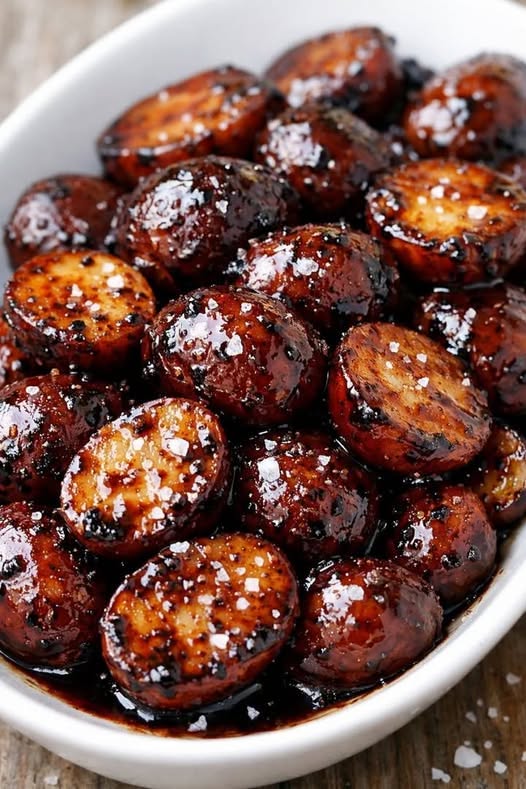
Slow Cooker Balsamic Glazed Baby Potatoes
Balsamic vinegar and potatoes is a combination that has no business being as good as it is until you make it and understand why. The vinegar’s acidity softens and brightens the potato’s earthy starchiness; its natural sugars caramelize against the potato’s surface during the long slow cook into a dark, glossy, slightly sticky glaze; and its deep, slightly wine-adjacent complexity adds a sophistication to what would otherwise be a very plain vegetable preparation. Butter provides the fat that helps the glaze cling and gives the sauce its characteristic richness and sheen. Three ingredients — baby potatoes, balsamic vinegar, butter — produce a side dish that looks and tastes as though it required considerably more deliberate effort than tossing three things into a slow cooker and waiting four to five hours.Slow Cookers
The practical value of this recipe extends beyond its flavor. Baby potatoes slow-cooked in balsamic glaze are an oven-independent side dish that cooks without any attention once assembled, frees the oven for whatever main course or other sides require it, and holds excellently on WARM for an additional hour without deterioration. For holiday dinners or any occasion when oven real estate is a finite resource and a genuinely good side dish is needed, this is one of the most effective solutions available — it occupies a slow cooker slot rather than an oven rack, it takes virtually no active time, and it produces a result that is elegant enough to serve at the most formal holiday table alongside the most labored-over main course.
Why Balsamic Vinegar Glazes So Well
Balsamic vinegar’s unique behavior when reduced — darkening, thickening, and developing a sweet, syrupy intensity that is entirely different from its raw flavor — is what makes it such an effective glaze ingredient. The acetic acid that gives all vinegar its characteristic sharpness is present in balsamic, but in lower concentration than in white wine or apple cider vinegar; balsamic’s defining character comes instead from the grape must (the fresh-pressed grape juice including skins, seeds, and stems) that is the basis of its production. That grape must contributes natural fruit sugars, tannic compounds from the grape skins, and complex aromatic compounds that are not present in other vinegars, and it is these compounds that caramelize during the cooking process into the dark, glossy, slightly fruity reduction that makes balsamic such a compelling sauce component.Fruits & Vegetables
In the slow cooker, this reduction happens gradually over four to five hours rather than in the few intense minutes of stovetop reduction. The result is a gentler, more thoroughly integrated reduction where the balsamic’s sugars have time to caramelize slowly into the potato’s surface rather than merely coating it, producing a glaze that penetrates slightly into the cut surface of the halved potatoes rather than sitting purely on top. The optional final uncovered HIGH cook accelerates the reduction to a proper glaze consistency if the sauce is still quite thin at the end of the covered cook.
Why You’ll Love This Recipe
This is the rare side dish that can legitimately be described as both effortless and elegant — occupying a slow cooker slot rather than oven space, requiring five minutes of preparation, and producing a finished plate of dark, glossy, caramel-adjacent glazed potatoes that looks as though it emerged from a professional kitchen. The balsamic glaze is assertive enough to be interesting but balanced enough by the butter to be broadly palatable, including for people who might be tentative about balsamic vinegar’s sharpness when tasting it raw. As an addition to a holiday table where oven space is at a premium, it is essentially irreplaceable.
Ingredient Notes
Small red baby potatoes — two pounds, halved — are the best variety for this preparation. Red baby potatoes have a waxy texture that holds together under the long, slow cook without dissolving into the balsamic sauce — they remain identifiable, intact potato pieces with a slightly firm interior and soft, yielding surface rather than the crumbling, starchy result that russets would produce in the same application. Halving them cut-side up maximizes the surface area in contact with the balsamic, which is where the caramelization and glaze penetration happen. Fingerling potatoes, Yukon Gold baby potatoes, or a mix of red and yellow varieties can all be substituted; all have the waxy texture that makes them appropriate for this long braise.
Balsamic vinegar — half a cup — is the primary flavor component. The quality of the balsamic vinegar matters significantly in this recipe because the vinegar is used at full strength and is the dish’s primary flavor statement. Inexpensive balsamic vinegar (often labeled “balsamic vinegar of Modena” and sold at the lowest price point) can be thin, harsh, and heavily reliant on added caramel coloring rather than genuine aged character — it produces a sharp, less complex glaze. A mid-range balsamic (around ten to fifteen dollars for a 250ml bottle) that has been aged for some time and has a thicker, slightly syrupy consistency and a rounder, more fruit-forward flavor produces a noticeably better glaze. The best commercial option is a balsamic labeled “Aceto Balsamico di Modena” with some indication of age (three leaves, four leaves, or a similar aging designation on the label) — these are meaningfully better than the cheapest options and worth the modest additional cost for a side dish that will appear on a holiday table.
Discover more
garlic
SOUP
Cake
Unsalted butter — three tablespoons, cut into small pieces — provides the fat that helps the balsamic reduction cling to the potato surfaces and contributes the dairy richness that rounds the vinegar’s acidity. Cut into small pieces and distributed over the potatoes, the butter melts gradually during the cook and combines with the balsamic and potato juices to form the sauce. The small pieces ensure more even distribution than whole tablespoons placed in one or two locations. Salted butter can be used — it adds a slight salted-caramel quality to the finished glaze that is actually quite pleasant, though it means the final seasoning adjustment needs to account for the added salt.Fruits & Vegetables
Coarse salt for finishing — sprinkled just before serving — is technically optional but strongly recommended. The coarse salt crystals on the surface of the finished glazed potatoes add both the crunch that contrasts pleasantly with the soft potato and the seasoning that the dish needs at the plate stage. Flaky sea salt (Maldon or similar) is ideal; kosher salt works well. The finishing salt should be added at the last possible moment — on the table or in the serving dish just before bringing out — as it dissolves into the glaze if added in advance.
NEXT PAGE
ADVERTISEMENT
