
Ingredients
2 lbs small red baby potatoes, rinsed and halved
½ cup balsamic vinegar (mid-range quality recommended)
3 tbsp unsalted butter, cut into small pieces
Flaky sea salt or coarse kosher salt, for finishing just before serving
Step-by-Step Instructions
Step 1 — Prepare the Slow Cooker
Lightly grease the interior of a 4- to 6-quart slow cooker with butter or cooking spray, covering the bottom and sides. The balsamic glaze that forms during the cook can become quite sticky and adherent to the ceramic insert walls; the greasing prevents this from becoming a cleanup problem and ensures the glaze stays with the potatoes rather than caramelizing onto the insert surface.Cookware & Diningware
Step 2 — Add the Potatoes
Place the halved red baby potatoes in the slow cooker, cut side up as much as possible. The cut surface facing upward maximizes the flat surface area that is exposed to the balsamic vinegar poured over, which is where the most effective caramelization and glaze penetration occur. A single even layer is ideal; for two pounds of baby potatoes in a standard 5-to-6-quart insert, one to two layers is typical.
Step 3 — Add the Balsamic and Butter
Pour the balsamic vinegar evenly over the potatoes, directing the pour across the entire surface of the insert so the vinegar is distributed broadly rather than pooling in one area. Scatter the butter pieces over the balsamic-coated potatoes, distributing them as evenly as possible across the full surface area.Fruits & Vegetables
Step 4 — Cook
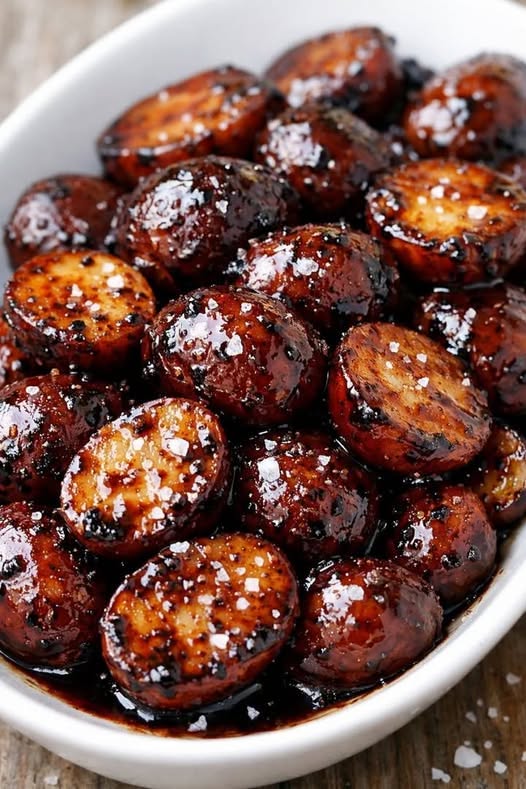
Cover and cook on LOW for 4 to 5 hours or on HIGH for 2 to 3 hours until the potatoes are completely tender when pierced with a fork — no resistance at the center. Check at the early end of the time range and continue in 30-minute increments if needed. The potatoes should be uniformly tender throughout, with the cut surfaces showing a darker, slightly glossy appearance from the balsamic that has caramelized against them during the cook.
Step 5 — Reduce the Glaze (If Needed)
Once the potatoes are tender, remove the lid and assess the sauce consistency. If the sauce is quite thin or watery — common when the potatoes have released more moisture than usual — switch to HIGH with the lid off and cook for an additional 15 to 20 minutes, stirring once or twice, until the liquid reduces to a thick, syrupy consistency that coats the potatoes and clings to the cut surfaces rather than flowing freely. Give the potatoes a gentle stir to coat them in the glaze as it concentrates. The reduction step produces a more dramatically glossy, more intensely flavored finished dish than the un-reduced sauce, and is worth the extra time for any occasion where presentation matters.
Step 6 — Taste and Serve
Taste the glazed potatoes and adjust seasoning if needed — a small pinch of salt if the glaze tastes flat, or a small additional drizzle of balsamic if the sauce is too mild. Transfer to a warm serving dish, spooning all the dark, glossy balsamic reduction from the insert over the top. Just before bringing to the table, sprinkle with flaky sea salt or coarse kosher salt — add it at the last moment so the crystals remain visible and crunchy rather than dissolving into the glaze.
Tips for the Best Results
Use a balsamic vinegar you would enjoy tasting on its own. The vinegar is the dominant flavor in this dish and it concentrates during the long cook rather than mellowing. A good-quality balsamic that tastes complex, slightly fruity, and rounded produces a complex, sophisticated glaze. A sharp, thin, or harsh balsamic produces a sharp, thin, harsh glaze. This is the one ingredient in the recipe where quality investment is most rewarded.
Place potatoes cut-side up. The flat cut surface absorbs and caramelizes the balsamic more effectively than the rounded skin side, which is less porous and less absorbent. Taking the time to position the cut sides upward produces more uniformly glazed potatoes and more attractive presentation.
Reduce the sauce to a proper glaze if it looks thin. The optional uncovered HIGH reduction step is what transforms a good dish into a great one when the sauce needs it. A properly reduced balsamic glaze — dark, syrupy, clinging — is dramatically more visually impressive and more intensely flavored than a thin, watery sauce. If the potatoes are done but the sauce is still quite fluid, the 15 to 20-minute reduction step is well worth the additional time.
dd the finishing salt at the last possible moment. Flaky sea salt sprinkled on the glossy dark glaze just before serving provides both the visual sparkle of white crystals against the dark sauce and the textural crunch that elevates each bite. Salt added earlier dissolves into the glaze and loses this textural contribution. A last-minute salt application is the detail that makes the finished presentation look most carefully assembled.
This dish holds very well on WARM. Unlike many slow cooker dishes that lose quality when held on WARM, balsamic glazed potatoes hold their texture and glaze quality for an additional hour on WARM without any deterioration. This makes them particularly practical for holiday dinners where different dishes finish at different times — start them early and hold on WARM while other components of the meal are being finished.Cookware & Diningware
Frequently Asked Questions
Can I use a different type of potato?
Yes. Fingerling potatoes work identically to red baby potatoes — they’re waxy, hold their shape well, and their elongated shape produces attractive, glossy finished pieces. Yellow (Yukon Gold) baby potatoes are also excellent — slightly more buttery in flavor, with a thin skin that becomes very soft and pleasant after the long braise. Larger potatoes cut into one-inch chunks can be used if baby potatoes aren’t available; the cooking time remains approximately the same. Avoid russet potatoes, which are too starchy and break apart during the long braise rather than maintaining their shape.
Can I make this ahead?
Yes — this is one of the recipe’s most practical attributes for holiday meal planning. Cook completely, allow to cool, transfer to an airtight container with all the glaze, and refrigerate for up to two days. Reheat in a skillet over medium-low heat with a splash of water to loosen the glaze, stirring gently until warmed through. Alternatively, return to the slow cooker on LOW for 45 minutes to an hour until heated through. Add the finishing salt at serving time. The flavors develop further during storage and the reheated version is often better than the freshly made one.Fruits & Vegetables
Can I add herbs or aromatics?
Yes — several additions work naturally with the balsamic-butter combination. Fresh rosemary (one or two sprigs added to the slow cooker with the potatoes, removed before serving) adds a piney, herbal note that pairs beautifully with balsamic and is one of the most natural herb pairings for this preparation. Fresh thyme (three or four sprigs) adds a more delicate herbal character. Two or three whole garlic cloves, lightly crushed and added with the potatoes, mellow and sweeten during the braise and add a gentle garlic depth to the glaze. All of these are additions rather than replacements — the three-ingredient base is worth preserving, and additions should complement rather than overwhelm it.
My glaze tastes too sharp — what went wrong?
The most likely cause is a lower-quality balsamic vinegar that is more acidic and less sweet than a properly aged balsamic. The solution for the finished dish is to stir a teaspoon of honey or a pinch of sugar into the glaze while it’s hot and allow it to dissolve — this balances the sharpness with sweetness. For future batches, use a higher-quality balsamic with more natural sweetness and a thicker consistency. The improvement in quality between the cheapest balsamic and a mid-range aged option is the most noticeable ingredient quality difference available in this recipe.
Can I double the recipe?
Yes — double all ingredients and use a 6- to 7-quart slow cooker. The cooking time remains approximately the same; the additional volume may require an extra 30 minutes at the end and the reduction step may take slightly longer with more liquid to evaporate. This is an excellent recipe to make in a large batch for a holiday gathering where a substantial quantity of a reliable side dish is needed.
Variations Worth Trying
Rosemary and garlic version: Add two sprigs of fresh rosemary and three lightly crushed, peeled garlic cloves to the slow cooker with the potatoes. Remove the rosemary before serving; the garlic can remain if it has softened enough to be pleasant, or be removed as well. The rosemary and garlic add an herbal, savory depth to the balsamic glaze that gives the dish a more complex, more robustly flavored character while keeping the essential balsamic-butter quality intact.Cookware & Diningware
Honey balsamic version: Stir one tablespoon of honey into the balsamic vinegar before pouring over the potatoes. The honey adds sweetness to the already sweet-tart balsamic, producing a more distinctly sweet, honey-forward glaze that is less challenging to more cautious palates and particularly appropriate for household members who find straight balsamic too assertive. This version is also excellent for holiday contexts where the side dish needs to work for a range of ages and preferences.
Discover more
Breads
soup
Bread
Dijon balsamic version: Stir one teaspoon of Dijon mustard into the balsamic vinegar before adding to the slow cooker. The mustard acts as an emulsifier that helps the butter and vinegar stay more cohesively combined throughout the cook, and adds a subtle sharpness and complexity to the finished glaze that some people find makes the dish more sophisticated. The mustard flavor is not prominently identifiable in the finished dish but contributes to the sense that the sauce has more depth than three ingredients should provide.Fruits & Vegetables
Fig and balsamic version: Add three to four dried mission figs, quartered, to the slow cooker with the potatoes. The figs rehydrate in the balsamic during the cook and their natural sweetness and honey-like character deepens and complements the balsamic in a way that produces a more complex, more fruit-forward glaze. The cooked figs can be served alongside the potatoes as part of the dish. This version is particularly elegant for a holiday context.
Balsamic and shallot version: Add three medium shallots, peeled and halved, to the slow cooker with the potatoes. The shallots caramelize alongside the potatoes during the long cook, becoming soft, sweet, and deeply savory, and their caramelized sweetness contributes additional complexity to the balsamic glaze. This is the most naturally complementary vegetable addition to the base recipe and produces a more substantial finished side dish with more varied texture.Cookware & Diningware
Serving Suggestions
Balsamic glazed baby potatoes are an unusually versatile side dish — their sweet-savory, slightly acidic character works alongside virtually any main course. They are particularly excellent with roasted poultry (turkey, chicken, duck), where the balsamic’s acidity cuts through the richness of the roast and provides a counterpoint to plain pan juices or gravy. Alongside pork — roast loin, tenderloin, ham, or pork chops — the balsamic glaze echoes and complements the sweet-savory character of pork very naturally. Grilled or roasted beef is a more assertive pairing where the balsamic’s depth stands up confidently to the meat’s richness. For a meatless meal, the potatoes alongside roasted vegetables and a good quality cheese (burrata or fresh mozzarella with the balsamic, in particular) and crusty bread produce a table that needs nothing else. For presentation, pile the potatoes onto a white serving platter so the dark glaze reads most dramatically, spoon any remaining sauce from the insert over the top, and add the finishing salt just before the platter goes to the table.Fruits & Vegetables
Storage
Store leftover balsamic glazed potatoes with their sauce in an airtight container in the refrigerator for up to three days. The glaze firms and the potatoes absorb it further during storage — both expected and fine. Reheat in a skillet over medium-low heat with a tablespoon of water stirred in to loosen the glaze, or return to the slow cooker on LOW for 45 minutes. Add the finishing salt fresh at serving time for each reheat — the coarse salt that was applied to the original serving will have dissolved into the glaze during storage. The reheated version is reliably very good and the balsamic flavor is more fully integrated into the potato after a day in the refrigerator than it was on the first evening.
Three Ingredients, One Side Dish That Earns Its Place
Slow Cooker Balsamic Glazed Baby Potatoes earn their place at the holiday table or the weeknight dinner table by producing a genuinely sophisticated result from three pantry ingredients and a slow cooker. The balsamic glaze — dark, slightly sticky, complex in the way only an aged grape-based reduction can be — transforms baby potatoes from a plain, serviceable side into something that generates genuine compliments and recipe requests. The slow cooker does the work of both cooking and glazing in one unattended process, freeing the oven for other preparations and freeing the cook from any active attention during the cook. That combination of elegance, practicality, and reliability is what makes this recipe worth knowing and worth returning to.Cheese
Enjoy!
ADVERTISEMENT
