
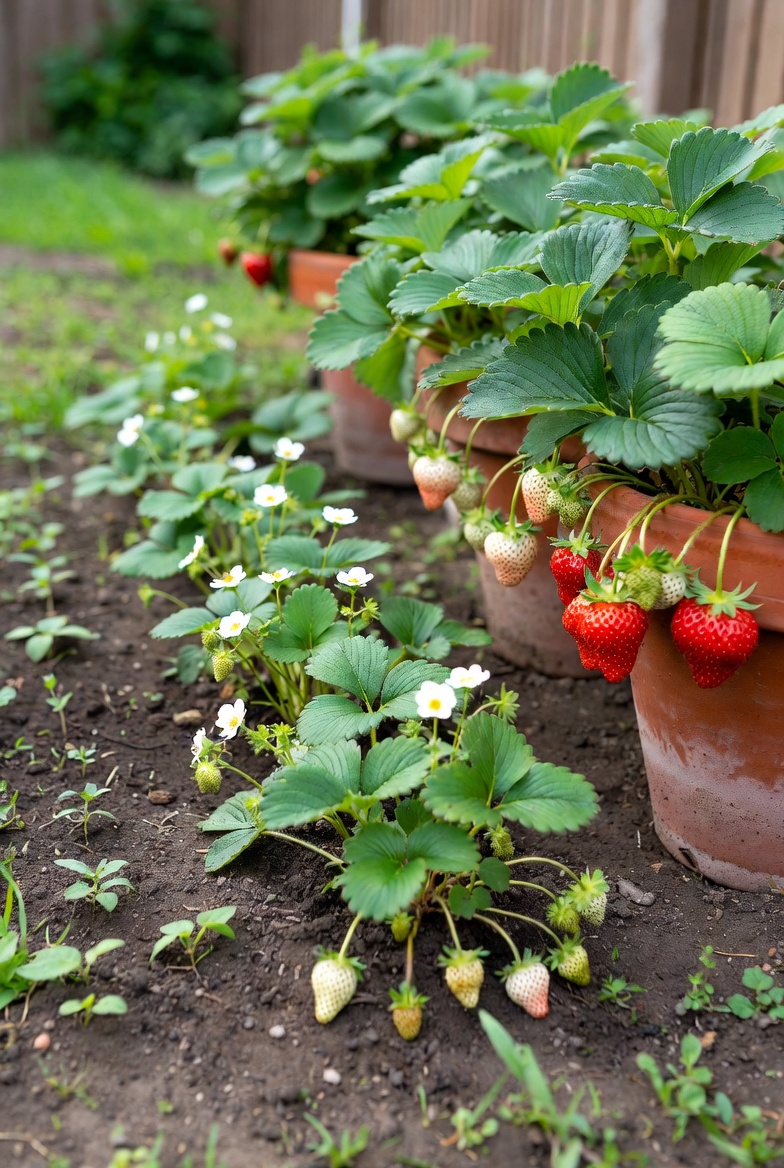
Strawberries are one of the most beloved fruits for home gardeners, thanks to their sweet flavor, vibrant color, and versatility in desserts, salads, and snacks. Growing strawberries in buckets is an excellent solution for gardeners with limited outdoor space. Container gardening allows for better control of soil, sunlight, and watering while keeping plants accessible and organized. With proper soil preparation, care, and maintenance, you can enjoy a steady supply of fresh, homegrown strawberries.
Why Grow Strawberries in Buckets?
Container gardening offers multiple advantages for strawberries:
Space efficiency – Buckets can be placed on balconies, patios, or small yards
Soil control – You can provide nutrient-rich, well-draining soil that promotes healthy root growth.
Mobility – Buckets can be moved to maximize sunlight exposure or protect plants from harsh weather.
Pest and disease management – Growing strawberries in containers reduces exposure to soil-borne pests and diseases.
Using buckets ensures manageable plants that are easier to care for while producing high-quality, flavorful fruits.
Step 1: Selecting the Right Bucket
Choosing the proper container is essential for healthy strawberries:
Size – A 5-gallon (19-liter) bucket or larger is ideal. It provides enough soil volume for roots to grow and supports multiple plants.
Drainage – Drill several holes at the bottom to prevent waterlogging and root rot.
Material – Plastic, clay, or fabric buckets are suitable as long as they are sturdy and can hold soil and moisture.
A well-chosen bucket ensures proper root development and encourages strong, productive plants.
Step 2: Preparing Fertile Soil
Strawberries require nutrient-rich, well-draining soil:
Soil mix – Combine garden soil, compost, and perlite or coarse sand in equal parts to retain moisture while allowing proper drainage.
Soil pH – Aim for slightly acidic soil, ideally between 5.5 and 6.5.
Fertilization – Mix in a balanced, slow-release fertilizer to provide essential nutrients for strong growth and fruit production.
Proper soil preparation encourages healthy roots, vigorous foliage, and sweet, juicy berries.
Step 3: Planting Strawberry Seedlings
Correct planting ensures optimal growth and fruit production:
Plant spacing – Space strawberry seedlings about 6–8 inches (15–20 cm) apart in the bucket.
Plant depth – Position the crown just above the soil line to prevent rot.
Varieties – Choose everbearing or day-neutral varieties for continuous harvest throughout the season.
Easy Steps to Strawberry Harvests in Buckets
Strawberries are one of the most beloved fruits for home gardeners, thanks to their sweet flavor, vibrant color, and versatility in desserts, salads, and snacks. Growing strawberries in buckets is an excellent solution for gardeners with limited outdoor space. Container gardening allows for better control of soil, sunlight, and watering while keeping plants accessible and organized. With proper soil preparation, care, and maintenance, you can enjoy a steady supply of fresh, homegrown strawberries.
x
Pause
Unmute
Fullscreen
Now Playing
x
video of: Unlock the Magic of Rosemary: Transform Your Home and HealthPlay Video
Unlock the Magic of Rosemary: Transform Your Home and Health
Watch on
Video channel logo
Unlock the Magic of Rosemary: Transform Your Home and Health
Why Grow Strawberries in Buckets?
Container gardening offers multiple advantages for strawberries:
Space efficiency – Buckets can be placed on balconies, patios, or small yards.
Ezoic
Soil control – You can provide nutrient-rich, well-draining soil that promotes healthy root growth.
Mobility – Buckets can be moved to maximize sunlight exposure or protect plants from harsh weather.
Ezoic
Pest and disease management – Growing strawberries in containers reduces exposure to soil-borne pests and diseases.
Ezoic
Using buckets ensures manageable plants that are easier to care for while producing high-quality, flavorful fruits.
Step 1: Selecting the Right Bucket
Choosing the proper container is essential for healthy strawberries:
Size – A 5-gallon (19-liter) bucket or larger is ideal. It provides enough soil volume for roots to grow and supports multiple plants.
Ezoic
Drainage – Drill several holes at the bottom to prevent waterlogging and root rot.
Material – Plastic, clay, or fabric buckets are suitable as long as they are sturdy and can hold soil and moisture.
Ezoic
A well-chosen bucket ensures proper root development and encourages strong, productive plants.
Step 2: Preparing Fertile Soil
Strawberries require nutrient-rich, well-draining soil:
Soil mix – Combine garden soil, compost, and perlite or coarse sand in equal parts to retain moisture while allowing proper drainage.
Ezoic
Soil pH – Aim for slightly acidic soil, ideally between 5.5 and 6.5.
Ezoic
Fertilization – Mix in a balanced, slow-release fertilizer to provide essential nutrients for strong growth and fruit production.
Proper soil preparation encourages healthy roots, vigorous foliage, and sweet, juicy berries.
Ezoic
Step 3: Planting Strawberry Seedlings
Correct planting ensures optimal growth and fruit production:
Plant spacing – Space strawberry seedlings about 6–8 inches (15–20 cm) apart in the bucket.
Plant depth – Position the crown just above the soil line to prevent rot.
NEXT PAGE
ADVERTISEMENT
