
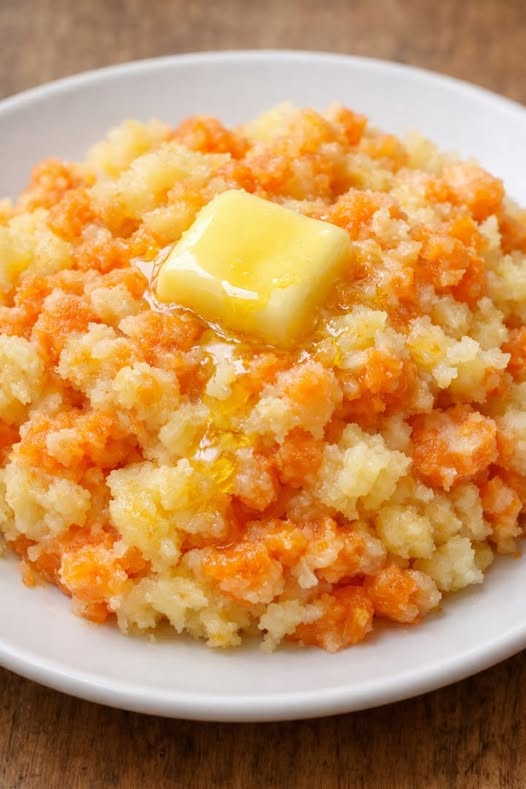
Slow Cooker Carrot and Potato Mash
There is a particular kind of food that Depression-era cooks understood better than most: the kind that makes very little into something genuinely satisfying. Potatoes and carrots together in the slow cooker with butter and salt aren’t an exciting ingredient list, but the dish they produce is warm, filling, and deeply comforting in a way that goes beyond the sum of those four items. The potatoes provide the starchy, creamy base; the carrots add a gentle sweetness and a brightness of color that makes the finished mash look as welcoming as it tastes; the butter brings richness and the kind of clean dairy flavor that makes simple food taste properly made; and the salt ties it all together. Nothing more is required.Cookware & Diningware
The slow cooker does something with these vegetables that a pot of boiling water cannot: it steams them in their own moisture and the small amount of liquid they release during cooking, concentrating their flavors rather than leaching them out into a discard pot of cooking water. The finished potatoes and carrots are fully flavored through to the center, not just on the surface, and the mash you produce from them directly in the slow cooker insert has the natural sweetness and earthy depth that makes this one of the more honest and quietly satisfying dishes in the slow cooker repertoire.
Why Such Simple Ingredients Work So Well
The combination of potato and carrot in a mash has a logic that goes beyond Depression-era economy, though economy is certainly part of its history. Potatoes are starchy and mild — they provide body, creaminess, and a neutral base that absorbs the butter’s flavor and takes on the seasoning of the salt without competing with it. Carrots are sweeter and denser — they add a natural sugar that develops during the long cook into something almost caramelized in quality, and their firm texture requires the same extended cooking time as the potato, making them a natural companion in any long-braise or slow-cook application. Together they produce a mash that’s more interesting and more nutritionally varied than plain mashed potatoes, with the sweetness of the carrot cutting through the starch of the potato and a visual appeal — the pale yellow of the potato marbled with the bright orange of the carrot — that makes the humble dish look genuinely inviting in the bowl.Dairy & Eggs
Butter in this amount — four tablespoons for two pounds of potatoes and one pound of carrots — is not excess. It’s the correct amount to make a mash that tastes properly made: rich enough to be satisfying and coatingly smooth without being greasy, with the clean dairy flavor present in every bite. The slow cooker’s enclosed environment means no butter is lost to evaporation during cooking — all four tablespoons stay in the pot and become part of the finished mash.
Why You’ll Love This Recipe
The cost is the first appeal. Potatoes, carrots, butter, and salt are among the least expensive ingredients available in any grocery store at any time of year. The total ingredient cost for a recipe that serves four generously is minimal — genuine economy cooking that doesn’t require any compromise on flavor or satisfaction. For households managing tight budgets, this kind of recipe is genuinely valuable: filling, nutritious, and made from ingredients that store well and can be bought in bulk.
The simplicity is the second appeal. Peel and cut the vegetables, add to the slow cooker, dot with butter, sprinkle with salt, close the lid. There is nothing else to do until mashing time, and mashing happens directly in the insert with no transfer required. It’s real hands-off cooking — ten minutes of prep and then several hours of complete inattention. The slow cooker holds the finished mash warm for an hour on the WARM setting without any degradation in quality, which makes timing flexible for busy households.
Ingredient Notes
Russet or Yukon Gold potatoes — two pounds, peeled and cut into roughly one-inch chunks — form the base. The choice between these two varieties produces noticeably different results in the finished mash. Russet potatoes are high-starch and produce a fluffier, lighter, more traditional mashed potato texture when worked with a masher — they break down easily and produce a smooth, dry mash that absorbs the butter cleanly. Yukon Gold potatoes are medium-starch with a naturally buttery, slightly rich flavor and produce a creamier, denser, more golden-colored mash with a slightly more cohesive texture. Both are excellent; russets produce the lighter, more classic mashed potato character while Yukon Golds produce the creamier, more distinctively flavored result. Peeling is necessary regardless of variety — potato skin doesn’t soften to a pleasant texture in the slow cooker’s steam environment and will produce tough, unpleasant bits in the finished mash. Cut the pieces as uniformly as possible — roughly one-inch chunks — so every piece cooks at the same rate.Cookware & Diningware
Carrots — one pound, peeled and sliced into half-inch rounds — add sweetness, color, and nutrition. The half-inch round thickness is the right size to cook at roughly the same rate as the one-inch potato chunks during the three and a half to four hours on HIGH — thicker carrot pieces would still be firm when the potatoes are done, while thinner pieces would become overcooked and mushy. Peeled carrots from a bag are the most convenient option; fresh whole carrots peeled and sliced produce a slightly more intensely flavored result. Baby carrots can be used halved lengthwise and cut into rounds, though their higher water content can produce a slightly wetter mash. The key is cutting the carrots uniformly so they cook evenly throughout the slow cooker.
Salted butter — four tablespoons total, divided between the cooking and the finishing stage — is the fat and primary flavor component of the mash beyond the vegetables themselves. Using salted butter rather than unsalted provides the dish’s salt in two forms simultaneously — the separate added salt seasons the vegetables during cooking, while the salt in the butter integrates into the fat that coats every piece of mashed vegetable. This two-source salt approach produces a more evenly and deeply seasoned finished mash than either salted butter alone or separate unsalted butter and salt alone. Dividing the butter into two additions — two tablespoons at the start to melt and baste the vegetables during cooking, and two tablespoons added just before mashing to provide a bright, fresh burst of butter flavor in the finished dish — produces a richer, more layered butter taste than adding all four tablespoons at once. Additional butter for serving is traditional and strongly recommended — a small extra pat melting over the top of each serving pool in the warm mash is one of the simplest and most effective presentations for this dish.
Salt — 1½ teaspoons — seasons the vegetables during the long cook, ensuring the seasoning penetrates throughout the potato and carrot chunks rather than sitting only on the surface. This amount is a starting point; taste the finished mash before serving and add more if needed. The amount of salt required varies depending on the brand of salted butter used, the size of the vegetable pieces, and personal preference. Season assertively — under-seasoned potato and carrot mash tastes flat and disappointingly bland regardless of how good the butter is.
Ingredients
NEXT PAGE
ADVERTISEMENT
