
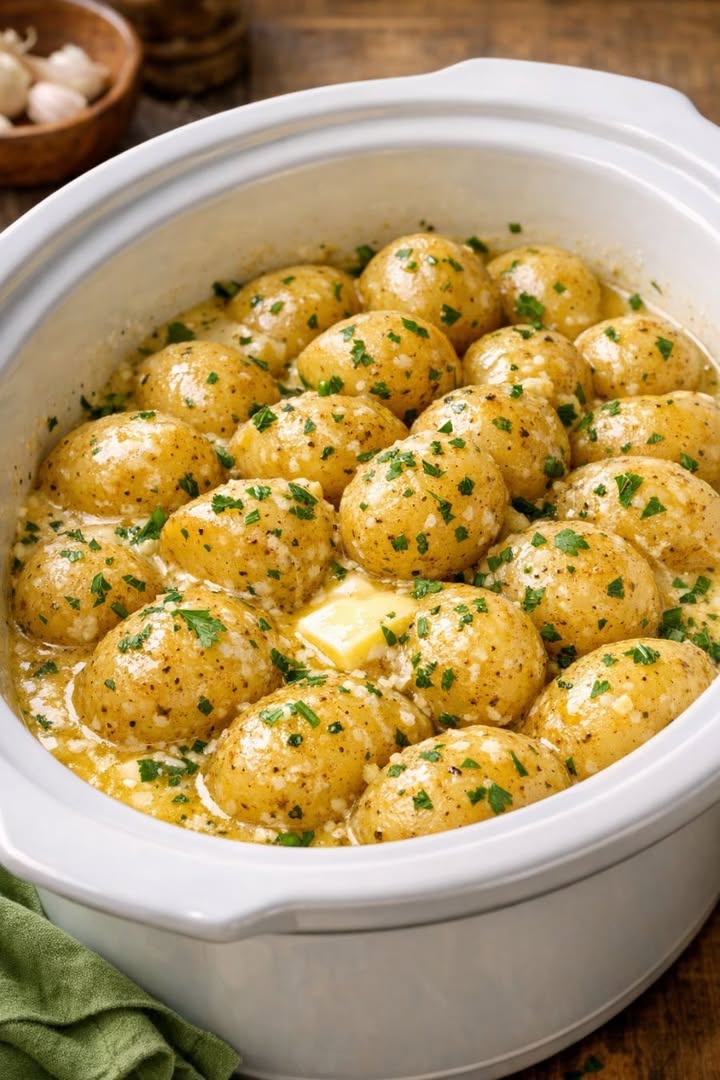
Slow Cooker Irish Colcannon
Colcannon is one of the oldest and most beloved dishes in the Irish kitchen — mashed potatoes enriched with butter and cream, folded through with cooked cabbage or kale until the two vegetables become a unified, comforting whole. It’s the kind of dish that has fed Irish families through long winters and celebratory tables alike, appearing on St. Patrick’s Day tables with the same regularity it appears on ordinary Tuesday evenings in households where it’s part of the regular rotation. There’s nothing fussy about it, nothing elaborate, and nothing in it that needs explanation — it’s simply very good mashed potatoes made better by the addition of softened cabbage and a truly generous amount of butter.Cuisines
This slow cooker version captures everything that makes colcannon worth making while removing the two active steps that usually require attention: boiling the potatoes and cooking the cabbage separately. Both go into the slow cooker raw with the cream, butter, and seasoning, and after three to four hours on HIGH, the potatoes are completely tender and ready to mash directly in the insert, with the cabbage soft and integrated throughout. The result is proper colcannon — creamy, buttery, hearty, and unmistakably Irish — from a single pot with almost no active involvement.
The History and Character of Colcannon
Colcannon has appeared in Irish cookery since at least the 18th century, and its name derives from the Irish “cál ceannann,” meaning white-headed cabbage — a reference to the vegetable that gives the dish its distinctive character alongside the potato. Historically it was peasant food in the truest sense: both potatoes and cabbage were inexpensive, widely available, and calorie-dense enough to sustain families through physical labor and harsh winters. The butter and cream that make the modern version so rich were originally luxuries added in larger quantities only for celebrations; everyday colcannon in lean times might have been considerably more modest.Slow Cookers
Today the dish is made with either cabbage or kale, though the cabbage version is more common and more widely recognized as the traditional form. The defining qualities of a good colcannon are the same whether the recipe comes from a traditional Irish kitchen or a modern slow cooker: potatoes that are fully tender and mashed to a creamy consistency, cabbage that has softened completely and lost any raw sharpness, and enough butter that a small pool of it sits on top of each serving when it reaches the table — a tradition that, far from being excess, is considered a mark of proper colcannon hospitality.
Why You’ll Love This Recipe
The slow cooker advantage here is primarily one of convenience and timing. For St. Patrick’s Day or any occasion where colcannon is serving as a side dish alongside corned beef, roasted meat, or braised pork, freeing up the stovetop by putting the potatoes in the slow cooker is genuinely valuable. The potatoes cook completely unattended over three to four hours on HIGH, stay warm on the WARM setting for up to two hours after mashing without any degradation in quality, and can be mashed directly in the insert without transferring to another vessel. The slow cooker becomes both the cooking vessel and the serving vessel, which reduces cleanup and keeps the colcannon at serving temperature throughout a meal.Fruits & Vegetables
The flavor of slow-cooker colcannon is also notably good in its own right. The potatoes cook in the cream and butter from the beginning rather than being boiled in water and enriched afterward, which means they absorb the dairy fat throughout the cooking time rather than just at the final mashing stage. The resulting texture is creamier and more uniformly rich than stovetop colcannon made with the traditional boil-then-mash method, and the cabbage has six or seven hours on LOW (or three to four on HIGH) to soften completely and mellow its flavor before being folded into the mash.
Ingredient Notes
Yukon Gold potatoes — three pounds, peeled and cut into one-inch cubes — are the definitive choice for this recipe. Yukon Golds have a naturally buttery, slightly sweet flavor and a waxy-to-medium starch content that produces a creamy, smooth mash without the gluey, sticky texture that high-starch russets can develop when overworked. Their yellow flesh produces a golden, visually appealing finished colcannon that looks as good as it tastes. They cook to complete tenderness in the slow cooker in three to four hours on HIGH and mash easily directly in the insert with a potato masher. Russet potatoes are an acceptable alternative — fluffier and starchier, they produce a slightly lighter mash but require gentler handling to avoid becoming gluey — work quickly and don’t over-mash. Red potatoes can be used for a chunkier, more textured result where the potato skins are left on; the flavour is good but the character of the finished dish is noticeably different from the smooth, creamy traditional colcannon. Peeling is recommended regardless of potato variety for this recipe — the skin doesn’t soften to a pleasant texture in the slow cooker’s moist heat and will produce an uneven, sometimes tough texture in the mash.Butter
Green cabbage — three cups, thinly sliced, approximately half a small head — provides the characteristic flavor and texture that distinguishes colcannon from plain mashed potatoes. Slicing it as thinly as possible — narrow, pencil-width ribbons — ensures it softens completely during the cooking time and integrates smoothly into the mash rather than producing tough, chewy pieces in the finished dish. Three cups is enough to give every serving a clear presence of cabbage without the potatoes being overwhelmed by it. For a more kale-forward colcannon (common in some regional Irish traditions), substitute curly kale, well-washed and stems removed, sliced into thin ribbons — kale takes longer to soften than cabbage and produces a slightly more bitter, more assertive green flavor that’s very good with the butter and cream.
Discover more
Cheese
Meat & Seafood
Crock Pot
Heavy cream — one cup — is what makes colcannon genuinely rich and restaurant-quality rather than merely adequate. Heavy cream has a fat content high enough to remain stable in the slow cooker without curdling and to produce a velvety, coating quality in the mashed potatoes that lower-fat options can’t replicate. It’s warmed with the butter before being poured over the vegetables so it enters the slow cooker at a temperature that doesn’t dramatically slow the cooking environment at the start. Half-and-half can be substituted for a lighter version — the potatoes will be less luxuriantly creamy but still very good. Whole milk produces an even lighter result; if using whole milk, increase the butter slightly to compensate for the reduced fat content.Dairy & Eggs
Unsalted butter — eight tablespoons (half a cup), plus two to three additional tablespoons melted for serving — is the ingredient that makes colcannon colcannon. The half cup that cooks with the potatoes enriches the entire dish from within and produces the characteristic buttery quality in every bite. The additional tablespoons drizzled over the top at serving time is the traditional finishing touch — a small pool of golden melted butter on top of each serving is a mark of authentic colcannon, not a modern embellishment. Unsalted butter is recommended because it gives you full control over the final salt level, which matters in a dish with this much dairy fat. The quality of the butter is perceptible in the finished colcannon — a good-quality European-style butter with higher fat content than standard American butter produces a noticeably superior result.Cuisines
Ingredients
3 lbs Yukon Gold potatoes, peeled and cut into 1-inch cubes
3 cups thinly sliced green cabbage (about ½ small head)
1 cup heavy cream (or half-and-half for a lighter version)
8 tbsp (½ cup) unsalted butter, cut into pieces
1½ tsp kosher salt, plus more to taste
½ tsp freshly ground black pepper
2 to 3 tbsp unsalted butter, melted, for serving
2 tbsp chopped fresh parsley or chives, for garnish (optional)
Step-by-Step Instructions
NEXT PAGE
ADVERTISEMENT
