
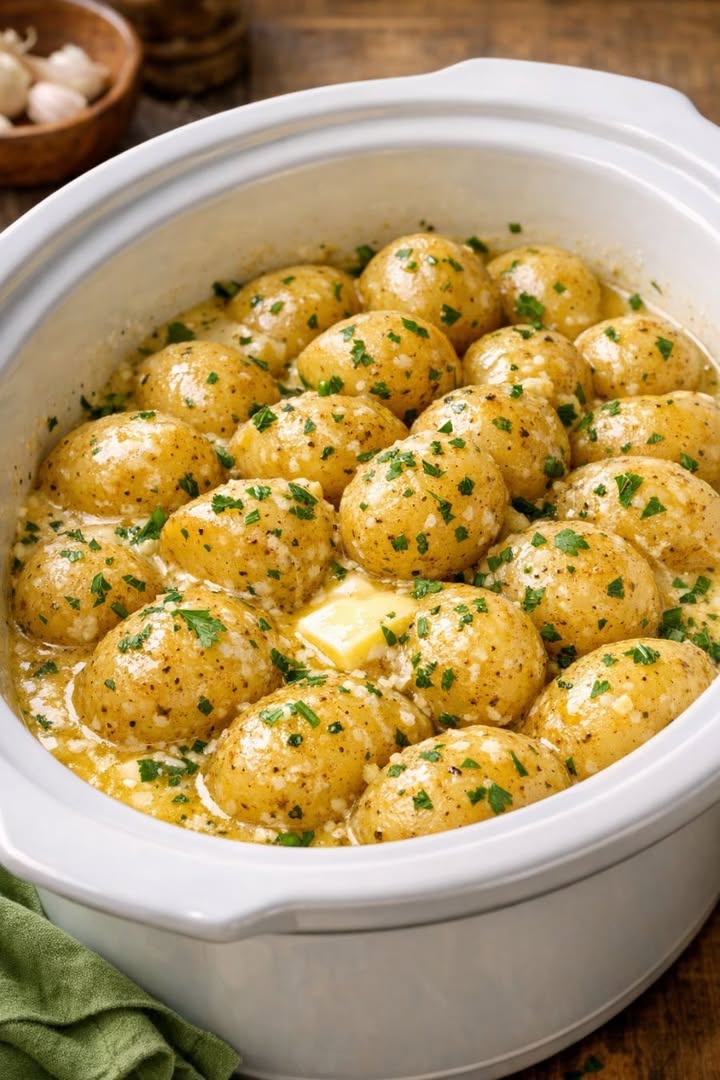
Step 1 — Prepare the Slow Cooker
Lightly grease the interior of a 4- to 6-quart slow cooker with a small amount of butter or nonstick spray. This prevents the potatoes from sticking to the insert, particularly at the bottom and sides where they’re in closest contact with the heat source, and makes cleanup easier after serving.Cuisines
Step 2 — Add the Vegetables
Place the peeled, cubed Yukon Gold potatoes in the slow cooker insert and spread them as evenly as possible across the bottom. Scatter the thinly sliced cabbage over and between the potato cubes, distributing it throughout the insert rather than leaving it all on top — the cabbage mixed through the potatoes will cook more evenly and integrate more seamlessly into the finished mash than cabbage sitting only on the surface.
Step 3 — Make the Cream and Butter Mixture
In a small saucepan over low heat or in a microwave-safe measuring cup, combine the heavy cream, the eight tablespoons of butter cut into pieces, the salt, and the black pepper. Heat gently just until the butter is fully melted and the mixture is warm — it should be steaming but not boiling. Warming this mixture before adding it to the slow cooker prevents the cold cream from dramatically lowering the temperature in the insert at the start of the cook, which would extend the cooking time. Give it a brief stir to combine.Slow Cookers
Step 4 — Add the Cream Mixture and Cook
Pour the warm cream and butter mixture evenly over the potatoes and cabbage in the slow cooker. Give everything a brief, gentle stir to coat the vegetables lightly and distribute the cream throughout the insert rather than having it pool in one area. Cover and cook on HIGH for 3 to 4 hours or on LOW for 6 to 7 hours, until the potato cubes are completely tender and break apart easily when pressed with the back of a spoon. The potatoes should offer no resistance at all at the thickest part of each cube.
Step 5 — Mash
Once the potatoes are fully tender, switch the slow cooker to WARM or turn it off. Use a potato masher to mash the potatoes and cabbage together directly in the insert, working in a circular and folding motion to incorporate the cabbage evenly throughout the mash. Mash to your preferred consistency — smooth and creamy for a more refined presentation, or slightly rustic with small chunks remaining for a more old-fashioned, textured colcannon. Avoid using an electric mixer or immersion blender to mash the potatoes; over-processing Yukon Golds releases excess starch and produces a dense, gluey texture that no amount of butter can fix.Dairy & Eggs
Step 6 — Adjust Consistency and Seasoning
Taste the colcannon and adjust the seasoning with additional salt and pepper as needed — it likely needs more salt than you’d expect given the large volume of potatoes. If the consistency seems stiffer or drier than you’d like, stir in warm cream a tablespoon at a time until the texture is creamy and just slightly loose — the colcannon will firm up slightly as it sits, so aim for a consistency just a touch looser than the final desired texture.
Step 7 — Garnish and Serve
Just before serving, drizzle the two to three tablespoons of melted butter over the surface of the colcannon in the insert, letting it pool attractively in the center in the traditional Irish serving style. Scatter the chopped fresh parsley or chives over the top. Serve directly from the slow cooker on the WARM setting, spooning portions into individual bowls or onto plates and making sure each serving gets some of the pooled butter from the top.Fruits & Vegetables
Tips for the Best Results
Warm the cream and butter before adding. Cold cream poured directly onto raw potatoes in the slow cooker dramatically lowers the starting temperature and adds noticeably to the cooking time. The brief warming step takes two minutes and makes a meaningful practical difference.
Slice the cabbage very thin. Thick pieces of cabbage in mashed potatoes are unpleasant — they don’t mash as smoothly as the potato and create an inconsistent, slightly chewy texture in the finished dish. Thin ribbons, roughly a quarter inch wide, integrate almost seamlessly into the mash after the long cook.
Discover more
buttery
Buttery
Salad
Don’t over-mash. Yukon Gold potatoes produce an excellent creamy mash with a hand masher, but they can become dense and gluey if overworked — particularly with any electric mixing tool. Mash until smooth and the cabbage is fully incorporated, then stop. The finished texture should be creamy and yielding, not stiff or stretchy.Slow Cookers
Season generously. Three pounds of potatoes absorb a significant amount of salt. The 1½ teaspoons of kosher salt in the cream and butter mixture provides a starting seasoning, but tasting after mashing and adjusting is essential — most people find the colcannon needs more salt at this final stage than expected to taste properly seasoned.
Keep warm for up to two hours. One of the slow cooker’s most practical advantages for holiday and event cooking is that the WARM setting keeps mashed potatoes at perfect serving temperature for up to two hours without any quality degradation, provided you stir once or twice and add a splash of warm cream if the surface seems to be drying. This flexibility is invaluable when managing the timing of a larger meal.
Frequently Asked Questions
What’s the difference between colcannon and champ?
Both are classic Irish potato dishes made with mashed potatoes, butter, and cream. The difference is the green component: colcannon uses cabbage or kale, while champ uses spring onions (scallions), which are stirred in raw after mashing to preserve their fresh, mild bite. Both are traditionally served with a well of melted butter in the center. Colcannon has a heartier, more substantial quality from the cooked cabbage; champ is lighter and more delicate. Both are worth knowing.Dairy & Eggs
Can I use kale instead of cabbage?
Yes — kale is the traditional alternative to cabbage in Irish colcannon, particularly associated with Halloween (Samhain) traditions in Ireland. Use curly kale with the tough central stems removed, sliced into thin ribbons. Kale is tougher than cabbage and takes longer to soften; the slow cooker’s long cook handles this effectively on LOW for 7 to 8 hours or HIGH for 4 to 5 hours. The finished colcannon will have a slightly more assertive, earthy flavor from the kale’s stronger bitter notes — very good, though different in character from the cabbage version.
Can I make this dairy-free?
Yes. Replace the heavy cream with full-fat coconut cream (which produces a rich, slightly sweet result) or unsweetened oat milk (lighter and more neutral). Replace the butter with a good-quality plant-based butter — the quality of the butter substitute is particularly important in colcannon since butter is central to the dish’s character. The finished dish will be noticeably different from the dairy version but can be very satisfying.Cuisines
Can I add other vegetables or mix-ins?
Yes. Sliced scallions (green onions) added in the final 30 minutes of the cook or stirred in after mashing are the most traditional addition — they add a fresh, mild onion flavor that’s classic in Irish potato cooking. Leeks, very thinly sliced and added with the cabbage, add a sweeter, more complex onion depth. Crispy bacon bits stirred in at serving time are popular in many households and add a salty, smoky contrast to the richness of the dairy. Grated sharp cheddar folded into the mash at the end is a non-traditional but deeply satisfying variation.
How do I reheat leftover colcannon?
Reheat gently in a covered saucepan over low heat with two to three tablespoons of cream or whole milk stirred in and warmed through, stirring frequently to prevent sticking. The added liquid compensates for the moisture the potatoes continue to absorb during refrigeration and restores the original creamy consistency. Alternatively, reheat individual portions in the microwave covered with a damp paper towel, stirring once halfway through. Avoid reheating at high heat, which can cause the potatoes to dry out and the butter to separate from the mash.Fruits & Vegetables
Variations Worth Trying
Scallion and cabbage colcannon: Add six thinly sliced scallions to the slow cooker in the final 30 minutes of cooking, or stir them in directly after mashing. The scallions remain slightly crisp and add a fresh, mild bite that contrasts pleasantly with the rich, creamy mash — the closest thing to traditional Irish colcannon that includes both the cooked cabbage and the raw green onion elements.
Kale colcannon: Replace the green cabbage with two cups of finely sliced curly kale (stems removed). Extend the cooking time by 30 to 45 minutes to ensure the kale is fully softened before mashing. The finished colcannon has a deeper, more assertive green flavor and a slightly more rustic, slightly darker color than the cabbage version — a traditional harvest-season colcannon that’s particularly good alongside roasted meats.
Discover more
Salads
Sausages
GARLIC
Leek and bacon colcannon: Substitute one cup of thinly sliced leek (white and pale green parts only) for one cup of the cabbage, and stir three strips of cooked, crumbled bacon into the finished colcannon just before serving. The leeks add a sweet, mild onion depth and the bacon adds a salty, smoky element that makes this variation particularly popular with people who love the combination of potato and pork.Slow Cookers
Buttermilk colcannon: Replace a quarter cup of the heavy cream with an equal amount of buttermilk, stirred in after the potatoes are mashed and the heat is turned to WARM. The buttermilk adds a subtle tang that cuts through the richness of the butter and cream and gives the finished colcannon a slightly more complex, old-fashioned flavor. Do not add the buttermilk while the heat is still on HIGH, as it may curdle; always stir it in off the heat or on WARM.
Garlic butter colcannon: Add two or three peeled garlic cloves to the slow cooker with the potatoes and cabbage at the beginning of the cook. After long slow cooking the garlic becomes completely soft and mellow — mash it along with the potatoes for a subtle garlic butter flavor throughout the colcannon. For a more assertive garlic character, use roasted garlic (a whole head, cloves squeezed out) stirred in during the mashing stage.
Serving Suggestions
Colcannon is the quintessential Irish side dish for St. Patrick’s Day, and pairs naturally with the other dishes that appear on the holiday table. Alongside corned beef and its braising juices, a generous spoonful of colcannon is the ideal platform for the rich, spiced cooking liquid to pool over. With slow cooker bacon and cabbage, the colcannon completes the traditional Irish plate — meat, greens, and buttery mashed potato together. Roasted or braised lamb is another classic Irish pairing. Beyond St. Patrick’s Day, colcannon works as a side dish for virtually any roasted or braised meat — roast chicken, pork chops, grilled sausages. For a simple vegetarian meal, a deep bowl of colcannon with extra melted butter and a scattering of sharp cheddar is entirely satisfying on its own. A pint of Guinness or a glass of cold apple cider alongside is the drink pairing most in keeping with the dish’s Irish origins.Dairy & Eggs
Storage
Leftover colcannon keeps in an airtight container in the refrigerator for up to 4 days. The potatoes will absorb some of the cream during storage and become somewhat stiffer when cold. Reheat gently with a splash of warm cream or whole milk stirred in to restore the original consistency. Leftover colcannon also makes excellent potato cakes — shaped into patties, pan-fried in butter until golden and crispy on both sides, and served alongside fried eggs for a traditional Irish breakfast dish called “colcannon cakes” or “potato farls.”
Creamy, Buttery, and Completely Worth Making
Slow Cooker Irish Colcannon is one of the most satisfying side dishes in the holiday repertoire — and equally satisfying the rest of the year whenever the occasion calls for something comforting and deeply good. The slow cooker frees up the stovetop, keeps the colcannon warm through a long meal, and produces potatoes that are creamier and more buttery-tasting than the stovetop version precisely because they cook in the dairy from the start rather than being boiled in water. Make a generous pot, drizzle plenty of melted butter over the top, scatter on the herbs, and bring it to the table warm. That’s all it needs to be exactly what colcannon has always been.Cuisines
Enjoy!
ADVERTISEMENT
