
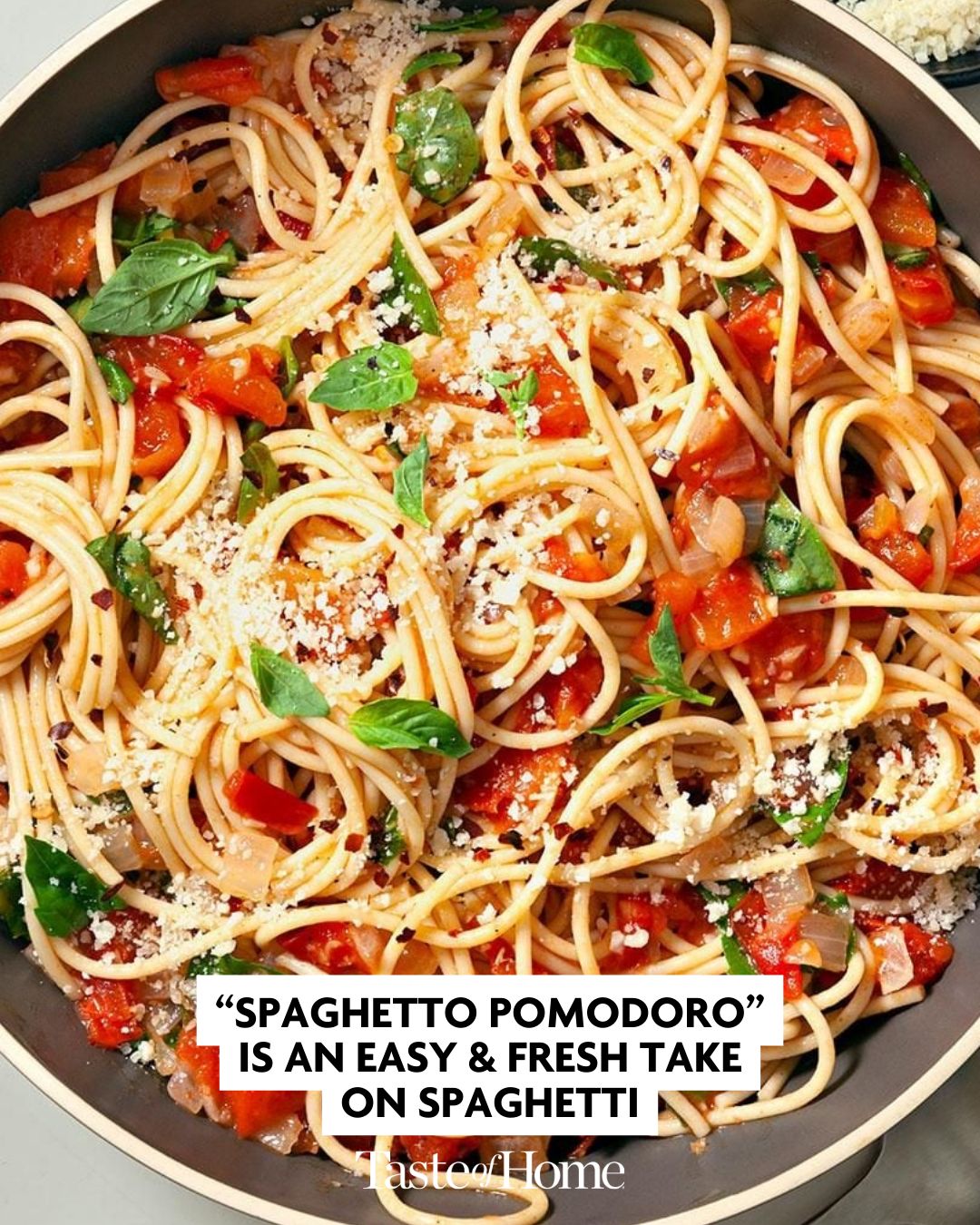
This spaghetti pomodoro recipe proves that simple doesn’t mean basic! The classic Italian pasta dish transforms a handful of ingredients into a robust, full-flavored tomato sauce scented with fresh basil and finished with a dusting of Parmesan cheese.
Some classic Italian pasta sauces require hours and hours of simmering to bring the flavors together. Spaghetti pomodoro isn’t one of those sauces. The simple, fresh pasta sauce can be made in the time it takes to boil the pasta, making this super quick pasta dinner ideal for busy weeknight dinners or last-minute dinner plans. The delicate tomato sauce has a bright, sweet flavor from the tomatoes and gains depth and complexity from the fresh basil and grated Parmesan cheese. Our spaghetti pomodoro recipe tastes as good as anything you’d get from a restaurant in Italy!
What is spaghetti pomodoro?
Pomodoro means “tomato” in Italian, so spaghetti pomodoro is a pasta dish made with a light yet flavorful tomato sauce. It’s sometimes called spaghetti alla Napoletana or pasta al pomodoro. The classic Italian recipe typically contains little more than tomatoes, olive oil, fresh herbs and garlic, although our pomodoro spaghetti recipe also includes onions and a pinch of crushed red pepper flakes to add a hint of heat.
Unlike other popular tomato-based pasta sauces that are richly flavored and loaded with slowly cooked sausage or meatballs (e.g., classic Sunday gravy), pomodoro sauce typically contains no meat. Like marinara, it’s about letting the flavor of the tomatoes shine. However, pomodoro sauce is thicker and chunkier than marinara and cooks for only 20 minutes.
Spaghetti Pomodoro Ingredients
Spaghetti: Any long pasta shape works with pomodoro sauce. Round spaghetti is perfect for delicate tomato sauces like pomodoro, but feel free to swap in bucatini, linguine or fettuccine.
Olive oil: This is a good time to reach for a high-quality olive oil. The best olive oil brands add vibrant flavor to this simple tomato sauce.
Onion and garlic: Cooking the onion and garlic in olive oil softens their punchy bite and gives the sauce a slightly sweet, slightly peppery quality.
Plum tomatoes: In the summer, I recommend using fresh tomatoes when they’re plump, sweet and juicy. Cut the tomatoes in half, remove the seeds and chop them into bite-sized pieces. In the winter, a 28-ounce can of whole peeled tomatoes is a good alternative.
Fresh basil: Sweet basil is the most common type of basil used in Italian cuisine. The delicate herb perfumes the sauce with a freshness that won’t be obtained with dried basil, so it’s worth making a trip to the store if you don’t have any fresh basil on hand.
Seasonings: Pomodoro sauce gets most of its flavor from tomatoes and basil, so we keep the seasonings simple with salt, pepper and crushed red pepper flakes. You can adjust the amount of pepper flakes depending on your spice preference.
Parmesan cheese: Dusting the finished pomodoro spaghetti recipe with grated cheese gives it a salty, savory, slightly nutty finish. I think it’s worth it to use Parmigiano Reggiano vs. Parmesan, but either one works.
Directions
Step 1: Cook the pasta
Cook the spaghetti according to the package directions.
Step 2: Saute the onions
While the pasta is cooking, in a large skillet, heat the oil over medium heat. Add the onion, and cook and stir until tender, four to five minutes. Add the garlic and pepper flakes, and cook for one minute longer. Drain the spaghetti, reserving 1/2 cup pasta water. Set the spaghetti aside and keep warm.
Editor’s Tip: This sauce is definitely better if you save your pasta water. The starchy water is pure gold for fresh pasta sauces because it thickens the sauce and helps the sauce cling to the cooked pasta once tossed together.
NEXT PAGE
ADVERTISEMENT
