
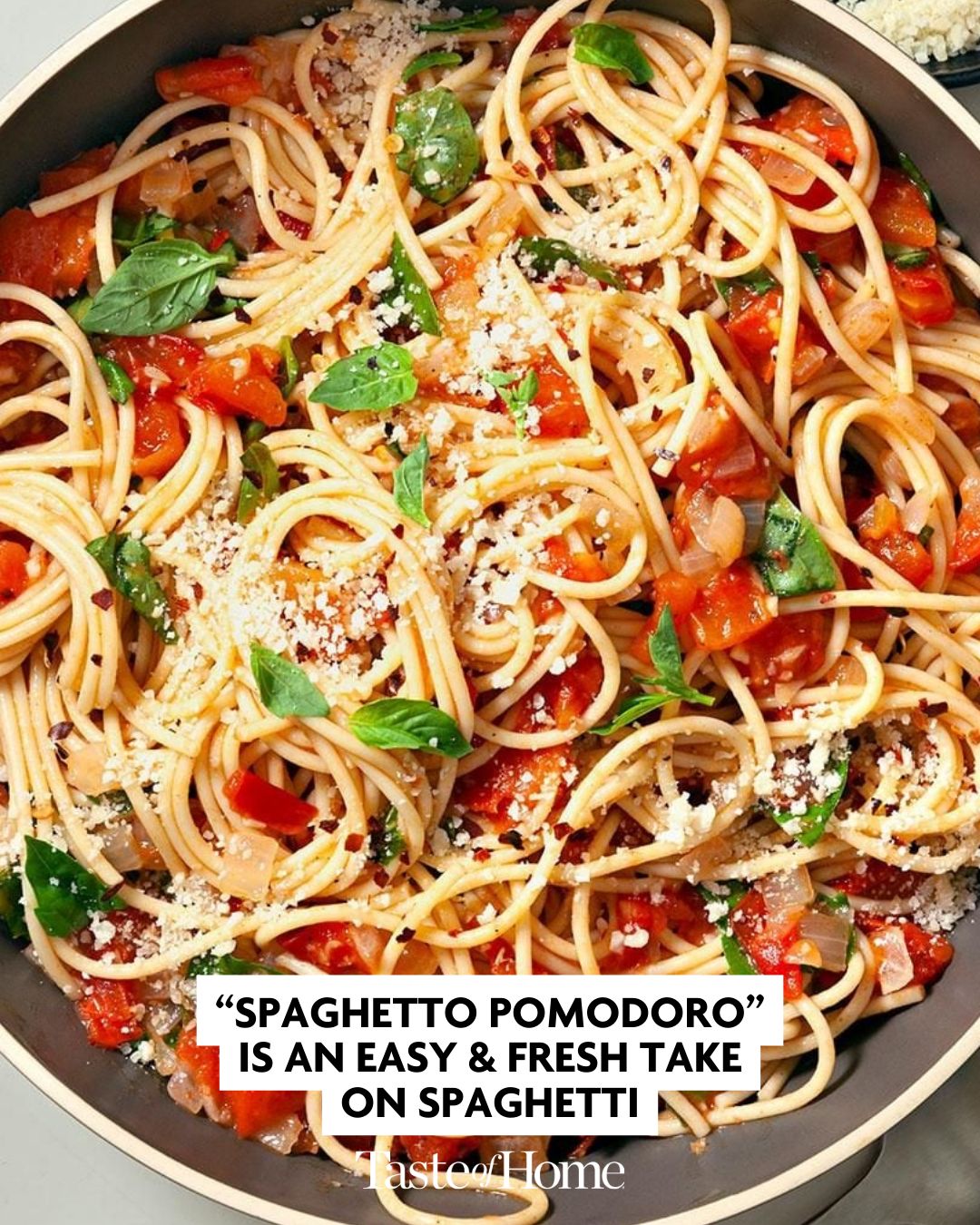
Step 3: Simmer the pomodoro sauce
Add the tomatoes and reserved pasta water to the skillet. Bring the mixture to a boil, then reduce the heat. Simmer, uncovered, until the sauce begins to thicken, six to eight minutes, stirring occasionally.
Editor’s Tip: If using canned tomatoes, squish the whole tomatoes in your hands before adding them to the skillet. Or, if you don’t want to get your hands dirty, break up the tomatoes with a potato masher or wooden spoon.
Step 4: Combine the spaghetti and sauce
Add spaghetti to the skillet and toss to coat.
Remove the skillet from the heat and stir in the basil, salt and pepper. Serve with Parmesan cheese and, if desired, additional fresh basil and crushed red pepper flakes.
Editor’s Tip: Basil is a delicate herb, so we add it after removing the pasta from the stovetop. Its flavor can be easily diminished if cooked for too long or exposed to extreme heat.
Recipe Variations
Finish it with butter: Swirl a pat of butter into the sauce at the end to infuse it with richness and create an attractive glossy sheen.
Use the sauce for other pasta dishes: Use pomodoro sauce to make a brighter, fresher-tasting lasagna or Italian pasta bake.
How to Store Spaghetti Pomodoro
Store the cooked pasta and sauce in separate airtight containers in the fridge. If stored together, the pasta will absorb moisture from the sauce, leading to soggy noodles and a too-thick sauce. The leftovers are good for up to four days.
Can you freeze spaghetti pomodoro?
If you intend to have leftovers, we suggest freezing only the sauce. While you could also freeze cooked spaghetti noodles separately, the simple ingredients of pomodoro sauce taste best when tossed with freshly cooked pasta. To freeze the sauce, store it in an airtight container for up to three months. Defrost in the fridge overnight before reheating.
How do you reheat spaghetti pomodoro?
To reheat pasta pomodoro, combine the pasta and sauce in a skillet over medium heat and cook until heated through. You can also microwave the leftover pomodoro spaghetti recipe until steaming in a covered container.
Spaghetti Pomodoro Tips
Can you use canned tomatoes for the spaghetti pomodoro recipe?
We actually recommend using canned tomatoes for spaghetti pomodoro when fresh tomatoes aren’t in season. A 28-ounce can of whole peeled tomatoes is a good substitute for the six plum tomatoes called for in the recipe. Look for canned tomatoes with minimal ingredients and avoid additions like diced peppers or herbs. The best San Marzano tomatoes are imported from Italy, and they’re definitely worth the splurge when making Italian classics like pomodoro sauce.
What is the best type of pasta for pasta pomodoro?
Spaghetti is a classic choice for pasta pomodoro because the delicate sauce clings to the long, round noodles as they’re twirled around a fork. Other long noodles like fettuccine or linguine work equally well, as do large pasta shapes with ridges like penne. Small pasta shapes like elbow macaroni can be hard to eat with pomodoro sauce, so save those shapes for soup or pasta dishes with a creamy sauce.
Ingredients
8 ounces uncooked spaghetti
2 tablespoons olive oil
1 small onion, chopped
2 cloves garlic, minced
1/4 to 1/2 teaspoon crushed red pepper flakes
6 plum tomatoes, seeded and chopped (about 4-1/2 cups)
15 fresh basil leaves, torn
1 teaspoon salt
1/4 teaspoon pepper
1/4 cup grated Parmesan cheese
Directions
1
Cook spaghetti according to package directions.
2
Meanwhile, in a large skillet, heat oil over medium heat. Add onion; cook and stir until tender, 4-5 minutes. Add garlic and pepper flakes; cook 1 minute longer. Drain spaghetti, reserving 1/2 cup pasta water; set spaghetti aside and keep warm.
3
Add tomatoes and reserved pasta water to skillet; bring to a boil. Reduce heat; simmer, uncovered, until sauce begins to thicken, 6-8 minutes, stirring occasionally. Add spaghetti and toss to coat. Remove from heat; stir in basil, salt and pepper. Serve with Parmesan cheese and, if desired, top with additional fresh basil and crushed red pepper flakes.
Nutrition Facts
About 1-1/2 cups: 288 calories, 6g fat (1g saturated fat), 4mg cholesterol, 394mg sodium, 49g carbohydrate (5g sugars, 3g fiber), 10g protein.
ADVERTISEMENT
