
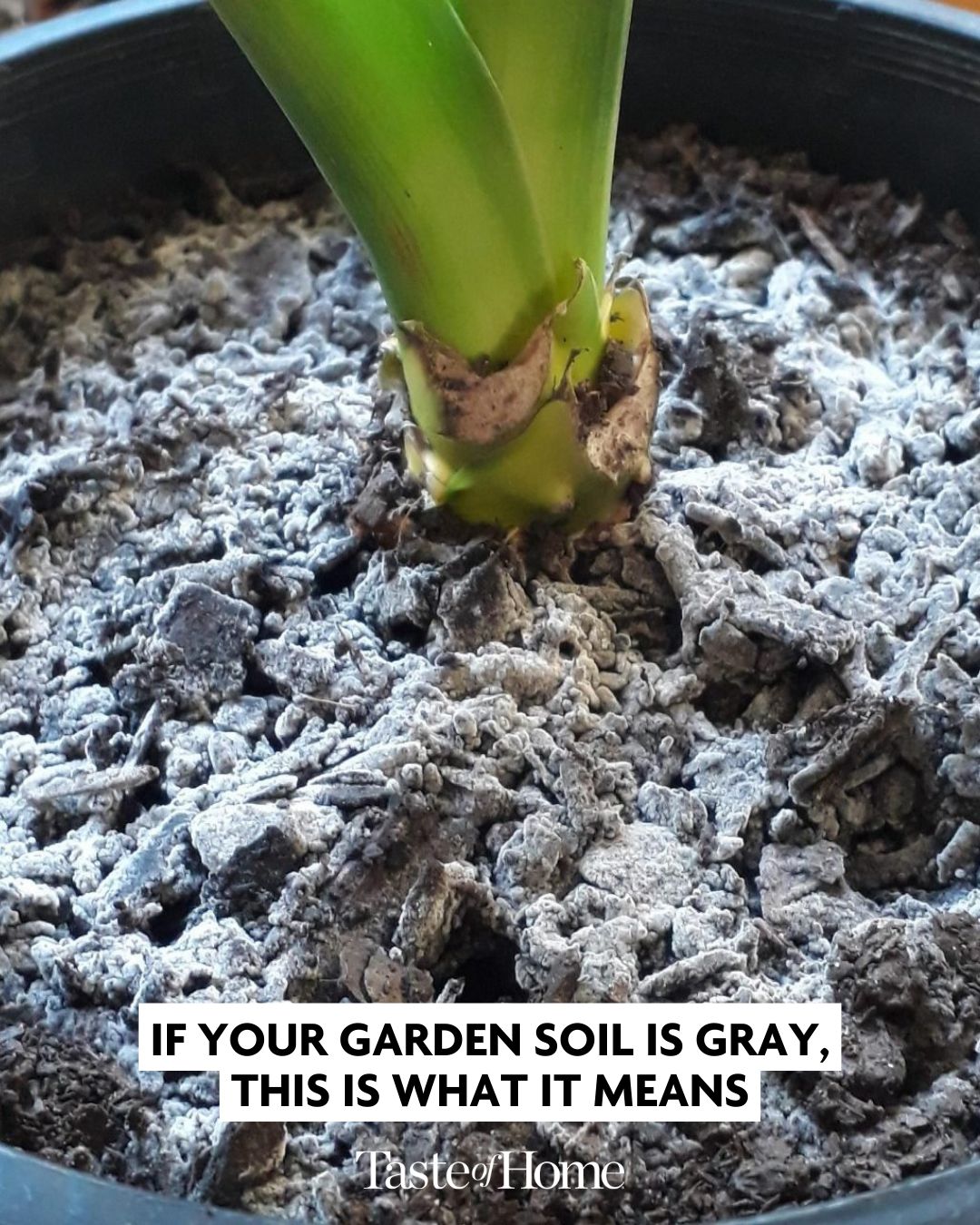
For healthy plants, keep an eye on the soil color.
If you’re ready to get your hands dirty in the garden, now’s the time to catch up on your soil knowledge. For those of us with black or brown soil, soil in shades of red or gray will be an oddity. But before you load up on the fertilizer, know that “colorful” soil isn’t necessarily a cause for concern.
While some soil colors do indicate a lack of essential minerals and nutrients, other hues mean the soil you’re working with is plenty nutritious. Here’s what you need to know.
Learn how to amend soil with perlite.
What Does Gray Soil Mean?
You might already know that soil that’s rich in nutrients and organic matter tends to be dark brown, possibly even black in color. But when soil verges on the edge of looking gray, it indicates a lack of iron, and this means trouble.
Plants need iron to survive—not huge amounts of it, but some supply is crucial. Therefore, ample iron content in your soil is a must. A grayish color might indicate that your soil is waterlogged, says Homestead on the Range. Even the novice gardener knows this isn’t ideal. Soil that doesn’t drain well and holds too much water won’t have room for iron. The gray soil can also indicate the presence of anaerobic bacteria, which thrive in areas with dead roots and high concentrations of organic matter, says the USDA.
NEXT PAGE
ADVERTISEMENT
