
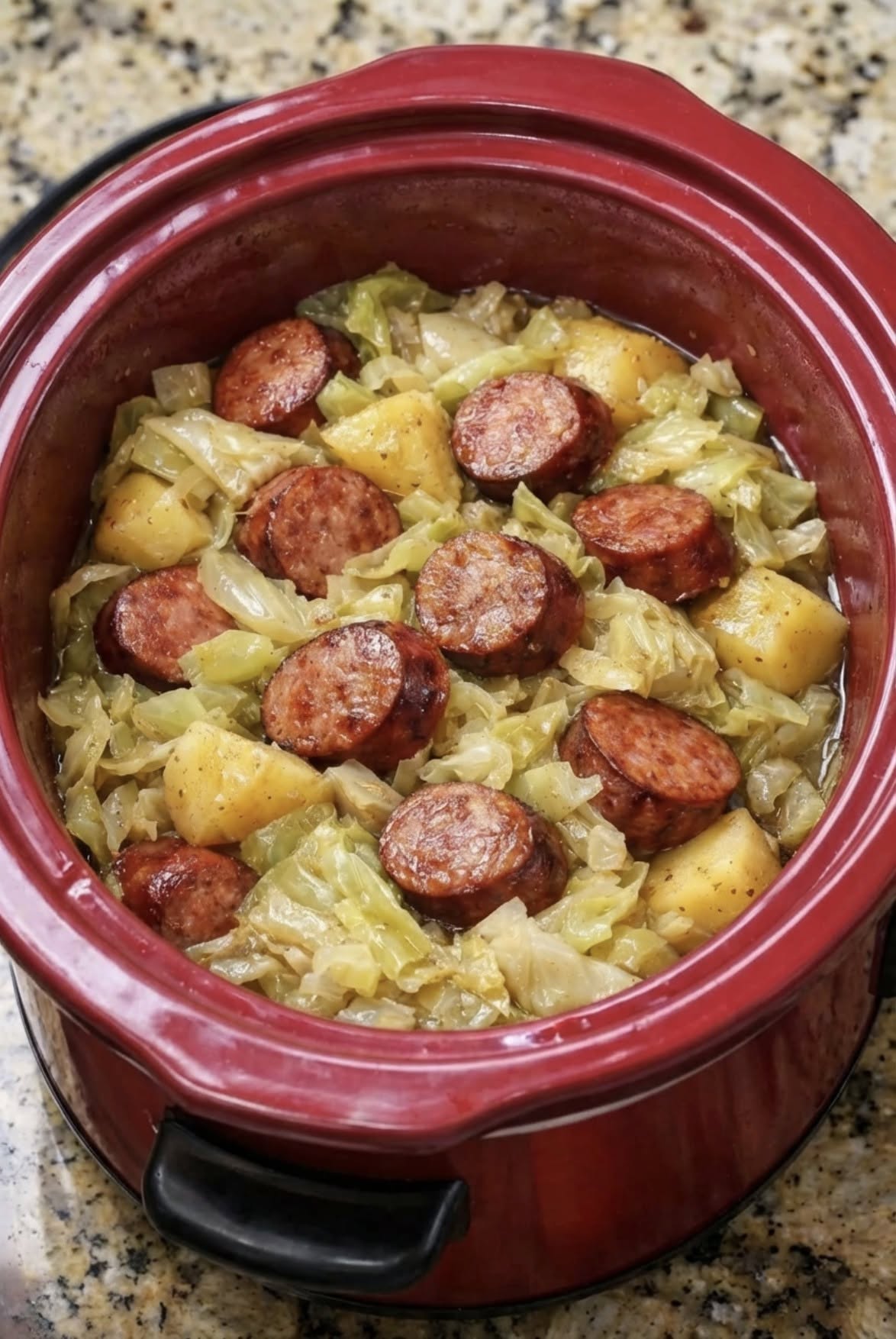
Step-by-Step Instructions
Step 1 — Brown the Sausage (Optional but Recommended)
Heat the olive oil in a skillet over medium-high heat. Add the sausage slices in a single layer and cook for 3 to 4 minutes per side until lightly browned on the cut surfaces. You’re not cooking the sausage through — it’s already cooked — you’re developing color and a slightly caramelized exterior that adds flavor to the finished dish. Transfer the browned sausage to the slow cooker insert. If you’re short on time, you can skip this step and add the sausage directly to the slow cooker; the result will still be delicious, just slightly less complex in flavor.Fruits & Vegetables
Step 2 — Layer the Vegetables
Place the sliced onion and minced garlic at the bottom of the slow cooker. These aromatics benefit from being positioned where they’ll be fully submerged in the cooking liquid and can soften and flavor the broth throughout the cook. Add the carrot rounds in an even layer over the onion, then arrange the cabbage wedges on top. The cabbage will shrink considerably as it cooks, so don’t worry if the insert looks very full at this stage — it will settle significantly within the first hour.
Step 3 — Add the Sausage, Broth, and Seasonings
Nestle the sausage slices among and over the cabbage wedges. Sprinkle the smoked paprika, salt, and black pepper evenly over everything. Pour the chicken broth over the entire contents of the slow cooker. The broth should reach about halfway up the vegetables — the vegetables themselves will release additional liquid as they cook, so the final dish will have more liquid than it appears to start with.Meat & Seafood
Step 4 — Cook
Place the lid on the slow cooker and set it to low for 4 to 6 hours, or high for 2 to 3 hours. Low and slow is the preferred method — the extended cook time allows the flavors to develop more fully and gives the cabbage time to become properly tender without turning mushy. Resist the temptation to lift the lid during cooking; each time the lid is removed, heat escapes and adds approximately 15 to 20 minutes to the total cooking time. The dish is ready when the cabbage is completely tender and the sausage is heated through and fragrant.
Step 5 — Taste, Adjust, and Serve
Once the cooking time is complete, taste the broth and adjust the salt and pepper as needed. The seasoning level will depend on how salty your particular sausage brand is. Use a slotted spoon to transfer the cabbage, carrots, and sausage to bowls or plates. Ladle some of the flavorful cooking broth over the top — it’s too good to leave in the pot. Serve immediately.Cooking & Recipes
Tips for the Best Results
Cut the cabbage into wedges, not strips. Larger wedge pieces hold their structure through the long cooking time and produce a more satisfying bite. Shredded or finely chopped cabbage tends to become too soft and loses its identity in the pot.
Layer in the right order. Onion and garlic at the bottom, carrots above them, cabbage on top, sausage nestled in last. This arrangement ensures the aromatics are fully submerged in the broth, the carrots cook evenly surrounded by liquid, and the sausage doesn’t sit directly on the heating element where it could overcook.
Discover more
Sausages
Cook
Soup
Use low-sodium broth. Smoked sausage is already seasoned significantly. Low-sodium broth keeps the overall salt level in your control rather than producing a dish that’s harder to correct after the fact.Slow Cookers
Cook on low when possible. The difference between low and high isn’t just time — the slower, gentler heat of the low setting produces more tender cabbage with better texture and more developed flavor in the broth. High heat gets it done faster but the result is subtly less nuanced.
Don’t skip the broth drizzle when serving. The liquid left in the slow cooker at the end of cooking is intensely flavored from hours of absorbing sausage smokiness, vegetable sweetness, and spice. Spooning it over the dish before serving makes a significant difference to how the finished plate tastes.Fruits & Vegetables
Frequently Asked Questions
Can I use pre-cooked sausage without browning it?
Yes, absolutely. Browning adds flavor but isn’t required. If you’re adding pre-cooked sausage straight from the package, the dish will still be very flavorful — the long slow cook will infuse the broth and vegetables with the sausage’s smokiness regardless. If using raw sausage, browning first is more important both for food safety reasons and for texture.
How do I keep the cabbage from turning mushy?
Two things help: cut the cabbage into large wedges rather than small pieces, and cook on the low setting rather than high. Larger pieces take longer to soften and are more forgiving of the extended cooking time. Cooking on low also maintains a gentler temperature that breaks down the cabbage more gradually.Soups & Stews
Can I make this vegetarian?
Yes. Substitute plant-based smoked sausage, smoked tofu, or thick-cut tempeh for the meat, and use vegetable broth in place of chicken broth. Add a teaspoon of liquid smoke if you want to maintain the smoky depth that smoked sausage contributes, since vegetarian alternatives vary widely in how much smokiness they carry.
Can I prep this the night before?
You can chop all the vegetables and slice the sausage the evening before and store everything separately in the refrigerator. In the morning, just layer everything into the slow cooker, add the broth and seasonings, and switch it on. This makes the morning prep take under 5 minutes.Meat & Seafood
Is this recipe keto-friendly?
Yes — smoked sausage and cabbage are both naturally very low in carbohydrates, and the broth and seasonings add essentially no carbs. Just check your sausage label, as some brands add fillers or sugar that raise the carb count slightly. Most traditional smoked sausages and kielbasa are keto-compatible.
Can I double the recipe?
Yes, as long as you have a large enough slow cooker — a 7-quart or larger model is needed to comfortably double this recipe. Extend the cooking time by 30 to 45 minutes and check for doneness before serving.
Variations Worth Trying
Beer-braised version: Replace one cup of the chicken broth with a bottle of beer — a lager or amber ale works particularly well. The beer adds a subtle malty depth and slight bitterness that plays very nicely against the sweetness of the cabbage and carrots. This variation is especially good with kielbasa.Cooking & Recipes
Apple and cabbage: Add one or two tart apples, peeled, cored, and cut into wedges, alongside the cabbage. The apple softens during cooking and contributes a natural sweetness and light fruity note that’s particularly appealing in autumn. This combination is classic in Central European cooking and pairs especially well with smoked pork sausage.
Discover more
cooking
Sausage
garlic
Spicy chorizo version: Swap the smoked sausage for Mexican or Spanish chorizo. Mexican chorizo is raw and highly seasoned — it should be browned and crumbled first before adding to the slow cooker. Spanish chorizo is cured and can be sliced and used as-is. Either version produces a significantly spicier, more boldly flavored dish.Slow Cookers
Herb-infused: Add a few sprigs of fresh thyme and a bay leaf to the pot with the broth, and stir in a tablespoon of fresh dill when serving. The herbs add a brightness and complexity that lifts the overall flavor considerably.Fruits & Vegetables
Creamy finish: Stir in a few tablespoons of heavy cream or sour cream just before serving, directly into the broth. This transforms the dish into something richer and more velvety — a particularly comforting variation on cold winter nights.
Root vegetable mix: Add cubed parsnips, turnips, or sweet potatoes alongside the carrots for a heartier, more substantial dish that eats like a full stew. Root vegetables hold up well in the slow cooker and add sweetness and body to the broth.Food
What to Serve Alongside
This dish is satisfying enough on its own, particularly when served with its flavorful broth, but a few simple accompaniments make it feel more complete. Crusty bread or soft dinner rolls are the natural choice — something to soak up the broth at the bottom of the bowl. Mashed potatoes alongside turn it into a genuinely substantial dinner. Creamy polenta or buttered egg noodles both work well as starchy bases to serve the sausage and cabbage over rather than alongside. For something lighter, a simple green salad with a sharp vinaigrette balances the richness of the sausage nicely. On a holiday table, this dish fits well alongside roasted root vegetables or glazed carrots as a hearty centerpiece option that requires minimal day-of effort.
Storage
Leftovers keep very well. Transfer to an airtight container and refrigerate for up to 4 days — the flavors continue to develop overnight and many people find the dish tastes even better the next day. Reheat gently on the stovetop over low heat, adding a small splash of broth if the liquid has been absorbed. The microwave works for individual portions; stir halfway through reheating for even heat distribution. For longer storage, freeze in portioned containers for up to 3 months. Thaw overnight in the refrigerator before reheating. The cabbage will be slightly softer after freezing and thawing, but the flavor remains excellent.Soups & Stews
A One-Pot Meal Worth Making on Repeat
Slow Cooker Sausage and Cabbage earns its place as a weeknight staple because it asks very little and delivers a lot. The prep is minimal, the cooking is entirely hands-off, the cleanup is easy, and the result is deeply satisfying — the kind of warm, savory, substantial dinner that makes the end of a long day feel genuinely restorative. It’s budget-friendly, it feeds a crowd, it stores and reheats beautifully, and it works just as well for a casual family dinner as it does for a holiday gathering. Keep this one in your rotation and you’ll reach for it often.
Enjoy!
ADVERTISEMENT
