
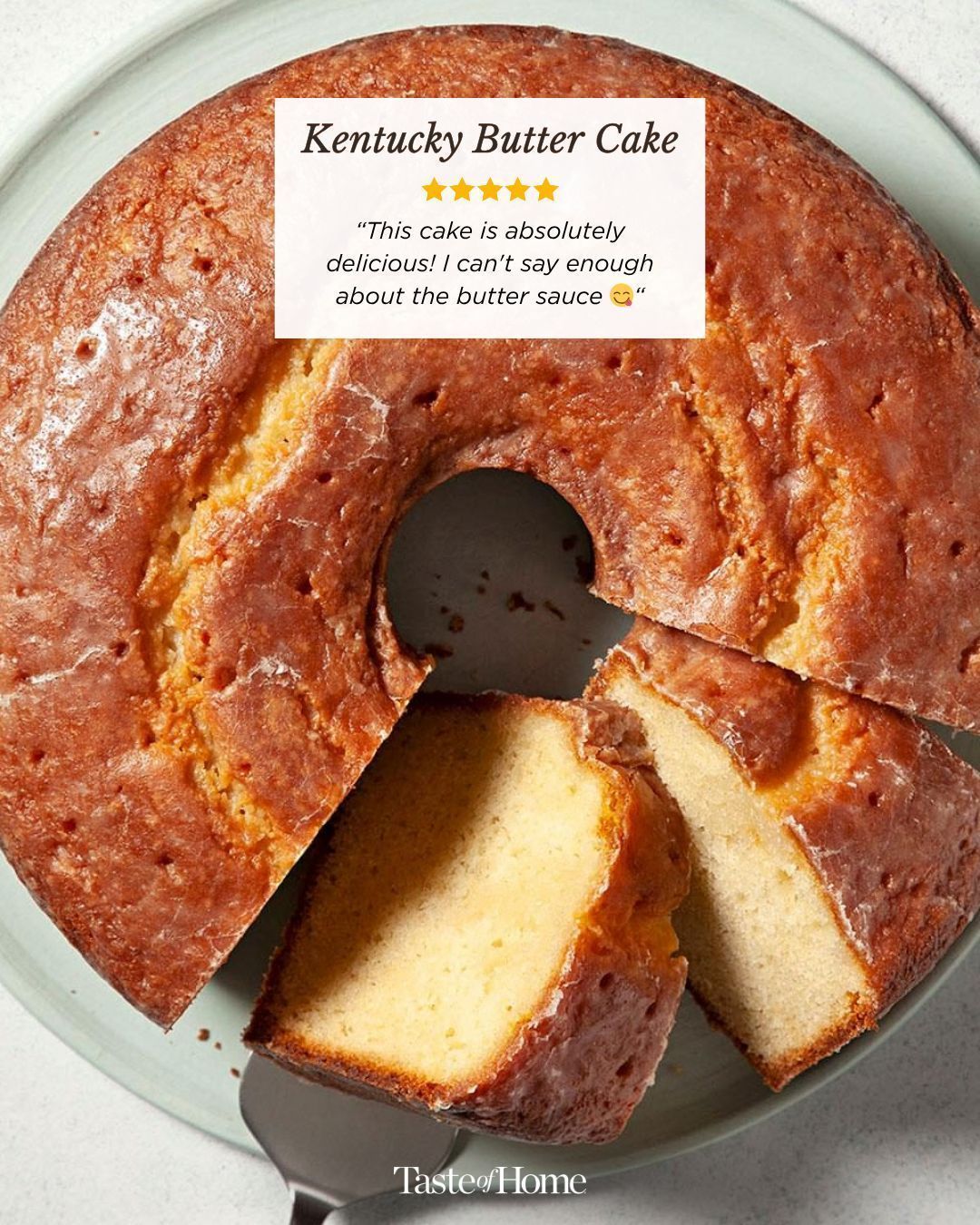
Look no further than Kentucky butter cake for a fluffy, buttery cake with an excellent crumb and a vanilla-almond butter sauce that permeates every bite.
Many desserts baked in a Bundt pan are pound cakes, but not all. They can be butter cakes, too! Unlike dense pound cakes, butter cakes are fluffy and tender with a delicate crumb. One prime example is the Kentucky butter cake. It boasts a rich dairy flavor that’s accompanied by a lush, sweet, buttery glaze soaked into each slice. That special glaze makes the cake taste and feel even better on the second day.
In 1963, a woman named Nell Lewis won the Pillsbury Bake-Off Contest with her recipe for Kentucky butter cake. The rich-textured cake was baked in a tube pan and glazed with a buttery syrup. Understandably, it was a huge hit with the judges.
This is our version of Lewis’s award-winning cake, plus some delicious ideas for adding your own spin.
Ingredients for Kentucky Butter Cake
Butter: You’ve got to use the best butter when you’re making a butter cake. Unsalted butter helps create a lovely texture. Plus, it bastes the cake in a fragrant syrup that really makes it sing. It’s a dairy double whammy!
Sugar: Simple granulated sugar keeps the flavor of this cake clean and focused on its namesake ingredient. I like to use organic cane sugar as opposed to other types of sugar because it’s slightly less refined.
Eggs: If you’ve got a carton of farm eggs, use them here. Because free-range eggs have richer-colored yolks, they’ll lend a beautiful quality to your batter.
Extracts: This recipe calls for both vanilla and almond extracts. Make sure that you’re using high-quality “pure” extracts rather than imitation versions. Here are some of our picks for the best vanilla extracts and almond extracts.
Flour: No need to pick up a fancy type of flour for Kentucky butter cake; all-purpose does the trick. The excellent flour from King Arthur Baking is a great choice.
Leavening agents: When a baked good includes an acidic ingredient, such as buttermilk, it’s common for the recipe to also call for baking soda. Why? Baking soda is a chemical base, which means that it produces gas when it’s combined with something acidic. However, baking soda doesn’t always give batter enough lift on its own. Thus, many recipes call for both baking soda and baking powder, as this one does. Here’s more about the differences between baking powder and baking soda.
Buttermilk: Buttermilk brings more than a delicious tang to the table. Since it’s acidic, it breaks down strands of gluten, which helps to keep baked goods tender. If you can’t find buttermilk at the store, here’s a trick for creating a buttermilk substitute.
Directions
Step 1: Blend the wet ingredients
In a large bowl, cream the butter and sugar until light and fluffy. Add the eggs, one at a time, beating well after each addition. Beat in vanilla.
Editor’s Tip: If you prefer, you could accomplish these tasks in a stand mixer or with a handheld mixer.
Step 2: Mix the dry ingredients
In a separate bowl, combine the flour, baking powder, baking soda and salt.
Step 3: Stir it together
Add the dry ingredients to the creamed mixture alternately with the buttermilk, beating well after each addition.
Editor’s Tip: Not sure how to add ingredients alternately? Start by adding half of the flour mixture to the wet ingredients, beating well. Then, add half of the buttermilk, beating again. Repeat this with the remaining dry ingredients and the rest of the buttermilk.
Step 4: Bake the cake
Scoop the batter into a greased and floured 10-inch tube pan. Bake at 350°F until a toothpick inserted in the center comes out clean, 55 to 70 minutes. Cool the cake in the pan for 10 minutes. Run a butter knife around the edges and center tube of the pan. Invert the cake onto a wire rack over parchment or waxed paper.
Editor’s Tip: All ovens are a little different, and this is not a cake that you want to overbake. It would be prudent to start checking the cake for doneness after 45 minutes. Generally, temping baked goods early is an excellent practice. Consider rotating the pan if your oven has hot spots.
Step 5: Whip up the sauce
Combine the sugar, butter and water in a small saucepan. Cook over medium heat until the butter is just melted and the sugar is dissolved. Remove from the heat, and stir in the extracts.
Editor’s Tip: If you’d like, you can make the sauce while you wait for the cake to cool down.
Step 6: Soak the cake
Once the cake is out of its pan, poke holes in the top of the warm cake. Spoon 1/4 cup sauce over the cake, and let stand until the sauce is absorbed. Repeat twice. Poke additional holes in the side of the cake and brush the remaining sauce over the sides. Cool completely.
Editor’s Tip: A few dozen holes will do the trick. Use a skewer, fork or any other tool that makes sense.
Kentucky Butter Cake Variations
Change up the glaze: An easy way to change up this cake is to tweak the ingredients in the glaze. The original author typically made this cake’s glaze with rum, but since alcohol wasn’t allowed in the Pillsbury baking competition, she omitted it when she entered the contest. Rum, Kentucky bourbon or more floral spirits such as St-Germain or creme de violette would all be lovely additions. If you’re not into boozy desserts, a couple tablespoons of nearly any citrus juice plus a sprinkling of zest would give the glaze some zip.
Make it pretty with posies: Cakes look extra charming when garnished with edible flowers, and some bright floral colors would really make your plating pop. Try violets or pansies, bachelor’s buttons or rose petals.
NEXT PAGE
ADVERTISEMENT
