
3. Instructions
Prep the Oven: Preheat your oven to 190°C (375°F) and lightly grease a 9×13 inch baking dish.Dairy & Eggs
Layer the Potatoes: Arrange the sliced potatoes in neat, overlapping rows within the prepared baking dish, seasoning lightly with salt and pepper between layers.
Make the Sauce: In a medium saucepan, melt the butter over medium heat. Whisk in the flour and cook for 1 minute. Slowly pour in the cream, whisking constantly until the sauce thickens.
Infuse Herbs: Remove from heat and stir in the minced garlic and chopped fresh herbs.
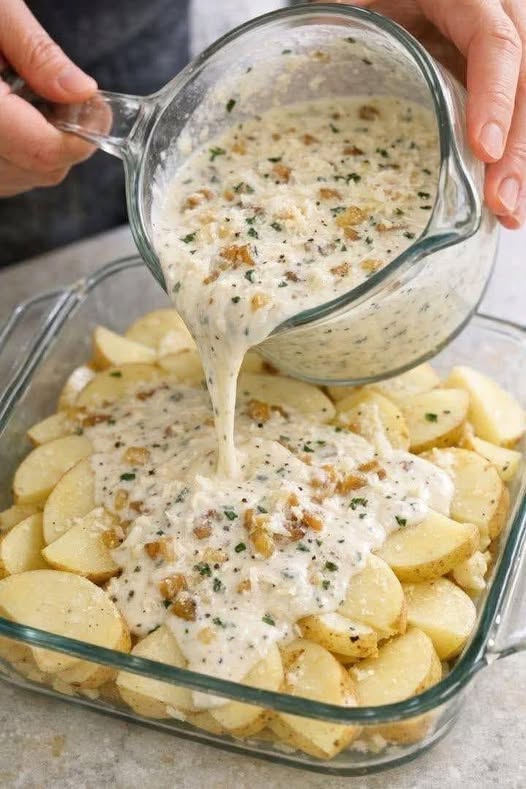
Pour: Carefully pour the warm herb cream mixture over the layered potatoes, ensuring it seeps down into all the crevices.
Bake: Cover the dish tightly with aluminum foil and bake for 45 minutes.
Final Crisp: Remove the foil (and sprinkle with Parmesan if using). Bake uncovered for another 15–20 minutes until the potatoes are tender and the top is bubbling and golden brown.Herbs & Spices
Rest: Let the dish stand for 10 minutes before serving to allow the sauce to set.
4. Variations
Onion Infusion: Layer thinly sliced sweet onions between the potato rounds for added depth of flavor.
Smoky Scalloped: Stir 1/2 cup of chopped, cooked bacon into the cream sauce before pouring.
Vegan Option: Use coconut milk or almond milk whisked with nutritional yeast and vegan butter for a plant-based version.Horticulture
5. Serving and Storage
Serving: This dish pairs exceptionally well with roasted meats like ham, prime rib, or roasted chicken.
Storage: Store leftovers in an airtight container in the refrigerator for up to 4 days.
Reheating: To maintain the creamy texture, reheat in the oven at 175°C (350°F) with a splash of milk to loosen the sauce.
6. Benefits
Texture Perfection: The use of a roux-based sauce prevents the cream from curdling, ensuring a perfectly smooth mouthfeel.Cookware & Diningware
Versatile Aromatics: The herb profile can be easily swapped based on the season or the main course it is accompanying.
Consistent Results: Using a mandoline for slicing ensures the potatoes cook at the exact same rate, preventing mushy or raw spots.
7. History of Scalloped Potatoes
The term “scalloped” originally referred to the way the dish was served—inside an actual scallop shell. This style of cooking dates back to late 17th-century England and France, where it was common to bake seafood or vegetables in cream. Over time, the term evolved to describe the shape of the thinly sliced potatoes, which mimic the edges of a shell.Dairy & Eggs
While the French developed Gratin Dauphinois (which typically omits flour and adds cheese), the English and early American “scalloped” versions traditionally used a thickened white sauce (Béchamel) to bind the potatoes together. This made the dish a hearty, filling staple for families during the winter months when root vegetables were the primary available produce. Today, the addition of fresh herbs reflects a modern shift toward lighter, more vibrant flavors in classic comfort cooking.
ADVERTISEMENT
