
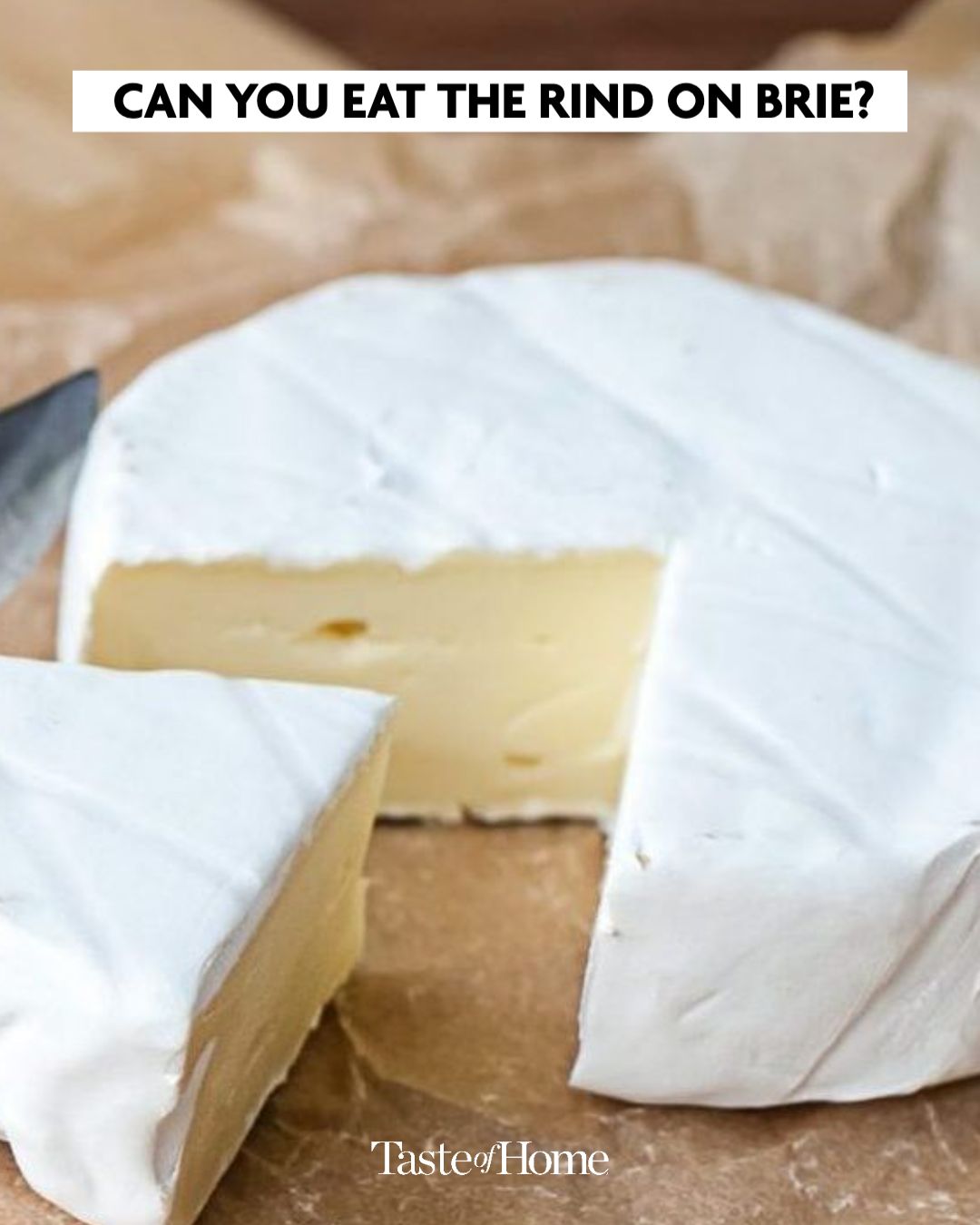
Don’t toss that Brie rind!
There are certain foods that make any occasion feel special, and Brie is one of them. Whether it’s served with crunchy apple slices or baked into a flaky puff pastry, Brie instantly elevates a meal or cheese board.
Brie is a soft-ripened cheese that comes inside a thick, white rind. But can you eat Brie rind? If you’re used to tossing the rind in the garbage, think again.
Can You Eat the Rind on Brie?
Yes, you can eat the rind on Brie. But what is it made of? The rind on Brie is a bloomy rind that grows from the molds and bacteria used to make Brie. According to the U.S. Department of Agriculture (USDA), these types of mold are beneficial and safe to consume.
Certain cheeses are made using mold. These include Brie, blue, Gorgonzola, Roquefort, Stilton and Camembert. The mold used to make these cheeses is safe to eat. The firm, white rind forms when the mold blooms and is then patted down. This process happens over and over until the Brie is ready. Not only is the rind on Brie safe to eat but it may even keep out harmful organisms that could contaminate the cheese.
The mold that grows on other types of cheese is not safe to eat. For example, if you have a wedge of Parmesan in your refrigerator and notice green mold growing, toss it out. It’s also not safe to eat human-made wrappers on cheese. An example of a human-made wrapper is the red wax found on Gouda.
NEXT PAGE
ADVERTISEMENT
