
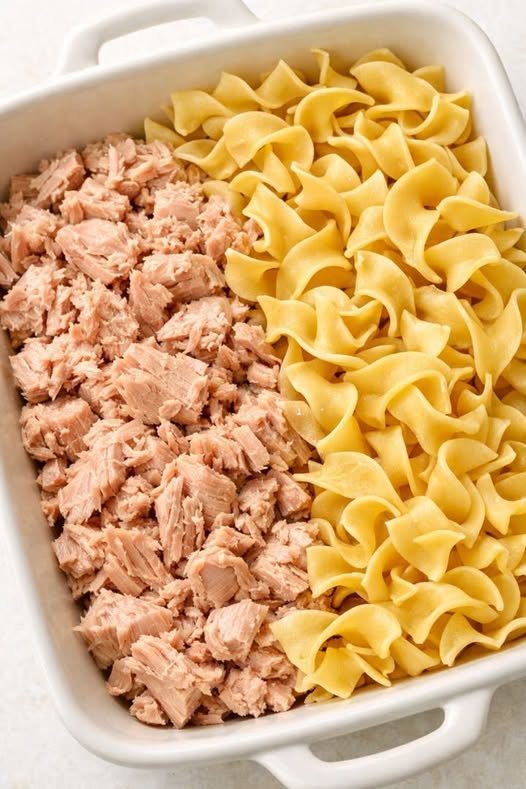
Classic Tuna Noodle Casserole with Egg Noodles
Tuna noodle casserole occupies a particular place in the American comfort food canon — simultaneously unfashionable and beloved, the subject of both affectionate nostalgia and genuine enthusiasm from the households that still make it regularly. It rose to prominence in the mid-20th century when condensed soups and canned tuna became reliable pantry staples across the country, providing home cooks with the components of a creamy, protein-rich pasta casserole that could be assembled on a weeknight from ingredients already on the shelf. At its best, it’s genuinely good: wide egg noodles in a savory, creamy sauce with tuna, peas, and vegetables throughout, finished with a buttery cracker topping that browns and crisps in the oven to a satisfying crunch.
This version is made properly — with attention to the details that distinguish a tuna noodle casserole worth eating from the mushy, underseasoned versions that gave the dish its unfair reputation. The noodles are cooked slightly underdone before going in the oven, so they finish cooking in the sauce without becoming soft. The sauce is built from condensed cream of mushroom soup, milk, and sour cream, with enough seasoning to taste genuinely flavored. Cheddar cheese goes into the sauce and on top. Celery and onion add texture and aromatic depth. And the cracker topping — butter crackers or breadcrumbs moistened with melted butter — bakes to a golden, crispy layer that provides the textural contrast the creamy interior needs.
A Brief History of Tuna Noodle Casserole
The convergence of commercially canned tuna (widely available in the United States from the early 20th century), condensed cream soups (Campbell’s introduced their iconic condensed cream of mushroom soup in 1934), and the post-war era’s enthusiasm for practical, economical home cooking produced tuna noodle casserole as a category of dishes that appeared in countless household recipe boxes and community cookbooks through the 1950s and 1960s. The specific combination of cream of mushroom soup, egg noodles, canned tuna, and vegetables (usually peas) became so standard that it crossed into cultural shorthand for a particular era of American home cooking — practical, reliable, and comforting in a way that didn’t require culinary expertise or expensive ingredients.
The dish’s reputation suffered somewhat in later decades as food culture moved away from processed convenience ingredients and toward fresh preparations, but the underlying concept — a creamy baked pasta casserole with canned fish, vegetables, and a crispy topping — is genuinely good when made with care and proper technique. The renaissance of interest in midcentury American cooking has brought renewed appreciation for tuna noodle casserole among home cooks who grew up with it and a curious new audience discovering it for the first time.
Why You’ll Love This Recipe
This casserole is one of the most practical from-scratch weeknight dinners available. The sauce requires no roux, no prolonged cooking, and no special technique — whisk together condensed soup, milk, sour cream, and seasoning, fold in the other components, toss with the par-cooked noodles, and bake. Total active prep time is about 20 minutes. It can be assembled up to 24 hours ahead and refrigerated until ready to bake, which makes it valuable for busy households that want dinner ready to go in the oven without evening prep. It serves six generously from economical pantry ingredients and reheats reliably for the next day’s lunch.
Beyond convenience, when made properly it’s genuinely satisfying food. The combination of creamy sauce, tender noodles, saline tuna, sweet peas, and crunchy topping provides enough textural and flavor variety to make each bite interesting. The nostalgia factor is real for many people — tuna noodle casserole is a dish that carries genuine warmth from associations with childhood dinners and family recipes, and a well-made version delivers on that warmth without apology.
Ingredient Notes
Wide egg noodles — 8 ounces — are the traditional pasta for this dish and the right choice for good reasons. Their broad, flat shape is ideal for a creamy sauce casserole: they hold the sauce well on their surface, they have a rich, slightly egg-forward flavor that complements the tuna and cheese, and their tenderness after cooking is the right texture for a dish that bakes in a sauce. Cook them 1 to 2 minutes less than the package directions recommend for al dente — they’ll continue cooking in the oven and absorbing sauce during the bake, so starting underdone prevents the finished casserole from having soft, mushy noodles. Drain immediately and toss lightly with a drop of oil to prevent clumping while you finish the sauce.
Canned tuna in water — two 5-ounce cans, drained and flaked — is the protein. Tuna in water is preferred over tuna in oil for this application: tuna in oil adds extra fat that can make the sauce feel greasy rather than creamy, and the water-packed variety produces a cleaner flavor that better complements the sauce’s dairy richness. Drain the cans thoroughly — press the lid firmly against the tuna and squeeze out as much liquid as possible before adding the tuna to the sauce, since excess liquid from the can will thin the sauce. Flake the tuna with a fork into roughly even pieces — some texture variation is appealing, but very large chunks are unwieldy in the finished casserole while completely pulverized tuna loses its presence in the dish.
Condensed cream of mushroom soup — one 10.5-ounce can, used undiluted — is the sauce base. Used straight from the can and whisked with milk rather than diluted at the standard soup preparation ratio, it produces a properly thick, coating sauce that won’t become watery during the bake. Cream of celery soup is an acceptable substitute that produces a slightly lighter, more herbal flavor. For those who want to move away from condensed soup, a quick homemade sauce — two tablespoons of butter, two tablespoons of flour, one and a half cups of whole milk, and a generous pinch of salt and pepper, whisked until thick over medium heat — produces a cleaner, more complex result at the cost of a few extra minutes of stovetop work.
Whole milk — one cup — thins the condensed soup to the right sauce consistency and adds dairy richness throughout. Whole milk produces the best result; 2% works with slightly less richness. The milk and condensed soup together provide the correct total liquid volume for the sauce to coat all the noodles and remain saucy after baking.
Frozen peas — one cup, thawed — are the vegetable component, and they’re worth using rather than substituting. Peas have a natural sweetness that provides a pleasant contrast to the savory tuna and creamy sauce, and their small size distributes evenly through the casserole so every bite has some. Thaw them quickly by running cold water over them in a strainer — they don’t need to be fully cooked before going into the casserole since they’ll warm through during the bake.
Celery and onion — half a rib of celery finely chopped, and a quarter cup of finely chopped onion — add aromatic depth and textural interest to the casserole. Both are standard in the traditional recipe and both contribute to the casserole’s complex, properly seasoned flavor. Fine chopping ensures they cook through during the bake and distribute evenly rather than sitting as large, identifiable pieces. For a sharper, more complex flavor, sauté the celery and onion briefly in a tablespoon of butter before adding them to the sauce.
Cheddar cheese — one cup shredded, divided — goes half into the sauce for flavor throughout and half scattered over the top before baking for the golden, bubbly cheese layer. Sharp cheddar provides the most assertive, complementary flavor alongside the tuna and mushroom soup; mild cheddar works but is less distinctive in the finished dish. Freshly shredded block cheddar melts more smoothly than pre-shredded bag cheddar.
Sour cream — half a cup — is optional but genuinely improves the casserole, adding a tangy richness and creaminess that plain soup and milk alone don’t quite achieve. It contributes to the sauce’s body and prevents the finished casserole from tasting flat. Don’t skip it if you have it on hand.
Crushed butter crackers or breadcrumbs moistened with melted butter form the topping. Ritz crackers or similar butter crackers crushed into coarse pieces produce the most flavorful, classically nostalgic topping. Plain breadcrumbs produce a more neutral crunch. Panko breadcrumbs produce a lighter, airier crunch. Any of these work; the butter is essential — dry breadcrumbs without fat on top produce a pale, dusty result rather than a golden, fragrant crust.
Ingredients
8 oz wide egg noodles
2 cans (5 oz each) tuna in water, drained and flaked
1 can (10.5 oz) condensed cream of mushroom soup
1 cup whole milk
1 cup frozen peas, thawed
½ cup finely chopped celery (about 1 rib)
¼ cup finely chopped onion
1 cup shredded sharp cheddar cheese, divided
½ cup sour cream (optional but recommended)
½ tsp kosher salt, plus more for the pasta water
½ tsp freshly ground black pepper
½ tsp garlic powder
½ tsp dried thyme or dried parsley
1 cup crushed butter crackers or plain breadcrumbs
2 tbsp unsalted butter, melted
Nonstick cooking spray or butter for greasing the baking dish
NEXT PAGE
ADVERTISEMENT
