
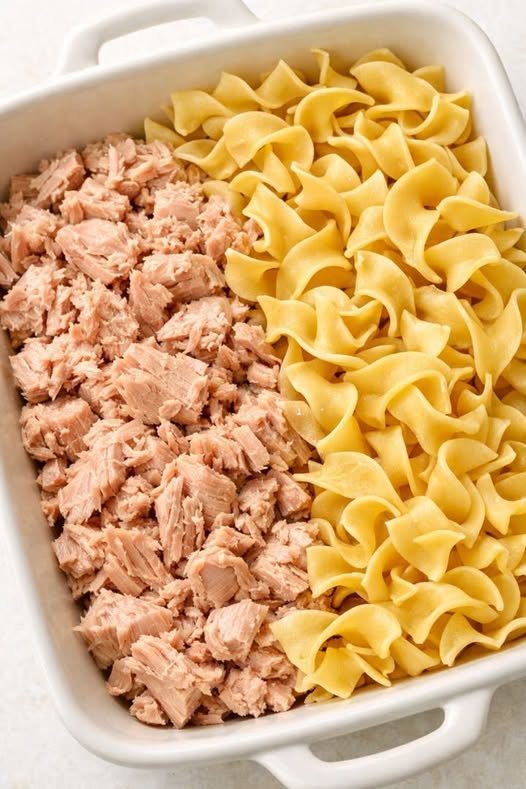
Step-by-Step Instructions
Step 1 — Preheat and Prepare
Position a rack in the center of the oven and preheat to 375°F (190°C). Lightly grease a 9×13-inch baking dish with cooking spray or a thin coat of butter and set aside.
Step 2 — Cook the Noodles
Bring a large pot of generously salted water to a boil. Add the egg noodles and cook for 1 to 2 minutes less than the package directions indicate for al dente — they should be tender but still have a noticeable firmness at the center, slightly more firm than you’d want to eat them directly from the pot. They’ll continue cooking in the sauce during the oven bake and will reach perfect tenderness in the finished casserole. Drain immediately in a colander and toss lightly with a drop of olive oil or cooking spray to prevent sticking while you assemble the sauce.
Step 3 — Make the Sauce
In a large mixing bowl, whisk together the condensed cream of mushroom soup and the whole milk until the soup is fully dissolved and the mixture is smooth. Stir in the sour cream, half a cup of the shredded cheddar, salt, pepper, garlic powder, and dried thyme or parsley. Taste and adjust the seasoning — the sauce should be well-seasoned with a creamy, savory, mushroom-forward flavor. It will taste slightly more salty and concentrated at this stage than the finished casserole, since it will be diluted somewhat by the tuna and peas as they’re folded in.
Step 4 — Add the Fillings
Add the drained and flaked tuna, thawed peas, chopped celery, and chopped onion to the sauce. Stir to distribute everything evenly — the tuna will break up a bit further as you stir, which is fine. The goal is an even distribution of tuna, peas, and vegetables throughout the sauce so every portion of the finished casserole contains a bit of each component.
Step 5 — Combine with Noodles
Add the par-cooked, drained egg noodles to the bowl and fold gently to coat them thoroughly in the sauce and distribute the fillings evenly throughout. Fold rather than stir vigorously — egg noodles are more delicate than other pasta shapes and will break into smaller pieces if handled roughly. The goal is noodles that are evenly coated and the fillings distributed throughout, not a perfectly uniform mixture.
Step 6 — Transfer and Top with Cheese
Transfer the noodle mixture to the prepared baking dish, spreading it out into an even layer across the entire dish. Scatter the remaining half cup of shredded cheddar evenly over the top of the casserole.
Step 7 — Make and Add the Topping
In a small bowl, combine the crushed butter crackers or breadcrumbs with the melted butter. Stir until the crumbs are evenly moistened with the butter — every crumb should be slightly coated rather than some being dry and some sodden. Scatter this mixture evenly over the cheese layer, distributing it across the entire surface of the casserole for even browning coverage.
Step 8 — Bake
Place the baking dish on the center rack and bake uncovered for 25 to 30 minutes, until the casserole is bubbling actively around the edges and the topping is golden brown. If the topping is browning faster than the casserole is heating through — visible at the edges where the sauce should be bubbling — tent loosely with aluminum foil for the last 5 to 10 minutes of baking. The edges of the casserole should be bubbling and the center should look set and warm, not liquid and moving.
Step 9 — Rest and Serve
Remove from the oven and allow to rest for 5 to 10 minutes before serving. The sauce continues to thicken slightly during this rest and the noodles absorb a final bit of the liquid, producing a casserole that serves in neat, cohesive portions rather than flowing apart when scooped. Serve directly from the baking dish with a large spoon.
Tips for the Best Results
Undercook the noodles by 1 to 2 minutes. This is the single most important technique note in the recipe. Noodles cooked to full al dente or beyond before going into the oven will be soft and possibly mushy by the time the casserole is done. Starting them slightly underdone produces noodles that are perfectly tender in the finished dish.
Drain the tuna thoroughly. Excess liquid from the tuna cans will thin the sauce and produce a watery finished casserole. Press the lid against the tuna in the can and squeeze firmly before opening fully, then turn the open can upside down over the sink and press again to remove as much liquid as possible.
Don’t skip seasoning the sauce before adding the noodles. Taste the sauce before the noodles go in and adjust the salt, pepper, and seasoning at that stage. Once the noodles are folded in, tasting is harder and adjusting seasoning is less effective — the seasoning needs to be right in the sauce before it dilutes through the full volume of the casserole.
Butter the breadcrumbs thoroughly. Dry, unbuttered crumbs on top produce a pale, dusty, forgettable topping. Every crumb should be moistened with butter so the topping browns evenly to a golden, fragrant crust during the bake.
Let it rest before serving. The 5 to 10 minute rest after baking makes a genuine difference to the portionability and texture of the finished casserole. Cut directly from the oven it flows apart easily; after resting it holds together and serves cleanly.
Frequently Asked Questions
Can I make this ahead?
Yes — this is one of the recipe’s most practical features. Assemble the casserole completely through the topping-addition step, cover tightly with foil or plastic wrap, and refrigerate for up to 24 hours. When ready to bake, remove the cover and bake as directed, adding 5 to 10 minutes to the total baking time to account for the cold start. The topping can become slightly soggy if it sits on the unbaked casserole overnight; if you prefer a crispier topping, add the buttered crumb mixture just before going into the oven rather than before refrigerating.
Can I substitute the condensed cream of mushroom soup?
Yes. Condensed cream of celery soup produces a lighter, slightly more herbal result. Condensed cream of chicken soup produces a more chicken-forward flavor. For a from-scratch sauce, melt two tablespoons of butter in a saucepan, whisk in two tablespoons of flour and cook for one minute, then add one and a half cups of whole milk and whisk over medium heat until thickened, about 5 minutes. Season generously with salt, pepper, and garlic powder. This homemade version is richer and more complex than the condensed soup-based version and is worth making if you prefer to avoid processed convenience ingredients.
Can I use a different protein?
Yes. Canned salmon is the most direct substitute — it produces a similar texture and richness to tuna with a slightly more pronounced fish flavor. Shredded rotisserie chicken folded in produces a chicken noodle casserole variation that’s equally satisfying and particularly appealing to people who don’t enjoy tuna. Canned crab produces a more delicate, sweeter result that’s a genuinely good variation for a slightly more special occasion version of the dish.
How do I prevent a mushy casserole?
Two factors: undercooking the noodles by 1 to 2 minutes before they go into the oven, and not extending the baking time beyond what’s needed. Check the casserole at 25 minutes — it should be bubbling at the edges and the topping golden. If those conditions are met, it’s done regardless of whether the full 30 minutes have elapsed. An overbaked casserole has overcooked noodles and reduced, thickened sauce that lacks the creaminess that makes the dish appealing.
Can I freeze this casserole?
Yes, with some caveats. Freeze the assembled, unbaked casserole without the crumb topping for up to 3 months — the topping doesn’t freeze and thaw well and should be made fresh. Thaw overnight in the refrigerator, add the buttered crumbs, and bake as directed, adding 10 to 15 minutes for the cold start. The noodle texture will be slightly softer after freezing and thawing than a fresh-assembled casserole, which most people find acceptable.
Variations Worth Trying
Extra-cheesy version: Increase the cheese to 1½ cups total, reserving three-quarters of a cup for the top rather than half. Add an ounce of cream cheese (softened) whisked into the sauce along with the sour cream for additional creaminess and a slight tang. The finished casserole is richer and more pronounced in cheese flavor — essentially a cheese-forward take on the classic that’s particularly popular for potlucks and gatherings.
Sautéed mushroom version: Sauté 8 ounces of sliced cremini or button mushrooms in a tablespoon of butter until golden and their liquid has evaporated — about 8 to 10 minutes — before adding them to the sauce with the tuna and peas. The sautéed mushrooms add an earthy, meaty depth that elevates the casserole from pantry-food territory toward something that tastes more restaurant-worthy. Use cream of mushroom soup rather than cream of celery for the most cohesive mushroom flavor throughout.
Lighter lemon and herb version: Use cream of celery soup instead of cream of mushroom, skip the sour cream, and squeeze the juice of half a lemon into the sauce with a tablespoon of chopped fresh dill. The lemon and dill brighten the casserole’s flavor considerably and produce a lighter, more Scandinavian-influenced character that’s particularly good in spring and summer. Use panko breadcrumbs for the topping for a lighter crunch.
French-fried onion topping: Replace the buttered crumbs with a full can of crispy French-fried onions scattered over the top. The onions add both crunch and a savory, slightly sweet onion flavor to the topping that many people associate as strongly with tuna noodle casserole as the classic cracker topping. The casserole bakes the same way; check the topping color at 20 minutes to ensure the onions don’t over-brown before the casserole is heated through.
Broccoli and tuna version: Add one cup of steamed broccoli florets (cut small) to the sauce with the peas, replacing the peas entirely or supplementing them. The broccoli adds more substantial vegetable presence and a slightly bitter, green note that contrasts pleasantly with the creamy sauce and tuna. This variation makes the casserole more vegetable-forward and can help it appeal to people who want more nutritional variety in the dish.
What to Serve Alongside
Tuna noodle casserole is a complete, filling main course on its own. Fresh, bright sides that provide acidity and contrast to the casserole’s richness are the best accompaniment. A simple green salad with a sharp lemon or vinegar-based vinaigrette is the most natural pairing — the acidity cuts through the creamy sauce effectively and provides freshness the casserole lacks. Steamed green beans or roasted broccoli add a vegetable component and a slightly bitter counterpoint to the sweetness of the peas and the richness of the cheese sauce. Warm dinner rolls or crusty bread are excellent for scooping up the extra sauce that collects around each serving. A bright, lightly tangy dessert — citrus sorbet, fresh fruit — makes a good finish to a meal that’s rich in starch, fat, and protein.
Storage
Leftover tuna noodle casserole keeps in an airtight container in the refrigerator for up to 3 days. The noodles will absorb more sauce during storage and the topping will soften — both are expected. Reheat covered with foil in a 350°F oven for 15 to 20 minutes until heated through, or reheat individual portions in the microwave covered with a damp paper towel. The crumb topping won’t recrisp from reheating; if you want a crunchy topping on leftovers, scatter a fresh tablespoon of buttered breadcrumbs over the top and place under the broiler for 2 to 3 minutes just before serving.
A Classic Worth Making Properly
Tuna noodle casserole has enough of a nostalgic reputation that it can seem like a dish that doesn’t need to be made particularly well — just assembled and baked. But the difference between a casserole made with attention to the details (properly underdone noodles, a well-seasoned and sour cream-enriched sauce, a buttered and golden crumb topping) and one made carelessly is very significant, and the better version is the one worth remembering. This recipe aims for that version: creamy, well-seasoned, properly textured, and good enough to make people who thought they didn’t like tuna noodle casserole reconsider. That’s the standard a classic deserves.
Enjoy!
ADVERTISEMENT
