
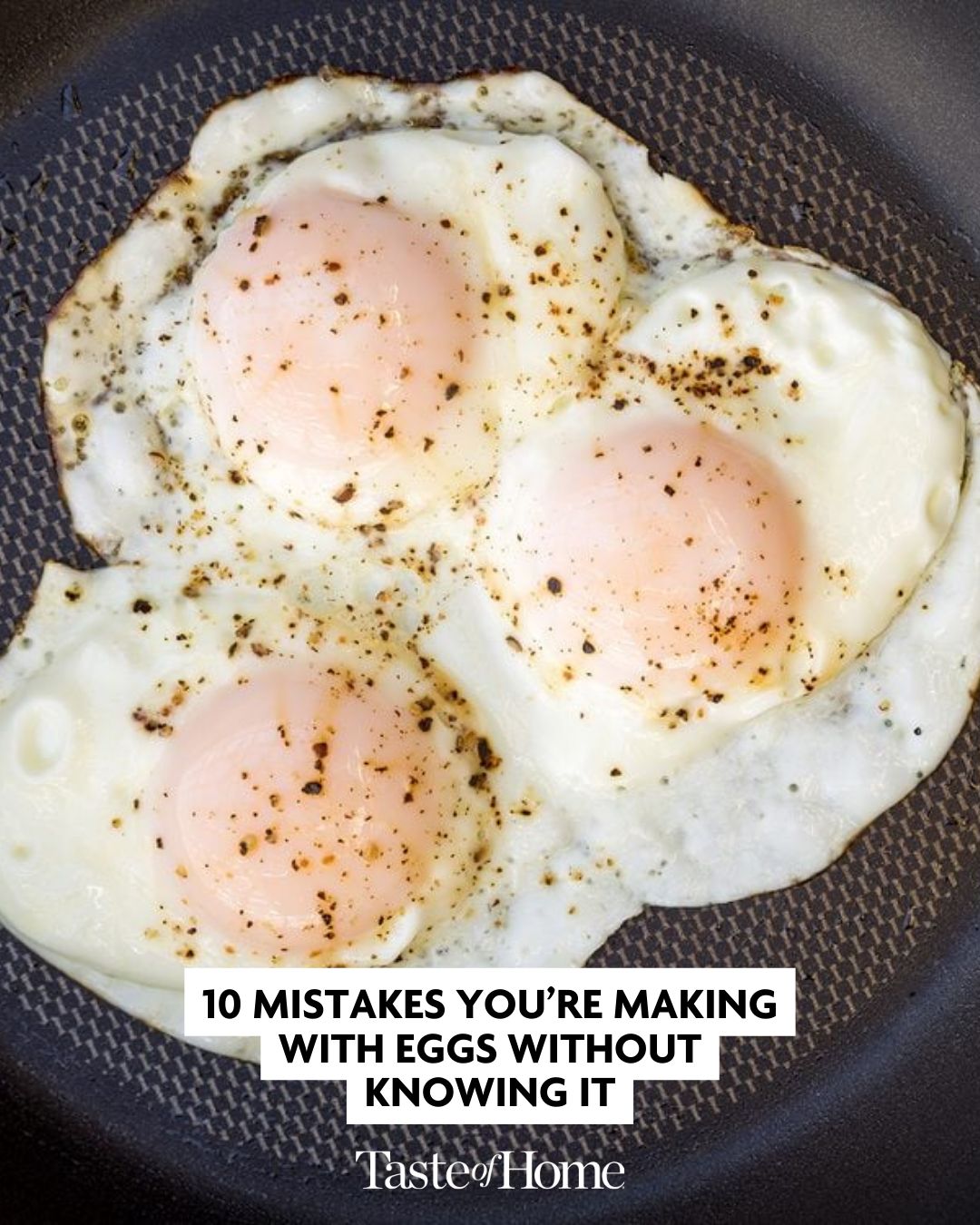
We love eggs for breakfast, lunch and dinner. But is your scramble a bit watery? Is your sunny side down? Learn how to correct the mistakes you might be making with eggs so they turn out perfectly every time.
Cracking Eggs on the Edge of the Bowl
First things first: Don’t crack your eggs on the edge of the bowl or you may get pieces of shell in your beautiful frittata. Gently tap the egg on a flat countertop, then open it over the bowl. If a bit of shell still sneaks in, use another piece of shell to fish it out. Here’s how to crack an egg (the right way!).
Not Whisking Enough
For scrambled eggs and omelets, the egg mixture should be a uniform yellow, with no white or clear strands left behind. To properly mix eggs, use a fork or whisk and go back and forth quickly, hitting the sides of the bowl with each stroke. Even the simplest egg recipes will look and taste like they came from a fancy restaurant!
Cooking Scrambled Eggs too Fast
Scrambled eggs seems like an easy dish to make when you’re in a hurry. But that’s the thing: You shouldn’t be in a hurry when you make scrambled eggs. When you cook them quickly over high heat or bake, they dry out. They should be cooked slowly over low heat until they turn into gorgeous, fluffy curds. Here is your guide to trying something unique and making boiled scrambled eggs. Don’t worry, it still doesn’t take long.
Adding Milk to Scrambled Eggs
Do you add milk to scrambled eggs? Is that what gives them their creamy texture? Well, no. It actually makes them rubbery and flavorless. If you cook plain scrambled eggs slowly and keep them moving in the pan, you’ll get perfect, creamy eggs. Save the milk for your cookies.
Letting Eggs Stick to the Pan
NEXT PAGE
ADVERTISEMENT
