
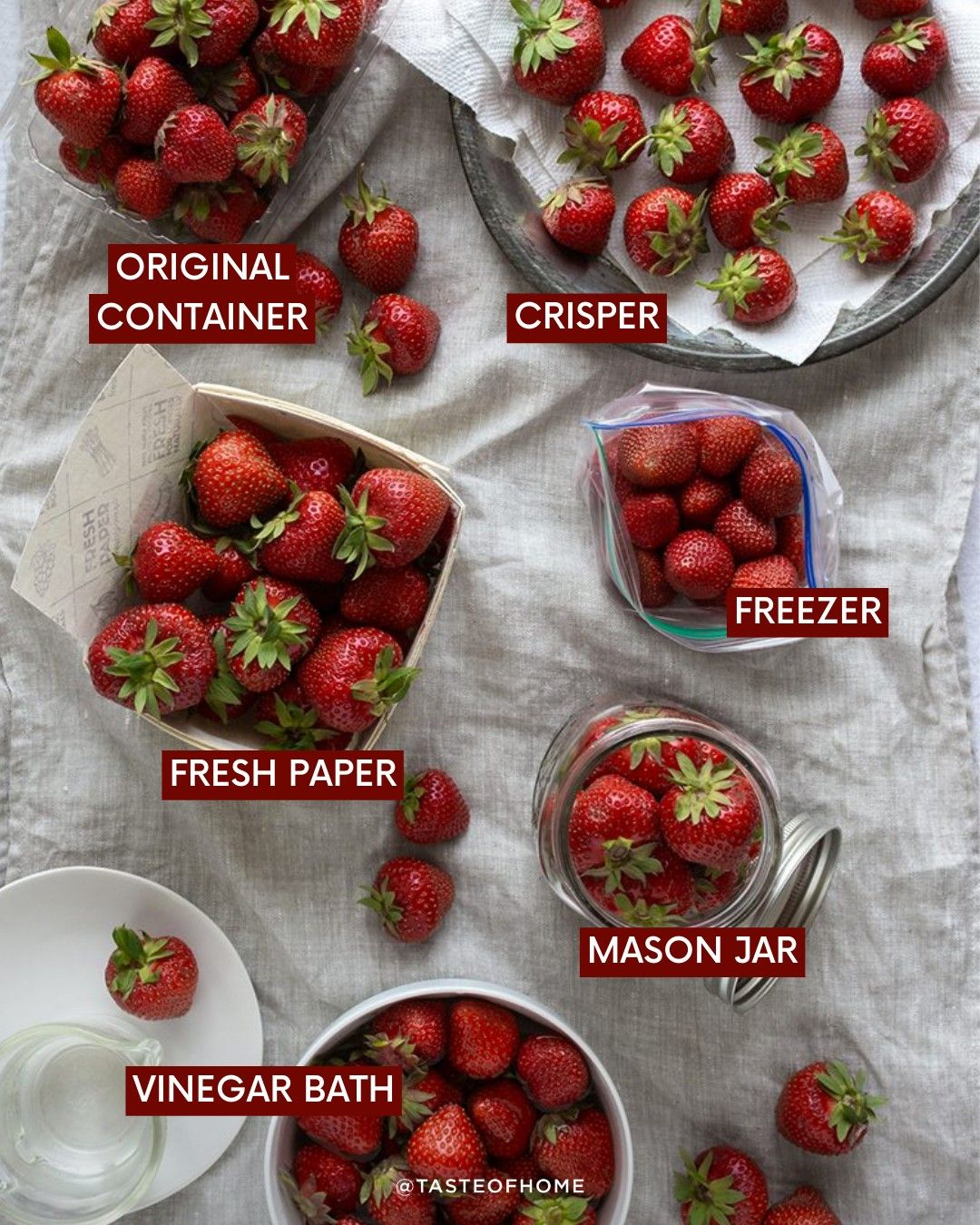
We tested six methods for how to store strawberries so you can keep your strawberries fresh for as long as possible.
Strawberries are so luscious and flavorful, especially when you pick your own or buy from a local fruit stand at the height of strawberry season. There’s a taste of summer in every berry! They’re too delicious to lose any to mushiness or mold, but keeping strawberries fresh once you get them home can be a challenge.
There are a lot of opinions out there on how to store strawberries, so we put some popular methods to the test. The longer we can keep strawberries fresh, the more sweet and savory strawberry recipes we can make! Here’s what we learned about storing strawberries, plus the method we liked most.
How We Tested Strawberry Storage Methods
Because the fridge is the best place to keep strawberries when you need to store them for more than a day, all of the methods we tested are refrigerator options. The cold environment inhibits bacteria and mold spores to prevent the berries from spoiling.
In each case, we tested strawberries stored in the refrigerator for seven days (except for the freezer method). With each method, our goal was to have our strawberries stay as fresh and plump as the day we brought them home. The best refrigerator storage solution would prevent the berries from turning moldy or developing mushy spots, even after a week. Although not as critical, storage methods that kept the leaves green and attractive scored points as well.
Want to keep your strawberries fresh for longer? Check how to freeze strawberries so that you’ll preserve their quality, nutritional value and most importantly, flavor.
The Best Methods for Storing Strawberries
Method 1: Original container
About this method: Strawberries are typically sold in plastic clamshell boxes or berry baskets made of wood or cardboard. They have openings along the sides and lid to let air flow around the berries.
How to do it: This is the easiest method to try: just pop the container in the fridge. (Though if you see moldy or mushy berries, remove those first.) This method is best for whole strawberries.
The verdict: Not bad
This method works fine to store your fresh strawberries in the fridge, but only for a few days. After seven days, they had some mushy spots and a few specks of mold growing. The leaves also looked withered. The strawberries for the most part were still edible and would be best sliced up for a recipe so that the bad spots can be cut away.
This storage method is OK if you don’t have time for anything else, as long as you can use the berries in three to four days.
Method 2: Vinegar bath
About this method: Freshly picked berries have naturally occurring mold spores on them, which is what eventually will make them spoil. Rinsing strawberries in a vinegar bath supposedly kills these spores, allowing the berries to stay fresh.
How to do it: For this method, stir one cup of white vinegar into two cups of water. Place strawberries in the mixture and gently swish them around for about a minute. Then, rinse the berries off under clean water (this mini colander is perfect for washing berries). Lay the strawberries out to dry on a dish towel-lined tray. When completely dry, place the berries back in the original container and store them in the fridge. This method is meant for whole strawberries.
The verdict: Skip it
Other sources sing the praises of this approach, so we were surprised with the results—we even tested twice to be sure. After a week, the vinegar-rinsed strawberries looked bedraggled and dark, with shriveled leaves and soft spots. Although there were no signs of mold, the berries didn’t look appealing at all.
Despite being laid out to dry, the strawberries still had excess moisture from the bath. Because moisture accelerates decay, this ultimately affected the freshness. It’s best to wait to wash berries until right before you eat them.
Method 3: The crisper
About this method: Crisper drawers in refrigerators are designed to be storage spots for fruits and vegetables. The drawers have vents to create high or low humidity environments that help produce last as long as possible.
How to do it: Place whole strawberries on a tray lined with clean paper towels or reusable refrigerator liners (to help absorb moisture on the strawberry surfaces or leaking juices.) Once your tray of berries is in the drawer, open the vents to let moisture escape and keep humidity low. This method is best for whole strawberries.
The verdict: It works
After seven days, the strawberries for the most part looked good. Although the leaves were limp, and we did find one berry that was beginning to grow mold, the majority of the strawberries were still firm and ready to eat.
The crisper drawer does what it’s supposed to do: it prevents moisture from building up on the strawberries, so they stay firm. Spacing the berries apart in a single layer on absorbent paper towels was also key to keeping the berries dry. If you weren’t already using your crisper drawer and paper towels for fruit, it’s about time you did!
Method 4: FreshPaper
About this method: FreshPaper is a product designed to keep produce fresher longer. The compostable paper sheets are infused with spices that naturally inhibit the bacteria that cause fruits and veggies to spoil. (And the sheets smell amazing!)
NEXT PAGE
ADVERTISEMENT
