
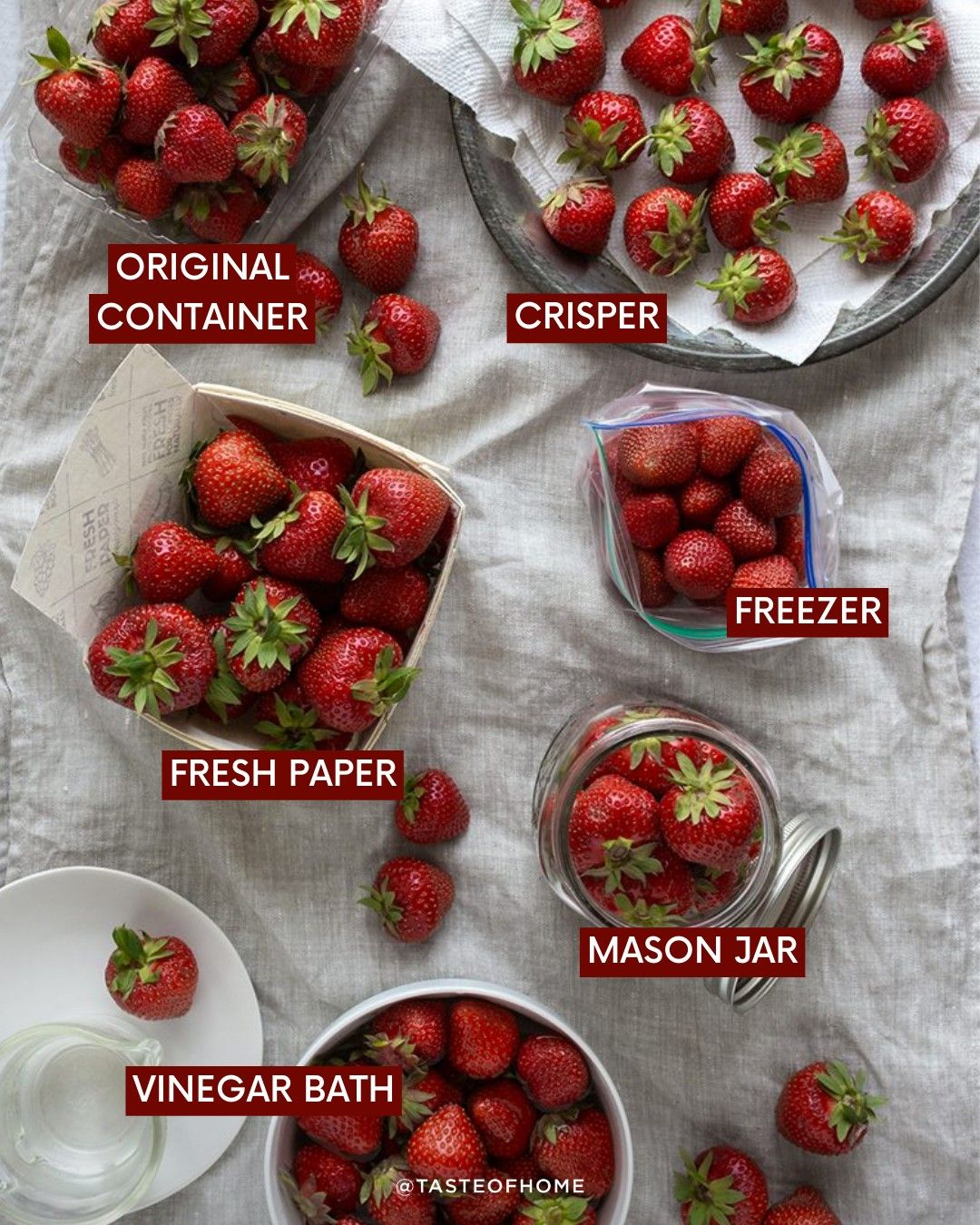
How to do it: The directions for FreshPaper say to drop a sheet in with your produce wherever you’re storing it. We tucked a sheet in the original container holding our strawberries. It can be used with whole or cut strawberries, but because cut berries are more perishable, you should add an extra sheet of FreshPaper to the container.
The verdict: Pretty good
The results with FreshPaper were similar to those of the strawberries in the crisper drawer; the majority of the berries were still firm and tasty. FreshPaper seems to keep its promise of inhibiting bacteria since there was no mold on the strawberries.
Because the berries were piled in a carton, there was less airflow to the ones near the bottom. Those berries had begun to develop soft spots. If berries were laid in a single layer with a sheet of FreshPaper, we think they’d do well in the fridge for the full seven days.
Method 5: Freezer
About this method: Fresh berries are stored in freezer bags in the freezer, where they last for months instead of days.
How to do it: Rinse and dry whole strawberries, then remove the stem and leaves with a knife or hulling tool. (This makes the berries easier to use once they’re thawed. The right berry tools will make the process go much more smoothly.) Place the strawberries inside resealable freezer bags, and press out all the air. Freeze the strawberries in a flat, single layer. Once frozen, you can move the bag where you need to in your freezer. This method can be used for whole or cut strawberries.
The verdict: Great for long-term storage
Strawberries freeze beautifully, and this method gives you the chance to hang on to their summer flavor longer than when they’re stored in the fridge. When sealed well, strawberries last for several months in the freezer. Use thick, freezer-safe bags so that your strawberries won’t absorb odors. Squeeze all the air out to prevent freezer burn from forming.
The downside to freezing berries is that they’ll be soft and juicy when you thaw them—not the best for snacking. It’s better to use frozen berries in things like smoothies, floats, milkshakes, muffins, mousse, and strawberry syrup.
Method 6: Mason jar
About this method: Fresh, whole strawberries are sealed inside glass Mason jars with metal lids and bands and then refrigerated.
How to do it: Check through your strawberries to remove any that have mushy spots or mold. Place your unwashed strawberries in a glass mason jar, and stack them loosely so that they aren’t squishing each other. Tightly fasten the metal lid and band on the jar, then put it in the fridge. This method works best with whole strawberries.
The verdict: We love it!
This is our favorite of the six methods. If you don’t see any difference between the before and after photos of this method, it’s not a trick. After seven days, the strawberries looked as fresh as they did on day one: plump and firm with fresh-looking leaves. It was so satisfying to find our strawberries looking and tasting this perfect after a week in the fridge. Because no air gets into the sealed mason jars, the fruit resists decaying. There’s just enough natural moisture trapped inside to keep the berries firm and the leaves vibrant.
When we opened the jar, it made the same pssshh sound that you hear when opening a soda. That’s the escaping ethylene gas produced by the strawberries. It’s important that the strawberries go into jars unwashed and that any iffy berries are removed so they don’t affect the rest.
Tips for Storing Strawberries
No matter which storage method you try, there are a few rules to know about storing fresh strawberries. Avoiding common berry mistakes will help your fruit stay fresh and better looking longer.
Sort the berries
Just as one bad apple can spoil the bunch, one moldy or deteriorating strawberry will cause the rest of the berries to spoil faster. Check boxes of strawberries carefully at the store before you buy them. When you get your strawberries home, sort through them and remove any that have mold or look mushy.
Leave the stem and leaves on
Hulling strawberries, or even just tearing off the leaves and stems, exposes the flesh of the fruit to air and bacteria, which will cause them to decay more quickly. It’s best to leave strawberries whole with leaves and stems intact until you’re ready to use them.
Wait to wash them
Strawberries absorb water quickly. Once the surfaces are saturated, they’ll quickly turn to mush or grow moldy. Wait to clean strawberries until just before you’re ready to use them. Rinse the berries quickly in cold water, and handle them very gently. Then, spread them out on a tray lined with a clean dish towel to air dry. Turn them occasionally, so they can dry on all sides and around the leaves. Once they’re completely dry to the touch, use them right away.
Store in the refrigerator
Unless you’re planning to eat or use your fresh strawberries within a day of bringing them home, the refrigerator is the best place to store them. (And you can choose which method to try!) The cold temperature will slow down the spoiling process, so your berries will last longer.
ADVERTISEMENT
