
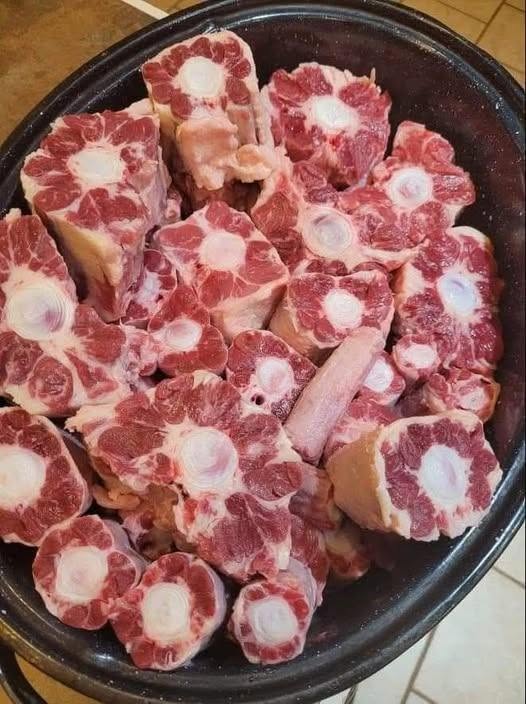
1. Sear for Flavor (The Golden Rule)
Pat the oxtails completely dry with paper towels and season them generously on all sides with salt and black pepper.
Heat the oil or tallow in a large, heavy skillet or Dutch oven over medium-high heat.
Working in batches so you don’t crowd the pan, sear the oxtails for 3 to 4 minutes per side until a deep, rich, golden-brown crust forms. Transfer the seared meat to a plate and set aside.
2. Build the Aromatic Base
Turn the heat down to medium. In the same pan with the rendered beef fat, add the diced onion, carrots, and celery. Sauté for 5 minutes until the vegetables begin to soften.
Stir in the minced garlic and tomato paste, cooking for another 2 minutes until the paste darkens to a rich brick-red color.Garlic
Pour in the red wine to deglaze the pan, using a wooden spoon to vigorously scrape up all the delicious, caramelized bits stuck to the bottom. Let it simmer for 3 minutes to burn off the sharp alcohol scent.
3. Low and Slow Simmer
Arrange the seared oxtails snugly in the bottom of your slow cooker or a deep roasting pot.
Pour the aromatic vegetable and wine mixture right over the top. Add the beef bone broth, bay leaves, thyme sprigs, and allspice. The liquid should come up about three-quarters of the way up the meat.Cookware & Diningware
Cover with the lid and cook:
Slow Cooker: Low for 8 to 10 hours (recommended) or High for 5 to 6 hours.
Stovetop/Oven: Simmer tightly covered on low heat (or in a 150°C / 300°F oven) for 3.5 to 4 hours.
The stew is finished when the meat is exceptionally tender and literally falling off the center bones. Remove the bay leaves and thyme stems before serving.
How to Serve
Over a Pillowy Bed: To preserve and enjoy every drop of the luxurious, unctuous gravy, serve this rich stew over a bed of creamy buttered mashed potatoes, garlic-infused polenta, or traditional rice and peas.
Make-Ahead Magic: Like most complex stews, this tastes twice as good the next day! Refrigerating it overnight also makes it incredibly easy to skim off any hardened fat from the surface before reheating.Dairy & Eggs
Wellness Benefits
Collagen and Gelatin Powerhouse: Oxtail is naturally surrounded by dense connective tissue and bone marrow. As it slow-cooks, this breaks down into gelatin, which coats the digestive tract to support gut lining integrity and supplies the raw amino acids (like glycine) needed for joint repair and skin elasticity.
Bioavailable Heme Iron: Beef oxtail provides a highly absorbable form of iron alongside zinc and Vitamin B12. These elements are vital for red blood cell production, robust cellular energy levels, and maintaining immune performance.
Amino Acid Completeness: Providing a dense, high-quality protein profile, this slow-cooked meal delivers all nine essential amino acids required for efficient muscle recovery and metabolic synthesis.
History and Origin
Oxtail stew is a beautiful testament to the brilliance of nose-to-tail cooking born out of historical necessity. Originally, “oxtail” literally referred specifically to the tail of a castrated ox, though today it encompasses the tail of any high-quality beef cattle cut into segments. Historically classified as a “throwaway” or cheap offal cut consumed by lower-income households across Europe and the American South, it required hours of boiling to be palatable.
Through the diaspora, it was brilliantly embraced and transformed into celebrated national culinary staples—most notably in Jamaica, where it is spiced with scotch bonnet peppers and allspice, and in Spain (Rabo de Toro), where it is braised lovingly in local red wines. Today, it has completely transcended its humble origins, occupying a premium spot on modern fine-dining menus as one of the most sought-after, flavor-dense cuts available.
ADVERTISEMENT
