
Step 1 — Prepare the Cabbage
Remove any loose or damaged outer leaves from the cabbage. Cut the head into quarters through the core and use a sharp knife to cut out the triangular core section from each quarter. Lay each quarter flat on the cutting board and slice across into thin ribbons approximately a quarter inch wide. The sliced cabbage will seem like an implausibly large volume relative to the slow cooker — it will cook down to approximately a third of its raw volume during the cooking process.Slow Cookers
Step 2 — Grease the Slow Cooker
Use a small amount of the melted butter — a tablespoon or so — to lightly coat the interior of a 5- to 6-quart slow cooker insert, particularly the bottom and lower sides where the noodles and butter will have the most contact with the hot surface. This light greasing prevents the bottom layer from sticking and makes cleanup easier after serving.
Step 3 — Build the First Layer
Spread half of the sliced cabbage evenly across the bottom of the slow cooker insert. Scatter half of the dry, uncooked egg noodles over the cabbage layer in as even a distribution as possible — try to cover the cabbage fairly uniformly rather than creating a thick pile in the center and sparse coverage at the edges. Drizzle half of the melted butter slowly and evenly over the noodle and cabbage layer, moving the stream back and forth across the entire surface so the butter covers as much area as possible. Sprinkle half of the black pepper over the buttered surface.
Step 4 — Build the Second Layer
Repeat the layering exactly: spread the remaining cabbage over the first layer, scatter the remaining noodles over the cabbage, drizzle the remaining butter as evenly as possible over the second noodle layer, and finish with the remaining black pepper. The slow cooker will look very full at this point — the cabbage and noodles will compress significantly during the cooking process.
Step 5 — Cook
Cover the slow cooker and cook on HIGH for 2½ to 3 hours or on LOW for 4 to 5 hours. Do not lift the lid during the first 2 hours of cooking — the steam that builds inside the covered insert is what hydrates and cooks the dry noodles and softens the cabbage. Releasing it too early disrupts the cooking environment and produces unevenly cooked results, particularly in the noodle layer where steam is doing much of the cooking work.
Step 6 — Toss and Finish
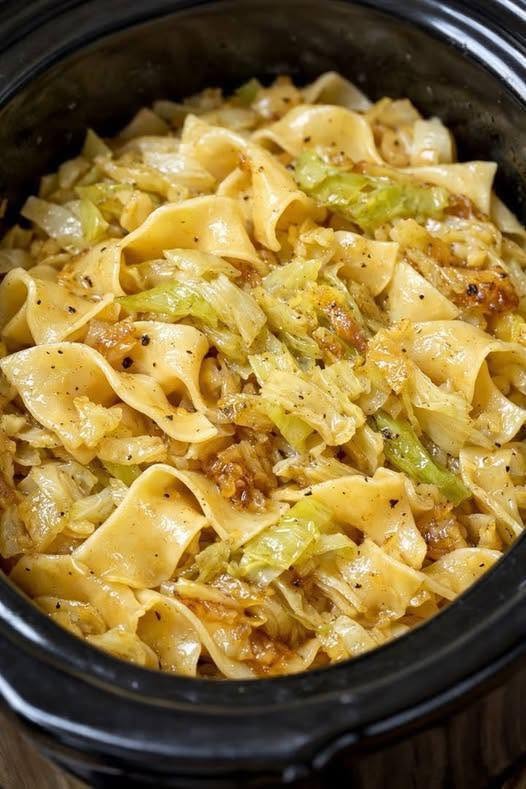
After 2½ hours on HIGH (or 4 hours on LOW), carefully remove the lid. The cabbage should be very tender and beginning to caramelize at the edges where it contacts the insert walls; the noodles should be soft and glossy with butter. Use a large spoon or tongs to gently toss the cabbage and noodles together, folding from the bottom up to incorporate the butter-soaked lower layers throughout the pot. If the noodles are not yet fully tender, replace the lid and cook in 20-minute increments, checking and tossing gently each time, until completely soft and unified with the cabbage. Taste and add additional black pepper if desired.
Step 7 — Serve
Switch to WARM and serve directly from the slow cooker, scooping from the bottom of the insert to ensure each serving gets a good mix of cabbage and noodles with plenty of the buttery cooking liquid that has accumulated at the base. Grind additional black pepper over each serving at the table.Slow Cookers
Tips for the Best Results
Don’t lift the lid in the first two hours. The steam trapped inside the slow cooker is what cooks the dry egg noodles through. Lifting the lid during the early stage of cooking releases this steam and can result in noodles that cook unevenly — soft on the outside but still chalky or firm in the center. Wait until at least the two-hour mark before checking.
Slice the cabbage thin. Quarter-inch ribbons or thinner are what produce the silky, tender, almost caramelized texture that makes this dish so satisfying. Thick chunks of cabbage don’t cook down as effectively in the slow cooker’s steam environment and can produce a texturally uneven result.
Discover more
Aglio
Pasta
soup
Consider browning the butter first. The most effective single upgrade for this recipe is browning the butter in a saucepan over medium heat before drizzling it over the layers — cooking it until the milk solids turn golden and the butter smells nutty and toasted. Brown butter’s flavor is dramatically more complex than plain melted butter, with a hazelnut-like depth that transforms the dish into something genuinely special. It takes about five minutes and is entirely worth it for anyone willing to spend the extra time.
Scoop from the bottom when serving. The butter that pools in the bottom of the slow cooker during cooking is the most concentrated and flavorful part of the dish. Serving from the top without reaching the bottom leaves the richest layer behind for the last serving. Use a large, deep spoon and make sure each portion gets some of the buttery lower layers.Slow Cookers
Use a generous amount of pepper. Black pepper is not a background seasoning in this dish — it’s a primary flavor element that provides the warmth and sharpness that keeps the butter-rich dish from feeling heavy. Two teaspoons may seem like a lot, but it distributes through a substantial volume of cabbage and noodles and produces a pleasantly peppery finished dish rather than an eye-watering one. Taste and add more after the cook if you want more heat.
Frequently Asked Questions
Can I add onions to this dish?
Yes — thinly sliced yellow onion is one of the most natural additions. Add one large onion, thinly sliced, to the cabbage layers at the beginning of the cook. The onion softens and caramelizes alongside the cabbage, adding a savory sweetness and a more complex flavor to the finished dish. This is how many Eastern European versions of the dish are made — with both cabbage and onion braised in the fat together before the noodles are added.
Can I add bacon or kielbasa?
Yes — both are traditional and excellent additions. Cooked, crumbled bacon stirred into the finished dish just before serving adds a smoky, salty crunch. Sliced kielbasa added to the layers before cooking warms through during the cook and infuses the dish with its garlicky, smoky character. Rendered bacon fat can replace some or all of the butter for an even more deeply flavored version. Any of these additions are faithful to the Central European and Midwestern tradition of this dish.
Can I use a different type of pasta?
Yes. Medium egg noodles cook slightly faster and produce a more delicate result. Extra-wide noodles need slightly more time and produce a heartier, more substantial bite. Pappardelle or tagliatelle (fresh or dried) can be used for a more Italian-inflected result. Avoid very small pasta shapes that cook too quickly and become mushy, and very large shapes that may not cook through in the steam environment of the slow cooker without more liquid.Dry Pasta & Noodles
How do I reheat leftovers?
The best method for reheating is in a skillet on the stovetop over medium-low heat. Add a tablespoon of butter and a tablespoon of water to the skillet, then add the cold leftovers and cover. Heat, stirring occasionally, until warmed through — the butter and water together restore the glossy, coated texture that the dish has when fresh. Microwave reheating works in a pinch but tends to dry out the noodles; add a splash of water and cover with a damp paper towel if using the microwave.
Can I make this more substantial for a main course?
Yes — the most straightforward approach is adding protein. Cooked, shredded chicken or pulled pork stirred in at the end of cooking; sliced smoked sausage added to the layers before cooking; or browned ground pork or beef folded into the finished dish all transform the cabbage noodles from a side dish into a complete main course. Any of these additions work naturally with the butter, cabbage, and black pepper base.Slow Cookers
Variations Worth Trying
Brown butter version: Cook the two sticks of butter in a light-colored saucepan over medium heat, swirling occasionally, until the milk solids at the bottom of the pan turn golden brown and the butter smells nutty and toasted — about 5 to 7 minutes. Pour the brown butter immediately over the ice to stop the cooking, then use exactly as you would the plain melted butter in the recipe. The brown butter produces a dramatically more complex, nutty flavor throughout the dish that elevates it from simple comfort food to something genuinely memorable.
Caramelized onion version: Cook two large yellow onions, thinly sliced, in two tablespoons of the measured butter in a wide skillet over medium-low heat for 30 to 40 minutes, stirring occasionally, until deeply golden and caramelized. Add the caramelized onions to the slow cooker with the first layer of cabbage and proceed as directed with the remaining butter. The caramelized onions add an intense, sweet-savory depth that makes the finished dish considerably more complex than the four-ingredient original.Sausages
Discover more
CAKE
Meat & Seafood
Breads
Bacon dripping version: Replace half the butter with rendered bacon fat (collected from frying bacon) and reduce the butter to one stick. Add the crumbled bacon to the finished dish just before serving. The bacon fat and bacon together add a smoky, meaty depth to the dish that’s particularly authentic to both Amish and Eastern European traditions of this preparation.
Sauerkraut and noodle version: Replace one cup of the fresh cabbage with one cup of well-drained sauerkraut, layered in with the fresh cabbage. The sauerkraut adds a fermented sourness and a more assertive, complex flavor to the dish. Reduce the butter slightly (to 1½ sticks) since the sauerkraut is already well-seasoned with salt. This version is closer to some Eastern European versions of the dish where fermented and fresh cabbage appear together.
Caraway seed version: Add two teaspoons of caraway seeds to the layered dish along with the black pepper. Caraway is the classic spice pairing for cabbage in Central European cooking — its slightly anise-like, warm flavor is one of the most natural and historically authentic additions to any cabbage and noodle preparation. The seeds add both flavor and a pleasant textural crunch throughout the finished dish.
Serving Suggestions
Amish Cabbage Noodles are hearty enough to serve as a complete simple supper on their own, particularly with a generous grind of additional black pepper over each bowl and a side of applesauce — a traditional Midwestern and Amish accompaniment whose gentle sweetness provides a refreshing contrast to the richly buttered noodles. As a side dish they pair particularly well with baked ham, smoked sausage, pan-fried pork chops, or roast chicken — the cabbage noodles’ simplicity is the right background for any well-flavored pork or poultry main course. Steamed green beans or a simple green salad with a vinaigrette adds the fresh, slightly bitter vegetable contrast that balances the richness of the butter effectively. Warm rye bread or crusty bread alongside is a natural companion for a dish with this much Eastern European heritage.Sausages
Storage
Leftover cabbage noodles keep in an airtight container in the refrigerator for up to 4 days. The noodles absorb more butter during storage and the dish will be denser when cold. Reheat in a skillet with a tablespoon of butter and a tablespoon of water over medium-low heat, covered, stirring occasionally until heated through. The buttered skillet reheating method restores the glossy, coated quality of the freshly made dish better than any other reheating method. A generous grind of fresh black pepper over the reheated dish refreshes the seasoning that mellows during storage.
Simple Food, Properly Made
Slow Cooker Amish Cabbage Noodles is a recipe that demonstrates one of the most important principles in cooking: the right technique applied to simple, good-quality ingredients produces something more satisfying than its ingredient count suggests. Four items — cabbage, noodles, butter, black pepper — cooked correctly in a slow cooker for a few hours become a dish that’s silky, rich, warm, and deeply comforting in the way that only food with generations of tradition behind it tends to be. It asks very little and delivers thoroughly. That’s worth making regularly.Bread
Enjoy!
ADVERTISEMENT
