
1. The Overnight Slow Ferment
In a large mixing bowl, whisk together the flour, salt, and active dry yeast until fully combined.Herbs & Spices
Toss the dried cranberries and chopped rosemary into the dry mixture, stirring to ensure the fruit is lightly coated in flour (this prevents them from clumping together).
Pour the lukewarm water (and honey, if using) into the bowl. Using a wooden spoon or a sturdy spatula, stir just until a shaggy, sticky dough forms and no dry flour remains. Do not overmix.
Cover the bowl tightly with plastic wrap or a damp kitchen towel. Let it sit at room temperature for 12 to 18 hours. Over this time, the yeast will slowly create thousands of air bubbles, naturally developing the bread’s structure and gluten network without any hand-kneading.
2. Shape and Preheat
After the long rest, your dough should be doubled in size, highly bubbly, and quite loose.Fruits & Vegetables
Generously dust a sheet of parchment paper with flour. Scrape the sticky dough out of the bowl onto the paper. Using floured hands, gently fold the edges of the dough into the center a few times to form a rough, round ball.
Leave the dough boule on the parchment paper, cover it lightly with a towel, and let it rest for 30 minutes.
While the dough takes its final rest, place an empty, heavy Dutch oven (with its lid on) into your oven. Preheat the oven to 230°C (450°F). Letting the heavy pot get intensely hot is the secret to achieving that professional bakery crust.
3. Bake to Golden Perfection
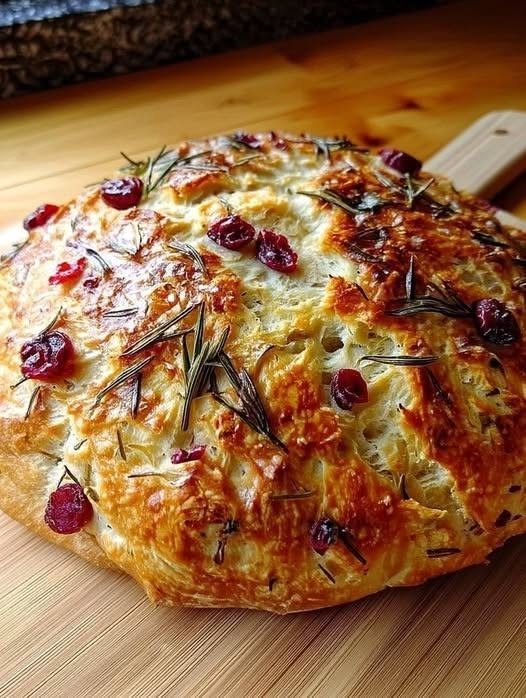
Right before baking, press a few reserved dried cranberries and small rosemary sprigs directly onto the moist top surface of the dough ball for a beautiful visual finish.Baked Goods
Carefully remove the blisteringly hot Dutch oven from the oven. Remove the lid.
Grab the corners of the parchment paper to lift the dough boule and lower it gently (paper and all) into the hot pot.
Cover immediately with the lid and bake for 30 minutes to trap the steam, which allows the bread to rise beautifully.
After 30 minutes, remove the lid completely and bake open for an additional 10 to 15 minutes. Keep an eye on it until the crust turns a rich, blistered, deep golden-brown hue and the exposed cranberries glaze slightly.
Lift the bread out using the parchment paper and transfer it to a wire cooling rack. Let it cool for at least 30 minutes before slicing to let the interior crumb set.Dried Cranberries
How to Serve
The Artisanal Board: Slice the warm loaf into thick wedges on a wooden board. Serve alongside a small dish of salted, grass-fed butter, a drizzle of raw honey, or a pool of high-quality extra virgin olive oil cracked with black pepper.
The Ultimate Charcuterie Pairing: The piney rosemary oils and sharp berry sweetness make this bread the absolute perfect companion for aged cheeses like sharp cheddar, creamy brie, or salty prosciutto.
Wellness Benefits
Natural Long Fermentation Digestibility: Letting the dough ferment slowly over 12+ hours allows natural enzymes to begin breaking down complex starches and phytic acid in the flour. This makes the finished loaf significantly easier on the digestive system compared to quick-risen industrial breads.Herbs & Spices
Antioxidant-Rich Plant Compounds: Dried cranberries add a dose of proanthocyanidins, which are powerful antioxidants praised for supporting urinary tract health and combating cellular oxidative stress.
Anti-Inflammatory Aromatics: Fresh rosemary contains rosmarinic acid and essential volatile oils that possess notable anti-inflammatory, antimicrobial, and memory-boosting cognitive properties.
History and Origin
While standard breadmaking historically required exhaustive manual kneading to develop the elastic gluten matrix needed to trap gases, the No-Knead Revolution completely reinvented home baking in 2006. Popularized by New York City baker Jim Lahey of Sullivan Street Bakery and food columnist Mark Bittman, the technique relies on two simple principles: an extraordinarily long fermentation time and a screaming-hot, enclosed vessel like a cast-iron Dutch oven.Fruits & Vegetables
The extended time allows the water molecules to naturally align the gluten strands effortlessly, while the covered iron pot mimics the expensive steam-injection ovens found in professional European bakeries. Adding sweet fruits and robust herbs like rosemary builds directly upon traditional Mediterranean rustic country loaves, combining ancient, hands-off patience with modern culinary ease.
ADVERTISEMENT
