
Ingredient Notes
Boneless pork shoulder or pork loin roast — 3 to 4 pounds — is the protein. See the introduction for the key differences between the two. For the most reliably tender, moisture-retaining result, pork shoulder (also sold as pork butt or Boston butt) is the better choice — it’s designed for the low-and-slow cooking method and can comfortably handle the full 7 to 9 hours on LOW without drying out. Pork loin produces a leaner, more refined presentation and is good for shorter cooking windows; check it at the lower end of the time range (6 to 7 hours on LOW) and remove it as soon as it’s tender to prevent over-cooking and drying. Trim excess external fat but leave some fat coverage on the surface if there’s a fat cap — position the roast fat side up so the rendering fat bastes the meat throughout the cook.
Honey — half a cup — is the primary sweetener and one of the two defining flavors of the sauce. A good-quality honey makes a perceptible difference in the finished dish — raw or minimally processed honey has more complex floral and fruity notes than heavily processed varieties, and those nuances carry through to the finished sauce. Clover honey is the most neutral and widely available option and produces an excellent result; wildflower, orange blossom, or buckwheat honey each shift the sauce’s character slightly with their own flavor profiles. Buckwheat honey is particularly good with pork for its deeper, more molasses-like character.
Dijon mustard — half a cup — provides the sharpness, complexity, and emulsifying quality that balances the honey and gives the sauce its layered character. A full half cup is a generous amount relative to the honey, producing a sauce where the mustard is clearly present as an equal partner rather than a background note. This balance is what makes the sauce interesting — less mustard produces a sweeter, less complex result. For a variation, whole-grain Dijon (sometimes sold as “country-style” mustard) adds visible mustard seeds that create an appealing rustic texture in the finished sauce. Yellow mustard can be substituted for a milder, more familiar flavor that some people prefer, particularly children — it produces a sauce that’s sweeter and less complex but still very good.
Kosher salt — 1½ to 2 teaspoons — seasons the sauce and, by extension, the meat. The amount specified is calibrated for the quantity of meat and sauce in this recipe; adjust slightly if using a significantly smaller or larger roast. Taste the honey mustard mixture after whisking and before adding it to the pork — it should taste pleasantly salty and sweet in balance, not bland. Salt that goes into the sauce at this stage permeates the entire roast during the long cook, seasoning the meat from the surface inward in a way that salting after cooking cannot replicate.
Ingredients
3 to 4 lb boneless pork shoulder or pork loin roast, trimmed of excess fat
½ cup honey
½ cup Dijon mustard (or yellow mustard for a milder flavor)
1½ to 2 tsp kosher salt
Step-by-Step Instructions
Step 1 — Prepare the Roast
Remove the pork roast from its packaging and pat every surface thoroughly dry with paper towels. Surface moisture on the roast dilutes the sauce at the beginning of the cook and reduces the sauce’s ability to cling to the meat. Trim any very large excess fat pockets from the exterior, but leave a reasonable fat coverage on the surface — particularly if there’s a natural fat cap, which should be positioned facing upward in the slow cooker to baste the meat as the fat renders during cooking. Place the roast in a 5- to 7-quart slow cooker insert.Slow Cookers
Step 2 — Make the Honey Mustard Sauce
In a small bowl, whisk together the honey, Dijon mustard, and kosher salt until the three ingredients are fully combined into a smooth, uniform sauce. Taste and adjust the salt at this stage — the mixture should taste noticeably salty as well as sweet and sharp, because the salt will distribute over the entire roast and into the cooking liquid. A sauce that tastes under-salted at this stage will produce an under-seasoned finished dish.
Step 3 — Coat the Roast
Pour the honey mustard sauce evenly over the pork roast. Use tongs to turn the roast once or twice to coat all surfaces with the sauce, ensuring the sides and bottom of the roast are as well covered as the top. Position the roast fat side up as a final step, which allows any fat cap to baste the meat from above as it renders. The roast and sauce will look relatively undeveloped at this stage; the caramelization and color develop during the long cook.
Step 4 — Cook
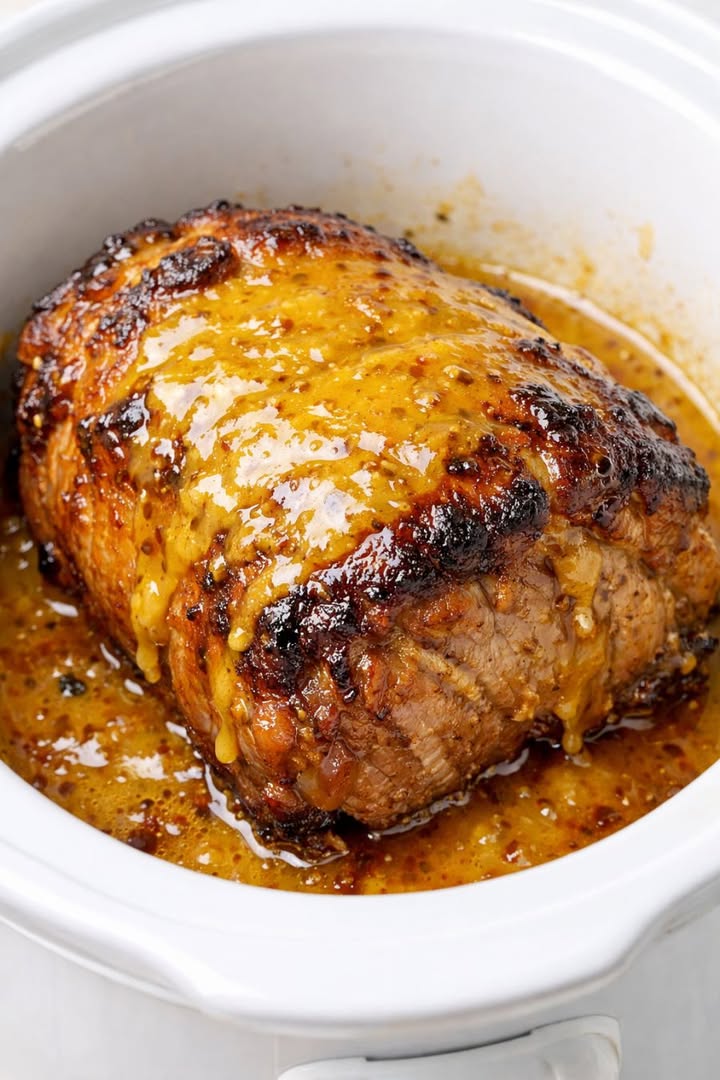
Cover the slow cooker and cook on LOW for 7 to 9 hours or on HIGH for 3½ to 4½ hours. The LOW setting is strongly recommended for pork shoulder, which benefits from the longer, more gradual heat to break down its connective tissue properly. Pork loin on LOW should be checked at 6 to 7 hours. The roast is done when it’s very tender throughout — a fork inserted into the thickest part should meet no resistance, and the meat should pull apart easily with gentle pressure. The sauce will have darkened to a deep golden amber and thickened around the roast, with caramelized, slightly sticky edges forming where the sauce has cooked against the insert’s walls.
Step 5 — Rest the Roast
Carefully transfer the cooked pork roast to a cutting board, letting any excess sauce drip back into the slow cooker insert. Tent loosely with aluminum foil and allow it to rest for 10 minutes. This resting period allows the juices driven toward the center of the roast during cooking to redistribute throughout the meat, producing more evenly moist slices than cutting immediately would yield.
Step 6 — Finish the Sauce
While the roast rests, skim any excess fat from the surface of the sauce remaining in the slow cooker with a large spoon. If the sauce seems thinner than you’d prefer for serving, switch the slow cooker to HIGH with the lid off and allow the sauce to reduce for 10 to 15 minutes, stirring occasionally, until it reaches a glossy, coating consistency. This reduction step is optional but produces a significantly more impressive-looking finished sauce that clings beautifully to the sliced meat.
Step 7 — Slice and Serve
Slice the rested roast into generous pieces. For pork shoulder, the meat will be tender enough to shred with two forks if that presentation is preferred — shredded honey mustard pork served over mashed potatoes or in sandwich rolls is excellent. For pork loin, slice cleanly across the grain into half-inch to three-quarter-inch slices. Arrange the sliced or shredded pork on a serving platter and spoon the honey mustard sauce generously over the top, or return the pork to the slow cooker insert and toss it in the sauce for service directly from the pot on the WARM setting.Slow Cookers
Tips for the Best Results
Pat the roast dry before saucing. Surface moisture dilutes the sauce and reduces how well it adheres to the meat. Thirty seconds of thorough patting with paper towels makes a meaningful difference to the sauce’s concentration and cling.
Taste the sauce before applying it. The honey mustard sauce is doing all the seasoning for a large piece of meat — it needs to taste properly salty before it goes on. A sauce that tastes bland or under-salted in the bowl will produce an under-seasoned roast. Adjust the salt by taste before the sauce goes over the pork.
Discover more
SOUP
Soup
BREAD
Use LOW for pork shoulder. The long, gentle LOW cook is what breaks down the shoulder’s connective tissue into tender, juicy, pull-apart meat. HIGH produces a faster but noticeably less tender result with pork shoulder. The extra time on LOW is worth it.
Don’t skip the resting period. Ten minutes of resting after the roast comes out of the slow cooker dramatically improves the juiciness of the sliced meat. Cutting immediately produces a flood of juices onto the cutting board rather than into the meat where they belong.
Reduce the sauce for a better presentation. The optional 10 to 15-minute uncovered HIGH reduction at the end transforms the somewhat loose, thin sauce of the just-finished roast into a glossy, coating glaze that makes the finished dish look considerably more polished and impressive. For any occasion where presentation matters, this step is worth the extra minutes.
Frequently Asked Questions
Can I use a different type of mustard?
Yes. Yellow mustard produces a milder, sweeter sauce that’s more familiar to children and people who find Dijon’s sharpness too assertive — the finished dish tastes more honey-forward and less tangy. Whole-grain mustard adds visible seeds and a slightly more complex, nuttier flavor. Spicy brown mustard produces a more intensely sharp sauce for people who prefer a bolder mustard character. Any mustard works with the same quantities and method.
Can I sear the roast before slow cooking?
Yes — and it’s a worthwhile optional step. Searing the roast in a hot, lightly oiled skillet for 3 to 4 minutes per side develops browned surface color through the Maillard reaction that slow cooking’s moist environment cannot produce. This browning adds meaningful savory depth to both the meat and the finished sauce. Deglaze the skillet with a tablespoon of the measured honey (or a splash of water or chicken broth) after searing, scraping up the browned bits, and add this deglazing liquid to the slow cooker along with the roast. The flavor improvement is noticeable and well worth the extra ten minutes for occasion cooking.
What’s the difference between using pork shoulder and pork loin?
Pork shoulder (butt) has significantly more fat and connective tissue than pork loin. In the slow cooker, this fat and collagen break down during the long cook into gelatin and rendered fat that make the finished meat more moist, tender, and richly flavored, and contribute body to the sauce. Pork loin is leaner, more refined in texture, and produces cleaner, more uniform slices — but it’s more sensitive to over-cooking and requires checking at the lower end of the time range to avoid drying out. Shoulder is more forgiving and more flavorful; loin is more elegant and lower in fat. Both are appropriate for this recipe with the noted timing adjustments.Slow Cookers
Can I make this ahead for a party or family gathering?
Yes — this is one of the recipe’s most practical qualities for entertaining. Cook the roast completely the day before, allow it to cool in the sauce, and refrigerate overnight in the slow cooker insert or in an airtight container. Reheat on LOW in the slow cooker for 1 to 2 hours until warmed through. The sauce actually improves overnight as the flavors develop further. Sliced and shredded pork held in the sauce is at its best on the second day — a quality that makes this an ideal make-ahead dish for gatherings.
Can I freeze leftover pork roast?
Yes. Cool completely and freeze the pork in the sauce in airtight containers for up to 3 months. Thaw overnight in the refrigerator and reheat gently on the stovetop over medium-low heat with a splash of water if needed, or in the slow cooker on LOW for 1 to 2 hours. The pork texture is slightly softer after freezing and thawing, which is acceptable in a dish where the meat was fork-tender to begin with. The sauce is unaffected by the freeze-thaw cycle.
Variations Worth Trying
Garlic honey mustard version: Add four minced garlic cloves to the honey mustard sauce before whisking. The garlic infuses deeply into both the sauce and the meat during the long slow cook, mellowing from its raw sharpness into a round, savory depth that makes the sauce more complex and layered. This is the most natural and effective single addition to the base recipe.Fruits & Vegetables
Apple cider honey mustard version: Replace two tablespoons of the honey with two tablespoons of apple cider and add a tablespoon of apple cider vinegar to the sauce mixture. The cider and vinegar add a bright, slightly tart quality that cuts through the richness of the pork and the sweetness of the honey, producing a lighter, more balanced sauce with an apple-forward character that’s particularly appropriate in autumn.
Discover more
Baked Goods
CAKES
soup
Rosemary and honey mustard version: Add two sprigs of fresh rosemary to the slow cooker alongside the roast, or stir a teaspoon of finely chopped fresh rosemary into the sauce mixture. Rosemary and pork is one of the most natural and reliably excellent flavor combinations in cooking, and the honey and mustard provide the sweet and tangy context that allows the rosemary to contribute its herbal, slightly piney character without dominating. Remove the rosemary sprigs before serving.
Bourbon honey mustard version: Add two tablespoons of bourbon to the sauce mixture. The bourbon adds a vanilla-caramel warmth and a slight bitterness that deepens the sauce’s complexity considerably, particularly during the long reduction. This version has a decidedly adult character and is particularly suited to autumn and winter gatherings where warm, deeply flavored food is most welcome.
Spicy honey mustard version: Add a teaspoon of crushed red pepper flakes or half a teaspoon of cayenne pepper to the sauce mixture. The heat builds through the long cook and produces a sauce with a warm, building spice that contrasts pleasantly with the honey’s sweetness. Reduce the cooking liquid slightly at the end for the most concentrated, spicy-sweet glaze.
What to Serve Alongside
The honey mustard sauce that surrounds the finished pork roast is rich, slightly sweet, and deeply savory — it needs something starchy and neutral alongside to carry it to the table effectively. Creamy mashed potatoes are the ideal companion, providing a smooth, buttery base for the sauce to pool over. Buttered egg noodles offer a similar but slightly lighter starch base. Steamed white or brown rice works well for a less rich accompaniment. On the vegetable side, roasted carrots — whose natural sweetness complements rather than competes with the honey in the sauce — are a particularly good pairing. Steamed green beans, roasted broccoli, or a simple green salad with a sharp vinaigrette all provide the fresh, slightly bitter contrast that makes the meal feel balanced. For a casual gathering presentation, arrange the sliced or shredded pork on a large platter, drizzle the sauce over the top so it runs attractively down the sides of each slice, and set out the sides in serving bowls for people to help themselves. Toasted slider rolls or soft dinner rolls alongside the platter allow guests to make small sandwiches from the pork, which is particularly popular for party-style service.Dairy & Eggs
Storage
Store leftover pork roast in the sauce in an airtight container in the refrigerator for up to 4 days. The sauce jellies slightly when cold as the collagen (particularly from pork shoulder) sets. Reheat gently on the stovetop with a splash of water to loosen the sauce, or return to the slow cooker on LOW for an hour. The flavor is excellent on the second day — the sauce continues to permeate the meat overnight, producing a more thoroughly seasoned leftover than the freshly cooked version. Leftover honey mustard pork makes outstanding sandwiches on toasted rolls with coleslaw and a little extra Dijon, which is arguably one of the best uses of any leftover pork roast available.
Four Ingredients, One Exceptional Roast
Slow Cooker Honey Mustard Pork Roast is a recipe that earns its place on the regular table by producing a result considerably more impressive than its four ingredients and minimal preparation suggest. The honey and mustard together create something that’s neither merely sweet nor merely sharp but genuinely balanced and complex in the way that a proper sauce is, and the long slow cook develops those flavors into a glossy, caramelized glaze around fork-tender pork that looks and tastes like it came from a kitchen where more effort was invested. That’s the right kind of recipe to know.Fruits & Vegetables
Enjoy!
ADVERTISEMENT
