
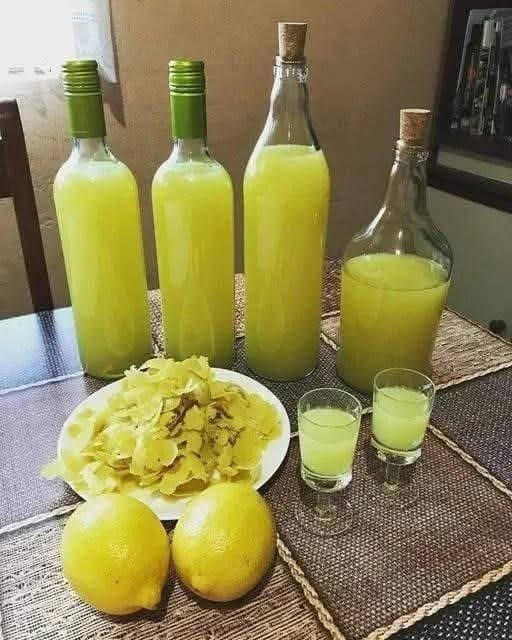
1. Infuse the Alcohol
Wash the Lemons: Scrub the lemons thoroughly with warm water and dry them completely.Lemons
Peel carefully: Using a sharp vegetable peeler, remove the yellow zest in long strips. Avoid the bitter white pith beneath the skin as much as possible, as this will ruin the flavor.
Macerate: Place the lemon peels into a large glass jar and pour the alcohol over them. Seal tightly and store in a cool, dark place for at least 7 to 14 days (or up to 30 days for maximum flavor extraction). The alcohol will turn a brilliant yellow.
2. Add the Simple Syrup & Bottle
Make Syrup: In a medium saucepan, combine the water and sugar. Bring to a gentle simmer over medium heat, stirring until the sugar dissolves completely. Let it cool to room temperature.
Combine: Strain the infused alcohol through a fine-mesh strainer lined with a coffee filter to remove all the lemon peels. Discard the spent peels. Mix the yellow alcohol with the cooled sugar syrup; you will see it magically turn opaque and cloudy.Cold & Flu
Age: Pour the limoncello into clean glass bottles and seal them. Let the flavors marry in the refrigerator or freezer for another week before drinking.
How to Serve
Ice Cold: Always store your limoncello in the freezer. Because of the alcohol content, it will get incredibly cold and thick without freezing solid.
The Glassware: Serve it neat in small, chilled cordial glasses or shot glasses as a post-dinner treat.
Cocktail Twist: Pour a splash over ice and top it with Prosecco or club soda and a sprig of fresh mint for a refreshing summer spritz.Sugar
Wellness Benefits
Traditional Digestif: Limoncello is traditionally consumed after a heavy meal because the essential oils extracted from lemon peels help stimulate gastric juices, aiding digestion and preventing bloating.
Vitamin C & Citrus Oils: The zest contains concentrated d-limonene, a compound known for its strong antioxidant and anti-inflammatory properties.
Mindful Indulgence: Made with just pure fruit, sugar, and alcohol, this homemade version is free of artificial preservatives, dyes, or high-fructose corn syrups commonly found in commercial brands.Lemons
History and Origin
Limoncello is native to the Amalfi Coast, Sorrento, and the island of Capri in Southern Italy. While its exact origin story is fiercely debated among these regions, it dates back to at least the early 20th century, when local families would brew it using prized, thick-skinned Sfusato Amalfitano or Sorrento lemons. It evolved from a warm hospitality gesture offered to guests into a world-famous symbol of Italian culinary heritage.
ADVERTISEMENT
