
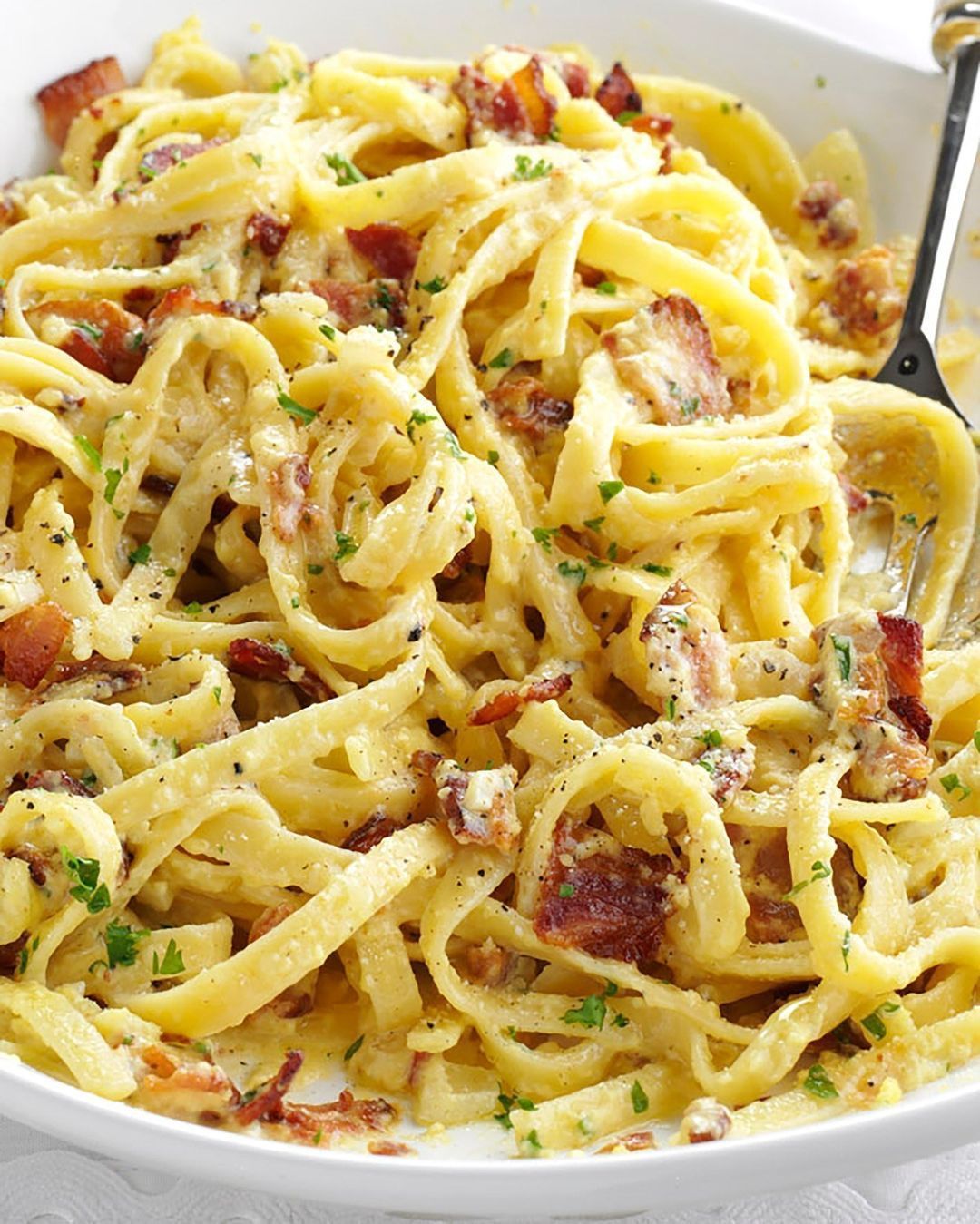
Step 2: Cook the pasta
While the bacon is cooking, in a Dutch oven, cook the fettuccine according to the package directions. Drain the pasta and return it to the pan.
Editor’s Tip: Cook the pasta to al dente, and be sure to salt your pasta water!
Step 3: Make the sauce
Add the chopped onion to the drippings in the skillet; cook and stir over medium heat 2 to 3 minutes or until tender. Add the garlic and cook 1 minute longer. Reduce heat to medium-low. Stir in the half-and-half.
Step 4: Add the eggs to the sauce
In a small bowl, whisk a small amount of the warm sauce into the eggs. Return the eggs and sauce to the skillet, whisking constantly. Cook for 8 to 10 minutes, or until a thermometer reads 160°, stirring constantly.
Editor’s Tip: Tempering the eggs by whisking in a small amount of warm sauce helps prevent the eggs from scrambling and leads to a smooth and silky carbonara. Cooking to 160° is key, as this is the temperature that makes the eggs safe to eat.
Step 5: Toss all the ingredients together
Stir the cheese, salt, pepper and bacon into the sauce. Add the sauce to the fettuccine and toss to combine. Sprinkle with parsley and, if desired, additional cheese. Serve immediately.
Fettuccine Carbonara Variations
Top with more fresh herbs: Add a handful of freshly chopped oregano, thyme, rosemary or basil to the pasta before serving.
Pile on some peas: Stir in 1/2 to 1 cup cooked green peas to the pasta just after tossing the noodles with the sauce.
Choose a different cheese: For an easy Italian swap, use Parmesan instead of Romano cheese. For a more intense flavor, use finely grated Gruyere, smoked Gouda or crumbled goat cheese.
Make the pasta from scratch: There truly is nothing better than noodles made from scratch. If you have the time, try making your own homemade pasta before making the carbonara sauce.
How to Store Fettuccine Carbonara
Carbonara with fettuccine is best eaten on the day it’s made. However, you can store leftovers in an airtight container in the refrigerator for up to three days. To reheat the pasta, add a teaspoon olive oil or butter to a skillet or heavy-bottom pan over low heat. Add the leftovers along with a splash of half-and-half, water or stock to add a touch of moisture. Stir constantly (being careful to avoid breaking the pasta) until heated through, about five minutes.
Fettuccine Carbonara Tips
Is it safe to eat raw egg?
In a traditional carbonara recipe, the eggs are cooked as they are tossed with the hot pasta. In our recipe, the eggs cook in the sauce mixture. However, if you’re still wondering if it’s safe to eat raw eggs, use pasteurized eggs, which are sold at nearly every grocery store.
Do you rinse pasta after cooking?
Do not rinse the fettuccine after cooking. The starches on the pasta help the sauce cling to the noodles. If the noodles are rinsed, the sauce will just slide right off. This is just one of our easy tips to remember when learning how to cook pasta perfectly.
What else can you serve with fettuccine carbonara?
Delicious sides to serve with this fettuccine carbonara recipe include Caesar salad and Italian chopped salad. Vegetable sides that pair well with a hearty pasta like this include garlic roasted broccoli, peas with shallots or the grilled vegetables of your choice. And of course, don’t forget the bread—think garlic breadsticks, garlic tomato bruschetta or rosemary focaccia.
ADVERTISEMENT
