
6. Benefits
Minimal Effort: Requires no mixing bowls or whisks, significantly reducing cleanup time.
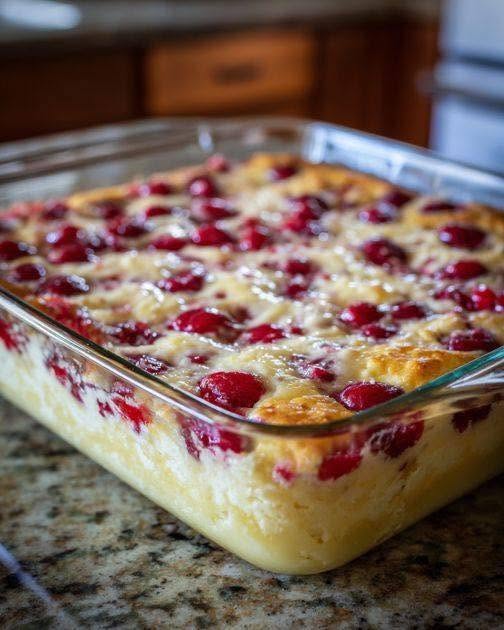
Versatile Texture: Offers a unique three-tier texture (fruit, custard, and cake) from a “dump” method.Cakes
Pantry-Friendly: All four ingredients have a long shelf life, making it a reliable “emergency” dessert.
7. History of Dump Cakes and Custard Bakes
The “Dump Cake” is a distinctively American culinary phenomenon that rose to prominence in the mid-20th century, specifically the 1960s and 70s. Its origin is closely tied to the post-WWII era of convenience cooking, when companies like Duncan Hines and Pillsbury began marketing boxed cake mixes as versatile foundations for home bakers. The concept was simple: “dump” the ingredients into a pan without pre-mixing, a technique that appealed to the busy, modernizing household.
While traditional custards date back to Ancient Rome and the Middle Ages—originally as savory meat-based fillings before evolving into sweet egg-and-milk desserts—the “Custard Dump Cake” is a modern hybrid. By adding sweetened condensed milk (invented by Gail Borden in 1853) to the traditional fruit-and-cake-mix formula, bakers discovered they could create a self-layering dessert. The heavy milk sinks slightly into the fruit and flour as it heats, creating a creamy, flan-like consistency beneath the baked cake crust.
Discover more
slow cooker
CHEESY
CAKE
Today, this 4-ingredient variation remains a staple of community cookbooks and potlucks across the United States. It represents a bridge between the classic European fruit clafoutis and the pragmatic, industrial-era American kitchen, proving that simplicity is often the secret to a timeless dessert.Dairy & Eggs
ADVERTISEMENT
