
Chocolate Chip: Add $1/4$ cup of dark chocolate chips (or sugar-free chips) for a dessert-inspired breakfast.
Protein Power: Stir two scoops of your favorite protein powder into the liquid mixture before pouring.
Serving and Storage
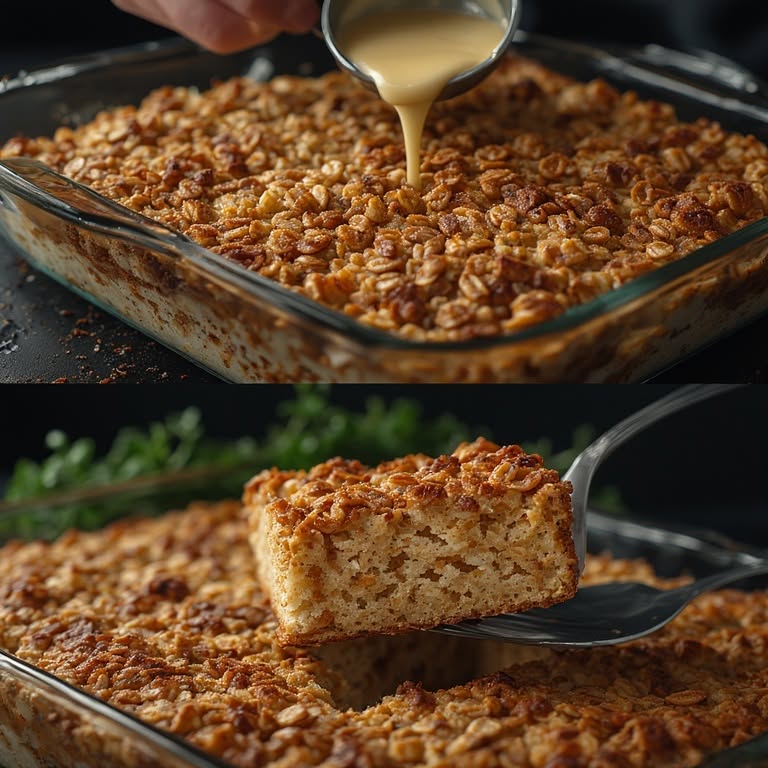
Service: Serve warm in a bowl with a splash of cold milk or a dollop of Greek yogurt.
Storage: This bake stores exceptionally well. Keep slices in an airtight container in the refrigerator for up to 5 days.
Freezing: Wrap individual squares in parchment paper and store in a freezer bag for up to 3 months. Reheat in the microwave for 45–60 seconds.
Benefits
Steady Energy: Rolled oats are a complex carbohydrate that provides a slow release of glucose, preventing mid-morning energy crashes.
Heart Healthy: Oats are rich in beta-glucan, a type of soluble fiber known to help lower cholesterol levels.
Blood Sugar Friendly: By omitting refined flour and processed sugars, this bake is a better option for maintaining stable insulin levels.
The History of Baked Oatmeal
Baked Oatmeal has its roots in the traditional Amish communities of Pennsylvania. Known as “Amish Oatmeal,” it was developed as a hearty, communal breakfast that could be prepared in large quantities and kept warm in a wood-fired oven while farm chores were being completed. Unlike the creamy, porridge-like “Scottish Oats” or “Irish Porridge,” the Amish version emphasized a firmer, more cake-like consistency.Dairy & Eggs
The modern No-Flour, No-Sugar evolution emerged in the early 2010s as part of the “Clean Eating” movement. Health-conscious cooks realized that by relying on the natural sweetness of fruits like bananas and apples, and the structural integrity of whole rolled oats, they could modernize this 19th-century staple for contemporary dietary needs. Today, it stands as a cornerstone of “Meal Prep” culture, celebrated for its efficiency and its ability to turn the simple, rustic oat into a sophisticated, nutrient-dense breakfast square.
ADVERTISEMENT
