
Tips for the Best Results
Choose pork shoulder or butt, not loin. This is the single most important ingredient decision in the recipe. Pork loin does not have the fat content or connective tissue to stay moist and tender over 8 to 10 hours in a slow cooker and will dry out and tighten. Pork shoulder and pork butt are specifically suited to long, low-temperature moist cooking and produce results that are impossible to achieve with a leaner cut.Soups & Stews
Use low-sodium broth. Two full envelopes of dry onion soup mix contain a meaningful amount of sodium. Pairing them with regular-sodium beef broth produces a finished gravy that most people will find too salty. Low-sodium broth is the right choice here, and even then the gravy is well-seasoned without any additional salt in most cases.
Pat the roast dry before seasoning. A dry surface allows the soup mix to adhere evenly to the meat and produces slightly better texture on the exterior of the roast during cooking. This 30-second step makes a noticeable difference to how much of the seasoning stays on the meat versus washing into the liquid.
Fat side up matters. The fat cap on the surface of a pork shoulder self-bastes the meat as it renders during cooking — fat flows down through and around the roast, keeping it moist and contributing to the richness of the gravy. Placing the fat side down insulates the bottom of the roast but means the top dries out more quickly. Fat side up is the right orientation for this recipe.
Don’t rush the resting time. Ten minutes of resting after the roast comes out of the slow cooker makes a genuine difference to the juiciness of the slices. The investment is small and the payoff in better, moister meat is consistent every time.
Frequently Asked Questions
Can I sear the pork roast before adding it to the slow cooker?
Yes, and it’s the best optional upgrade available for this recipe. Searing the roast in a hot skillet with a tablespoon of oil for 3 to 4 minutes per side before adding it to the slow cooker develops deep, browned surface color through the Maillard reaction. This browning adds a layer of savory depth and complexity to both the meat and the finished gravy that slow cooking alone cannot produce. Deglaze the hot skillet with a splash of the measured beef broth, scraping up any browned bits, and add the deglazing liquid to the slow cooker along with the rest of the broth. The added flavor is significant and well worth the 10 extra minutes if you have them.
Can I use bone-in pork shoulder?
Yes — bone-in pork shoulder produces an even richer, more deeply flavored gravy as the collagen from the bone dissolves into the cooking liquid over the long cook. Add an additional hour to the cooking time and test for tenderness rather than going solely by the clock. The bone also makes the roast easier to hold its shape during the cook, which can be an advantage if you’re planning to serve it sliced rather than pulled or shredded.
Can I make this recipe with pork loin?
Technically yes, but the result will be significantly less tender and juicy than with pork shoulder. Pork loin is a very lean cut that’s best suited to shorter cooking times and risks becoming dry and tough after 8 hours in a slow cooker regardless of how much liquid surrounds it. If you only have pork loin available, reduce the cooking time to 4 to 5 hours on LOW and check for doneness frequently from that point — the target internal temperature is 145°F, and going significantly beyond it with a lean cut produces diminishing results in texture.Cookware & Diningware
Can I make the gravy thicker?
Yes, several approaches work. The simplest is to remove the lid and cook on HIGH for 10 to 15 minutes after the roast is removed, allowing the liquid to reduce and concentrate. Alternatively, mix a tablespoon of cornstarch with two tablespoons of cold water until smooth, then stir the slurry into the hot gravy and cook on HIGH for 5 to 10 minutes, stirring occasionally, until thickened to the desired consistency. Blending some or all of the onions into the liquid with an immersion blender also thickens the gravy naturally without any added starch, producing a silky, smooth result with a deep onion flavor.
Can I shred the pork instead of slicing it?
Yes — after the full 8 to 10 hours on LOW, pork shoulder is typically tender enough to shred with two forks directly in the slow cooker. Stir the shredded pork back into the onion gravy so it’s fully coated. Shredded pork in onion gravy served over mashed potatoes or egg noodles is an outstanding variation that lends itself particularly well to being spooned generously rather than sliced and plated. Shredded pork in this gravy also makes exceptional sandwiches — pile it onto soft rolls and spoon extra gravy over the top.
Variations Worth Trying
Creamy onion gravy version: Just before serving, whisk a third to a half cup of sour cream or heavy cream into the warm onion gravy in the slow cooker. The cream transforms the dark, rustic braising liquid into a silky, stroganoff-style sauce with a pale tan color and a richer, creamier quality that’s particularly good over egg noodles. Stir in the cream gradually and taste as you go — a small amount adds creaminess without muting the savory onion depth, while more cream shifts the character of the gravy significantly.Dairy & Eggs
Apple and onion version: Add two peeled, cored, and thickly sliced apples (Granny Smith for tartness or Honeycrisp for sweetness) to the slow cooker on top of the onion layer before adding the roast. The apples break down during the cook and their natural sweetness and mild acidity balance the deep savory notes of the onion soup mix and beef broth in the gravy. Apple and pork is one of the most natural flavor combinations in cooking, and this variation leans into that affinity fully.
Garlic and herb version: Tuck four to six whole peeled garlic cloves into the onion layer before adding the roast, and scatter a few sprigs of fresh thyme or a teaspoon of dried thyme over the onions with the soup mix. The garlic becomes completely soft and mellow during the long cook, infusing the gravy with a gentle, rounded savory depth that complements the onion flavors without dominating them. Fresh rosemary is another excellent herb addition — use it sparingly, as its flavor intensifies significantly during the long slow cook.
Mushroom and onion version: Add 8 ounces of sliced cremini or button mushrooms to the onion layer before placing the roast. The mushrooms release their liquid during cooking and contribute an earthy, umami richness to the gravy that deepens its overall flavor considerably. This variation produces a particularly complex, restaurant-quality braising liquid that’s well worth the minimal extra preparation.
Discover more
Soupe
Sausages
Cheese
Balsamic onion gravy: Stir two tablespoons of balsamic vinegar into the beef broth before pouring it into the slow cooker. The balsamic adds a gentle sweetness and a subtle fruity acidity that deepens the caramelized quality of the onion gravy and gives it a slightly more complex, wine-braised character. The vinegar flavor mellows completely during the long cook and is not identifiable as balsamic in the finished dish — it simply makes the gravy taste richer and more developed.Soups & Stews
What to Serve Alongside
The pork roast and its onion gravy are genuinely best served over or alongside something that can absorb and carry the braising liquid. Creamy mashed potatoes are the most natural pairing — a generous spoonful of gravy-soaked sliced pork over a pool of buttery mashed potatoes is a deeply satisfying plate. Buttered wide egg noodles are an equally classic match. Steamed or roasted root vegetables — carrots, parsnips, turnips — absorb the gravy’s flavor well when served alongside the pork. Roasted broccoli or steamed green beans provide a fresh, slightly bitter contrast to the richness of the meat and its sauce. Warm dinner rolls or crusty bread are important for the gravy that inevitably pools on the plate — it’s too good to leave behind. A simple green salad with a tart vinaigrette provides necessary acidity and freshness to balance the meal’s richness.
Storage and Leftovers
Leftover pork roast and onion gravy keep very well in an airtight container in the refrigerator for up to 4 days. Store the sliced pork submerged in the gravy to keep it moist — pork slices stored without their cooking liquid dry out quickly in the refrigerator. Reheat gently in a covered saucepan over medium-low heat with a splash of beef broth if needed to loosen the gravy back to a pourable consistency, or in the microwave covered with a damp paper towel, stirring once or twice during reheating. The flavors deepen and improve overnight, making the second-day leftovers particularly good. Leftover pork in onion gravy makes outstanding sandwiches on soft rolls; the shredded or sliced pork with gravy spooned over it and a thin smear of Dijon mustard is one of the better uses for slow cooker pork leftovers available.Garlic
This dish also freezes well for up to 3 months. Freeze the pork and gravy together in portion-sized airtight containers. Thaw overnight in the refrigerator and reheat gently on the stovetop, adding a splash of broth as needed.
Four Ingredients, Sunday Dinner Flavor
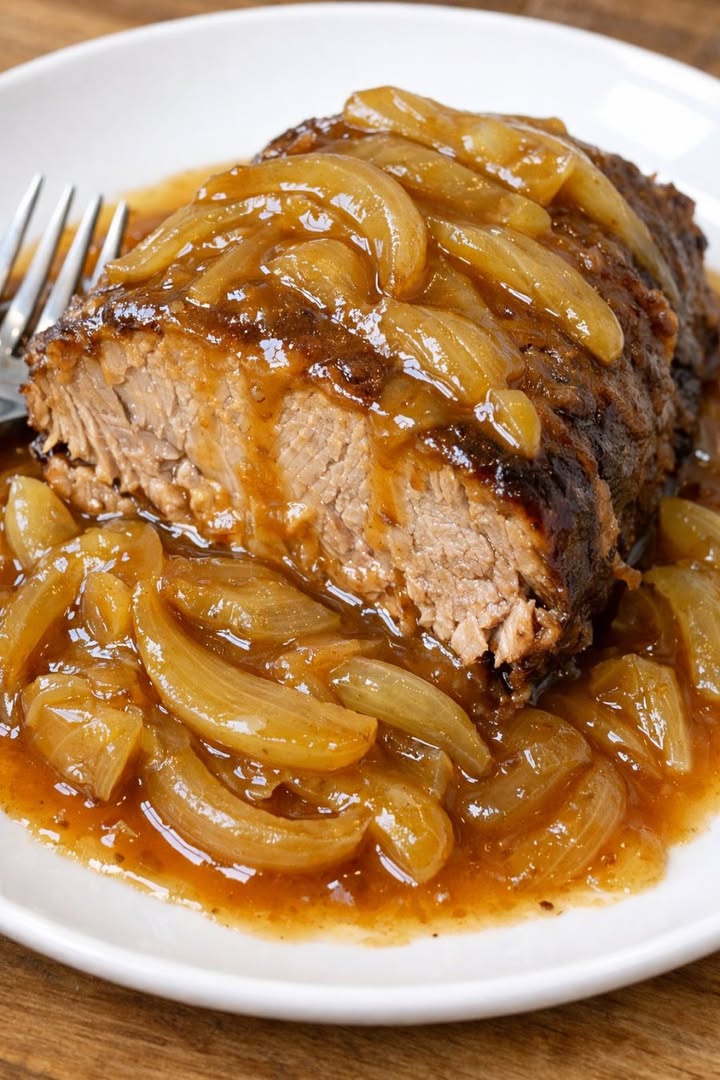
Slow Cooker Amish Onion Gravy Pork Roast is the kind of recipe that makes the slow cooker feel like one of the most worthwhile appliances in the kitchen. Almost no effort, very modest ingredients, eight to ten hours of patient cooking — and what you get is a deeply tender pork roast bathed in a caramelized onion gravy that tastes like time and care went into it. Which is true. It just didn’t require your time or your care in the usual way. That’s the quiet brilliance of this style of cooking, and why recipes like this one keep showing up at family tables generation after generation.
Enjoy!
ADVERTISEMENT
