
3. Instructions
Boil Pasta: Cook the macaroni in salted water according to package directions. Drain and rinse under cold water to stop the cooking process and remove excess starch.Salads
Whisk Dressing: In a large bowl, whisk together the mayonnaise, sugar, mustard, vinegar, salt, and pepper until smooth and the sugar is mostly dissolved.
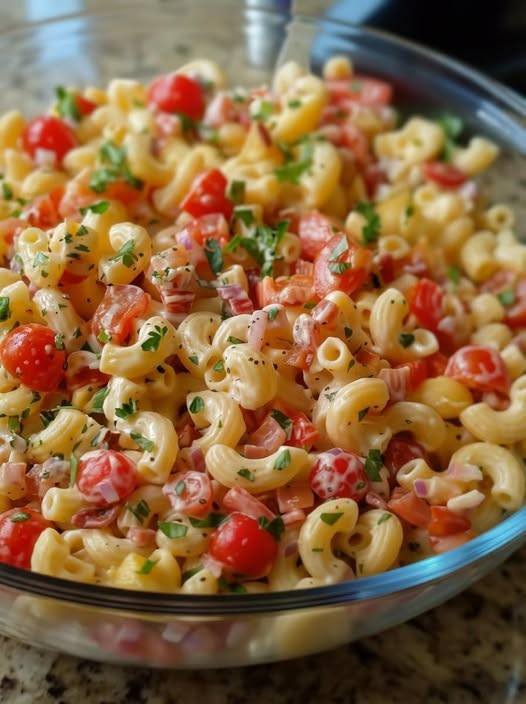
Combine Ingredients: Add the cooled macaroni, diced celery, red onion, bell peppers, and cherry tomatoes to the dressing bowl.
Fold: Gently fold in the chopped hard-boiled eggs so they don’t break apart too much.
Chill: Cover and refrigerate for at least 4 hours. The pasta will soak up the dressing, creating the signature creamy consistency.
Garnish: Stir gently before serving and sprinkle with fresh parsley.
4. Variations
Smoky Twist: Add 1/2 cup of crumbled bacon and use smoked paprika in the dressing.Grains & Pasta
Extra Tang: Stir in 1/4 cup of sweet pickle relish for added texture and acidity.
Spicy Amish Salad: Add diced jalapeños and a dash of hot sauce to the dressing mix.
5. Serving and Storage
Serving: This is the perfect accompaniment to BBQ ribs, fried chicken, or grilled burgers.
Storage: Store in an airtight container in the refrigerator for up to 3–4 days.
Pro-Tip: If the salad looks a little dry the next day, stir in a tablespoon of milk or a tiny bit more mayo to loosen the dressing before serving.Condiments & Dressings
6. Benefits
Cost-Effective: Uses inexpensive pantry staples to feed a large group.
Texture Harmony: Offers a satisfying mix of soft pasta, creamy dressing, and crisp, fresh vegetables.
Make-Ahead Convenience: Reduces stress for hosts by being prepared entirely in advance.
7. History of Amish Macaroni Salad
The history of Amish Macaroni Salad is rooted in the Pennsylvania Dutch tradition of “sweets and sours.” This culinary philosophy focuses on balancing heavy, savory foods with pickled, preserved, or sweetened side dishes. While pasta was introduced to these communities later than their traditional grain-based dishes, the macaroni salad became an essential part of “church bench” meals and community gatherings in the early 20th century.Mayonnaise
The “Amish” designation specifically refers to the preference for a sweeter dressing profile, often achieved through a higher sugar content and the addition of yellow mustard—a departure from the more vinegar-heavy German potato salads of the same region. This dish represents the evolution of community-based cooking, where recipes were designed to be portable, long-lasting without refrigeration for short periods, and capable of providing high energy for hard-working farming families.
ADVERTISEMENT
