
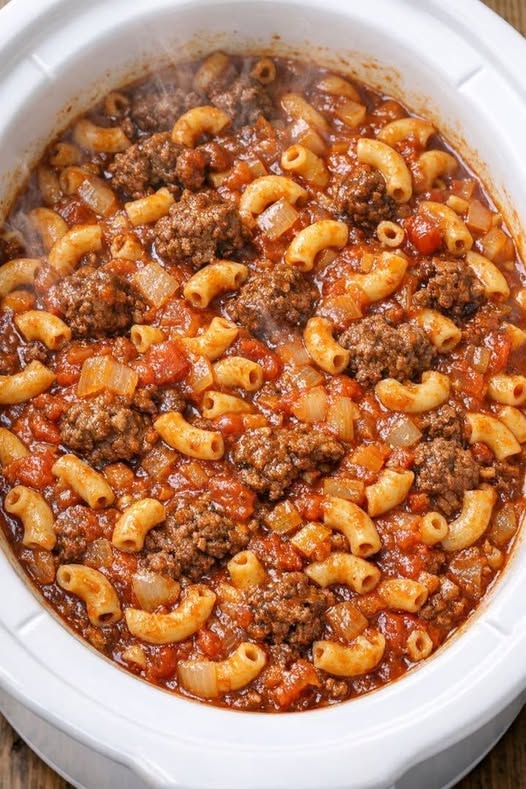
Slow Cooker Slumgullion
Slumgullion doesn’t have a glamorous name and it was never meant to. It’s a Depression-era one-pot dish built from the cheapest, most available ingredients a family could pull together — ground beef, onion, canned tomato sauce, and pasta — and its whole point was feeding people well when resources were thin. That practical spirit is what makes it one of the most enduringly satisfying dishes in American home cooking. Four humble ingredients, cooked low and slow, produce a thick, tomatoey, deeply savory pot of food that tastes like real comfort in the most honest sense of the word.Cookware & Diningware
Decades removed from the circumstances that created it, slumgullion still earns its place at the table. It’s genuinely inexpensive to make, it feeds a crowd from a modest amount of ingredients, it’s completely kid-friendly, it reheats perfectly, and it requires almost no cooking skill or active attention. The slow cooker version gives the tomato sauce and beef time to meld into something richer and more cohesive than a quick stovetop version can produce, and the macaroni added near the end absorbs the sauce and thickens the whole pot into something that’s more stew than soup — substantial enough to serve as a full meal from a single bowl.
A Brief History of Slumgullion
The word slumgullion dates back at least to the mid-1800s in American English, where it originally referred to a thin, watery broth or a cheap, unappetizing stew. Mark Twain used it disparagingly in reference to weak coffee. By the time of the Great Depression, the word had been reclaimed somewhat as a name for the kind of resourceful, filling, one-pot meals that families made from whatever was on hand — combinations of meat, pasta or rice, vegetables, and tomato products that used every bit of available food without waste. It sits in the same American tradition as goulash, chili mac, and American chop suey, and the recipes overlap considerably. What they share is the philosophy: simple, filling, inexpensive, and satisfying in the way that only genuinely straightforward food can be.Beef
Why You’ll Love This Recipe
The most immediate appeal is cost. This recipe feeds six people comfortably from a pound and a half of ground beef, two cans of tomato sauce, one onion, and two cups of dry pasta — ingredients that together cost a fraction of most dinner recipes. It’s one of the most genuinely budget-friendly hot meals available, and the simplicity of the ingredient list doesn’t compromise the result. The slow cooker does the work of developing flavor over several hours, which means the finished dish tastes considerably more complex than a rushed stovetop version.
Beyond the budget appeal, slumgullion is deeply, honestly comforting. There’s no irony or nostalgia required to enjoy it — it’s just a thick, warm, tomatoey pasta dish with savory beef and tender onion throughout, served hot in a bowl. It appeals across generations, across picky eaters, and across any occasion where you simply need to feed people well without fuss. Leftovers reheat beautifully and improve overnight as the flavors continue to develop, making this an excellent recipe for meal prep or for making a big batch on a Sunday for the week ahead.Tomato Sauce
Ingredient Notes
Ground beef (80 to 90% lean) is the protein base. 80/20 ground beef produces the richest, most deeply flavored result because the fat carries flavor and contributes to the sauce’s body as it renders during browning and slow cooking. 90/10 is leaner and produces a slightly less rich but still very good result, and requires less draining after browning. Drain off most of the excess fat after browning — leaving a little behind adds flavor, but too much creates a greasy finished dish. If you want to reduce the cost further, extend the recipe by using a pound of ground beef instead of a pound and a half and adding an extra half cup of pasta. The dish is still very satisfying and serves the same number of people.
Yellow onion, diced and softened briefly in the skillet with the beef before going into the slow cooker, provides a sweet, savory depth that raw onion added directly to the slow cooker wouldn’t achieve as well. The pre-softening step takes only 3 to 5 minutes and produces an onion that’s fully translucent and beginning to caramelize at the edges — this is the flavor foundation for the whole pot. If you’re cooking for children or anyone who dislikes onion texture, dice the onion very finely or grate it directly into the pan so it essentially dissolves into the sauce during cooking while still contributing its flavor.Grains & Pasta
Canned tomato sauce — two standard 15-ounce cans — forms the liquid base of the dish. Plain tomato sauce (not pasta sauce or marinara, which are already seasoned) gives you full control over the final flavor. Tomato sauce is essentially pureed, lightly cooked tomatoes with nothing added, which means the dish’s seasoning is entirely up to you and the slow cooking process. If you have seasoned tomato sauce or marinara on hand, it will work fine — just be more cautious with additional salt since the sauce already contains seasoning.
Elbow macaroni is the traditional pasta shape for this dish — its small, curved tubes are the right size for the thick sauce and are deeply associated with the comfort food character of slumgullion and its close relatives. Any small pasta shape works: small shells, ditalini, rotini, or cavatappi all produce good results. Larger pasta shapes are less well-suited because they don’t integrate as naturally into the thick, saucy dish and can be harder to eat from a bowl. Add the pasta dry to the slow cooker in the final 30 to 40 minutes — the sauce provides enough liquid to cook it, and cooking it this way allows it to absorb the sauce and become fully flavored throughout rather than just coated on the surface.Food
Water may be needed to adjust the consistency during or after the pasta is added. The sauce thickens considerably as the macaroni absorbs liquid during cooking — if it looks very thick before or after adding the pasta, stir in a quarter to half a cup of water to loosen it to a saucy, scoopable consistency. Err on the side of slightly loose, since the dish thickens further as it sits on the warm setting or in the refrigerator.
Ingredients
1½ lbs ground beef (80–90% lean)
1 large yellow onion, diced
2 cans (15 oz each) plain tomato sauce
2 cups dry elbow macaroni
1 tsp salt, or to taste
½ tsp black pepper, or to taste
Up to 1 cup water, as needed for consistency
Step-by-Step Instructions
Step 1 — Brown the Beef
Place a large skillet over medium heat. When the pan is hot, add the ground beef and crumble it with a wooden spoon or spatula as it cooks. Cook for 8 to 10 minutes, stirring and breaking up the meat regularly, until the beef is evenly browned and no pink remains anywhere. Take the time to brown the beef properly rather than just cooking it through to grey — the browning that happens on the bottom of the pan, where the meat contacts the hot surface directly, develops the Maillard reaction flavors that add depth to the whole dish. Once browned, carefully tilt the pan and spoon off most of the rendered fat, leaving just a small amount behind for flavor.Slow Cookers
Step 2 — Soften the Onion
Add the diced onion to the skillet with the browned beef. Cook over medium heat, stirring frequently, for 3 to 5 minutes until the onion has softened, turned translucent, and is just beginning to pick up a little color at the edges. This brief cooking step makes a genuine difference to the finished flavor — raw onion added directly to the slow cooker will soften over the cooking time, but its sharpness won’t mellow in the same way as onion that’s been briefly sautéed first.
Step 3 — Transfer to the Slow Cooker and Add Sauce
Scrape the beef and onion mixture into the slow cooker insert, including any browned bits from the bottom of the pan — those bits are flavor. Pour in both cans of tomato sauce and stir everything together until the beef and onion are evenly distributed through the sauce. If you prefer a looser, more brothy slumgullion rather than a thick stew-like result, stir in up to one cup of water at this stage. Sprinkle in the salt and black pepper, stir once more, and taste the sauce — it should be well-seasoned and savory, with the flavors coming through clearly even before the long cook.Beef
Step 4 — Cook the Base
Cover the slow cooker and cook on LOW for 4 to 5 hours or on HIGH for 2 to 3 hours. This cooking stage is what transforms a simple mixture of ground beef and tomato sauce into something cohesive and developed — the long, gentle heat allows the flavors to meld fully, the onion to soften completely into the sauce, and the sauce to deepen and thicken. The house will smell very good by this point.
Step 5 — Add the Macaroni
About 30 to 40 minutes before you’re ready to eat, remove the lid and stir in the dry elbow macaroni. Press the pasta down into the sauce so every piece is submerged and in contact with the liquid — pasta sitting above the sauce level won’t cook evenly. If the sauce looks very thick at this stage, stir in a splash of water so the macaroni has enough liquid to absorb as it cooks. Switch the slow cooker to HIGH if it’s been on LOW.Meat & Seafood
Step 6 — Finish Cooking the Pasta
Replace the lid and cook on HIGH for 25 to 35 minutes, stirring once halfway through. The pasta is done when it’s tender but still has a slight chew — not mushy, not chalky in the center. The mixture should be thick, saucy, and cohesive, with the pasta fully integrated into the beef and tomato sauce. Taste for seasoning one final time and adjust with additional salt and pepper as needed.
Step 7 — Serve
Ladle generous portions directly from the slow cooker into wide, deep bowls. Serve immediately while hot and steaming, with whatever accompaniments you’d like alongside.
Tips for the Best Results
Brown the beef properly, don’t just cook it grey. The flavor difference between properly browned beef and merely cooked-through grey beef is significant in a dish with this few ingredients. Medium heat, patience, and resisting the urge to stir constantly lets the beef develop the golden-brown surface color that contributes the most flavor to the finished pot.Slow Cookers
NEXT PAGE
ADVERTISEMENT
