
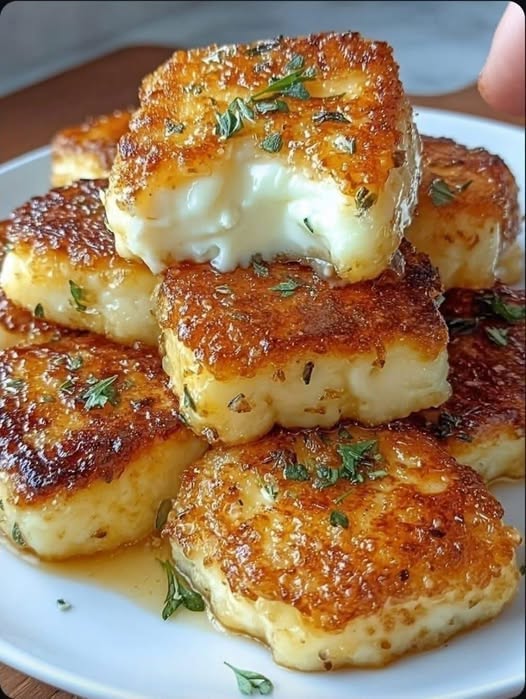
Garnish and Serve: Plate the hot cheese immediately. Pour any leftover warm honey-oil mixture from the pan right over the top and finish with chopped fresh herbs.
Chef’s Pro Tips
Watch the Moisture: Halloumi is packaged in brine. If you don’t pat it thoroughly dry, it will steam in the pan instead of frying, which makes it rubbery rather than crispy.
Serve It Piping Hot: Halloumi waits for nobody! It has a unique protein structure that makes it delightfully gooey and soft right out of the pan, but it will firm up quickly as it cools. Serve it immediately while the core is still warm and melty.
How to Serve
The Mediterranean Mezze: Arrange the fried halloumi on a platter alongside warm pita bread, marinated olives, hummus, and sliced cucumbers.Baked Goods
Elevated Summer Salad: Place the hot, honey-crusted slabs right on top of a bed of fresh arugula, sliced strawberries or figs, and toasted walnuts.
History and Culinary Origins
Halloumi is a traditional semi-hard cheese that originates from the Eastern Mediterranean island of Cyprus, where it has been crafted for centuries, long before the arrival of modern refrigeration. Traditionally made from a blend of goat’s and sheep’s milk, its unique culinary superpower lies in its production process: the cheese curds are heated in their own whey, a step that alters the protein matrices and gives the cheese an incredibly high melting point.
Because it won’t melt into a puddle over direct heat, Mediterranean communities traditionally preserved, grilled, or pan-fried halloumi as a substantial, savory protein source. Pairing its intense, salty brine with the sweet notes of honey or fresh fruit is a timeless Levantine culinary practice, creating a brilliant sweet-and-savory contrast that has made this simple preparation famous worldwide.
ADVERTISEMENT
